

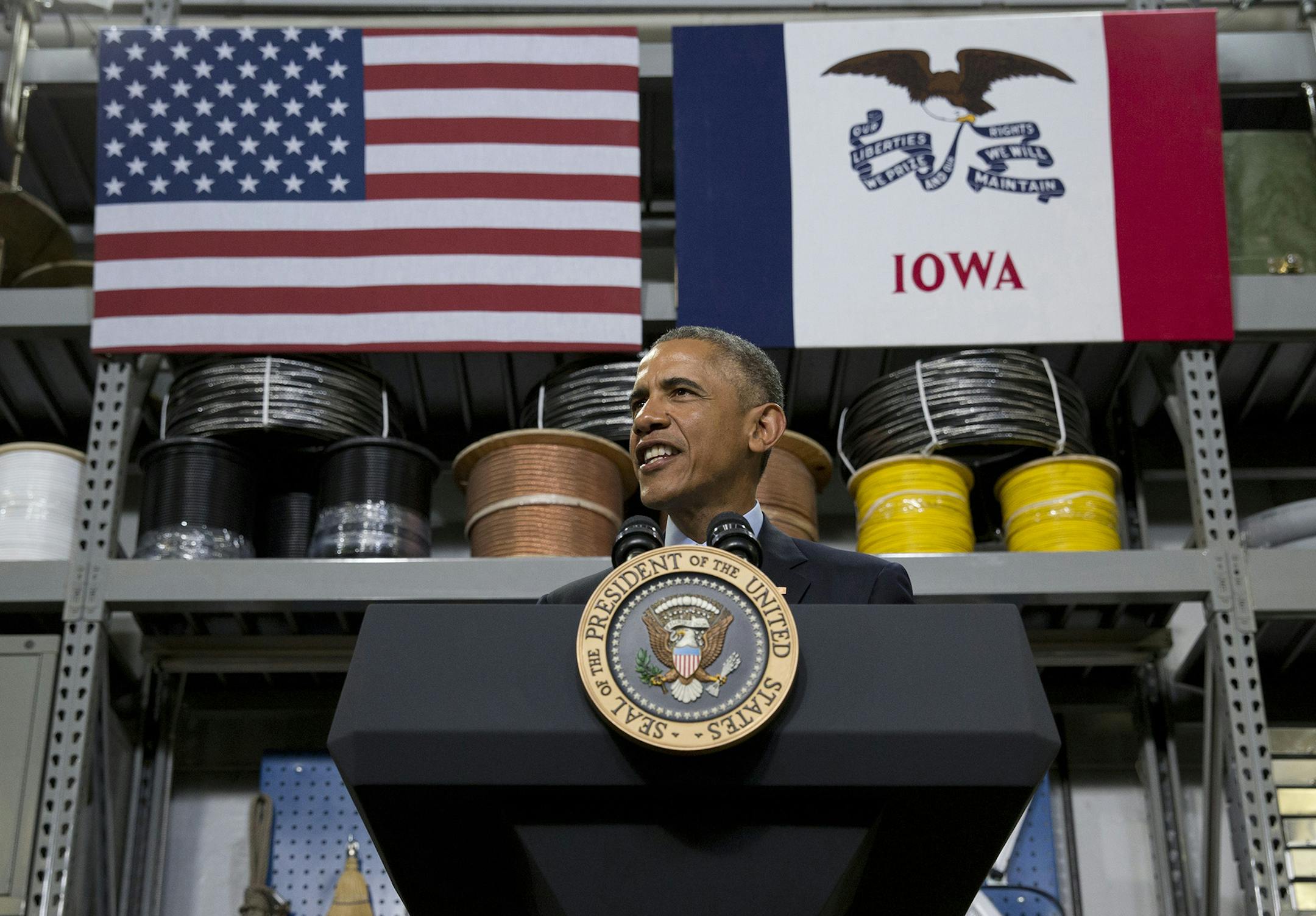
Earlier this month President Obama visited Cedar Falls, Iowa, to encourage more American communities to build government-owned broadband networks. He issued this challenge for cities and towns to build their own municipal networks because, he said, the United States has fallen behind much of the world in providing super-high-speed broadband. The president then instructed what was previously thought to be an independent commission, the Federal Communications Commission (FCC), to overturn existing state laws in 19 states that exist to protect citizens against ill-advised municipal broadband projects.
One that they are seeking to overturn is in effect in Minnesota, where state law requires a local ballot initiative before a municipal broadband project can advance, providing transparency and some level of protection to taxpayers.
Expanding broadband access is a laudable goal and an important public-policy objective. High-speed broadband expands educational opportunities, allows businesses to innovate and communicate, and can help promote economic development. Unfortunately, while the ostensible purpose of funding municipal broadband may have been to expand access, too often funds are being used instead to expand government and to "compete" with the private sector.
Virtually every time a local government in Minnesota has attempted to build its own public broadband network to compete with the public sector, the results have been an unmitigated disaster. Yet our state government leaders and Obama continue to press local elected officials to pursue the impossible dream of developing and maintaining a transparent, affordable, state-of-the-art broadband network that's a good deal for taxpayers and consumers.
The Dayton administration's Broadband Task Force is urging the Legislature to set aside an additional $200 million in tax dollars to fund additional municipal broadband networks. According to Katie Clark Sieben, commissioner at the Minnesota Department of Employment and Economic Development (DEED), the need for additional state investment in broadband is great. She said in a November Star Tribune interview that "it would cost $900 million to $2 billion to meet that need."
The "need" referenced is DEED's report that 22 percent of Minnesotans lack access to broadband. This is likely accurate — if you don't count wireless broadband, the kind of service many of us use every day on our smartphones.
The reality is that the overwhelming majority of Minnesotans have access to broadband today, with 98 percent of all homes and businesses with service levels at or above the FCC's definition of broadband. The telecommunications industry has invested more than $5 billion in Minnesota since 2006, and more than 50 percent of new industry investments are in sparsely populated areas. Yet the government money continues to flow into Minnesota, and our leaders request even more.
Six years ago, $7 billion in U.S. taxpayer money was devoted to funding broadband projects through the 2009 American Reinvestment and Recovery Act. In addition, the FCC annually funds more than $8 billion in congressionally mandated "Universal Service" mandates. And the U.S. Department of Agriculture guarantees hundreds of millions of dollars each year through its Rural Utilities Service loan program that funds projects like Lake County's fiber-optic network that is intended to serve the residents and businesses in that county as well as in rural St. Louis County.


