

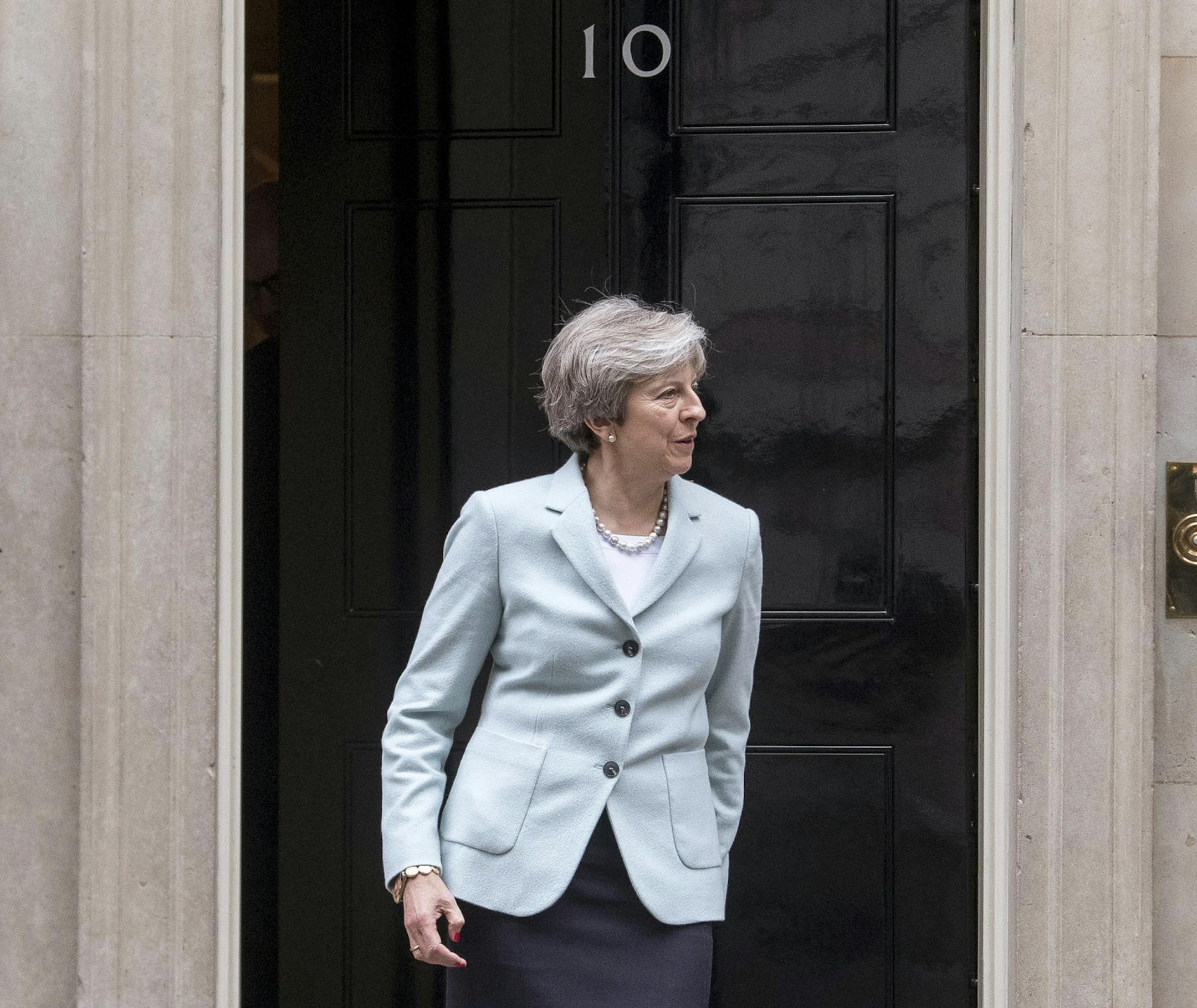
Life for British Prime Minister Theresa May keeps getting harder.
May spent Monday morning swerving questions about Brexit, tax evasion and sexual harassment in front of an audience of business titans. That was after the president of Confederation of British Industry said the talks on leaving the European Union resembled a "soap opera."
Unfortunately for business, looking for more detail on Brexit, May's words were a reiteration of her existing position and vague reassurances to a skeptical audience that she understood that "a strictly time-limited implementation period will be crucial to our future success."
From the podium, CBI President Paul Drechsler warned her that "the clock is ticking" — a refrain E.U. negotiator Michel Barnier is fond of saying too — with many companies on the point of implementing the plans they'll need if her negotiations fail to secure a trade deal.
Meanwhile the pressure to get ahead of the sexual harassment scandal that is rocking Westminster continued.
Last week saw the prime minister lose her defense secretary, and announce that her most senior official will investigate her deputy, Damian Green, over claims he behaved inappropriately toward a female writer. At least six other Conservative lawmakers are under investigation either by civil servants, the party or the police. Allegations have also been made against Labour Party lawmakers and officials.
Green denied in the strongest terms a Sunday Times newspaper report that police found pornography on one of his parliamentary computers in 2008. He called the claims by a former top police official "completely untrue" and "political smears."
May's authority has been eroded since she unexpectedly lost her parliamentary majority in June's snap election. Her weakened state regularly raises the question of how long she can last before she's ousted — or if she limps on as the Tories keep fighting over Europe.


