

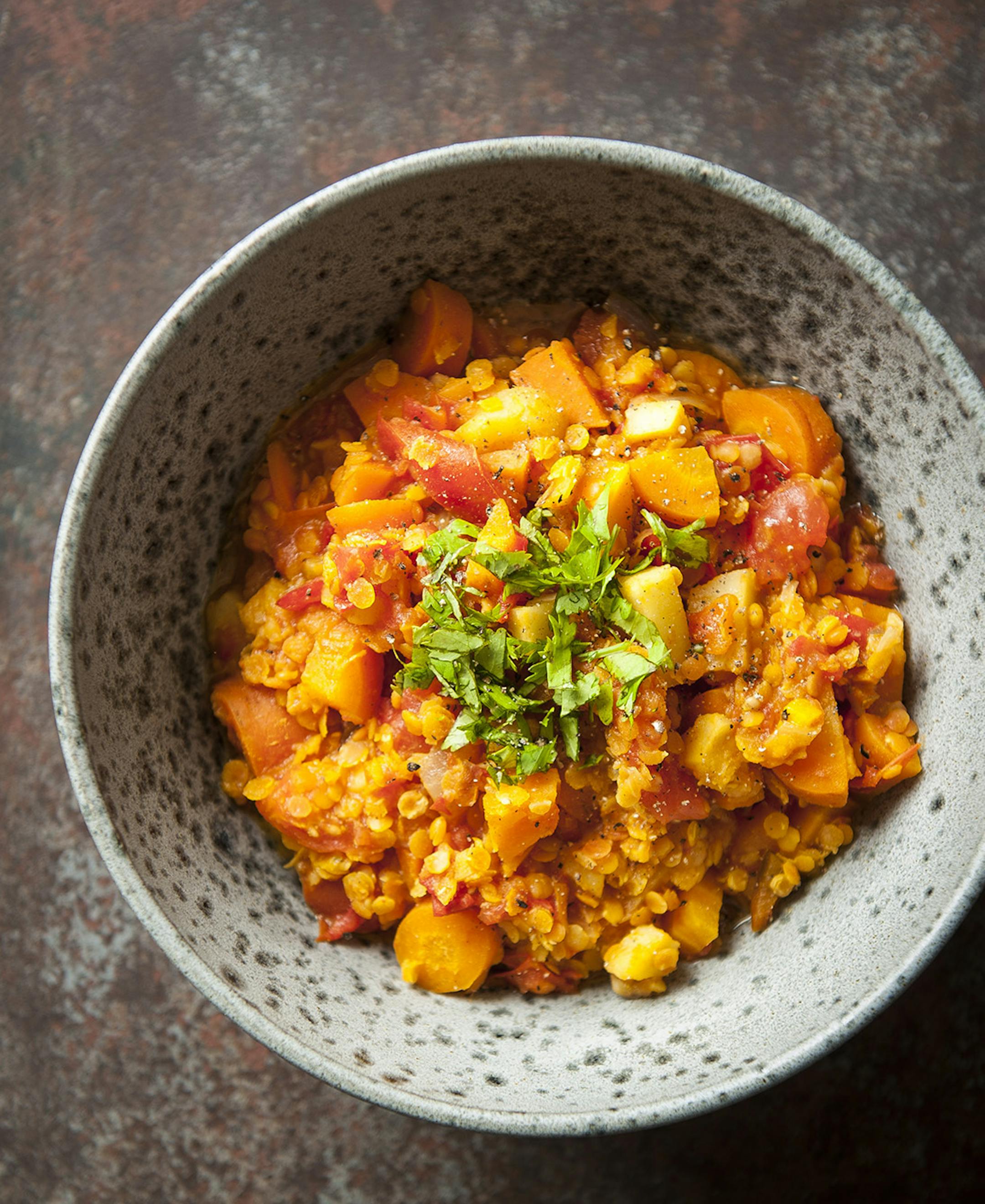
Pumpkin and winter squash are my go-to comfort foods as the kitchen windows glaze over with frost. Earthy, sweet and immensely satisfying, their velvety textures and golden hues add heft and flavor to soups and stews.
To balance their sugary notes, I like bold seasonings — orange zest, chile, cinnamon and clove; fresh ginger; or rosemary, sage or thyme. Strong-aged cheeses such as Parmesan or Cheddar work nicely, as well. Pumpkin also makes an especially good Indian dal.
Dal refers to a dish of lentils, peas and beans, as well as the dried legumes themselves. In Indian homes, dal is as common as mashed potatoes are here, and often served over rice for a simple meal. Sparked with warm spices, dal is traditionally finished with "tarka" — seasoned ghee (clarified butter) — stirred in right before serving so the dish comes to the table exploding with fragrance and flavor.
Pumpkins make great decorations, but not all varieties make good eating. My two favorite cooking pumpkins are the plump, round Baby Bear, weighing in at about 2 pounds, and the pretty Cinderella, with a flattened shape and striking bright orange color, true to its fairy-tale name. These are smaller than jack-o'-lanterns, exceptionally sweet, and both have a distinct pumpkin flavor. They can sit pretty on your kitchen counter or dining room table for several days until you're ready to cook.
At the farmers market, look for pumpkins that are heavy for their size and have a firm skin that is free of bruises. Check for brown frostbite scars that can affect the texture and longevity, and punctures or cuts that attract bacteria that will cause mold. The stems should be intact, firm and dry, and the pumpkins should sound hollow when tapped. Once a pumpkin has been cut, the storage time is greatly reduced. Keep cut pumpkin in the refrigerator. Rather than covering it with plastic wrap that traps moisture, leave it unwrapped, then trim off and discard the browned edges before using.
The old nickname for pumpkin — "ironbarks" — aptly describes how difficult pumpkins can be to cut open and peel. But it's worth the effort because the harder pumpkins tend to have a sweeter, firmer flesh.
To prepare the pumpkin, cut it in half, scoop out the seeds and fibers with a spoon, then place the cut side down on a cutting board and peel it by cutting downward with a sharp knife.
Then, cut the pumpkin into large chunks and finally into smaller pieces to cook. Now the pumpkin is ready to toss into soups and stews, and to roast in the oven. There's more to pumpkin than pie.


