There still may be a few chunks of ice on the lake, but this year's maple yield has already been simmered into syrup. Finally, our first taste of spring.
Because sap is collected over several weeks from several different areas, no batch of syrup is the same. Each one tastes of our fierce winter, crusty spring snow, the brightening light, damp forest — and of our weather, water, soil and the legacies of those who "sugared" before us.
The Ojibwe refer to the maple tree as aninaatig, and the traditional methods of tapping trees rely on paying close attention to and understanding the land. Many Native communities celebrate the Iskigamizge Giizis (Maple Sugar Moon), usually the first full moon of April or May, when the eagles return. It is then that the sap begins to flow.
While all maple trees produce sap, the most fruitful is the sugar maple. These magnificent trees can grow as tall as 80 feet with wide, majestic canopies or crowns.
The process of simmering sap into syrup and then down into sugar hasn't changed much over time. The sugar is simply what remains after all the liquid from the syrup has been evaporated. Maple syrup and sugar have complex flavors of wood and smoke and, unlike processed sugar or corn syrup, they are full of antioxidants, vitamins and minerals. They also have lower scores on the glycemic index and are easier to digest.
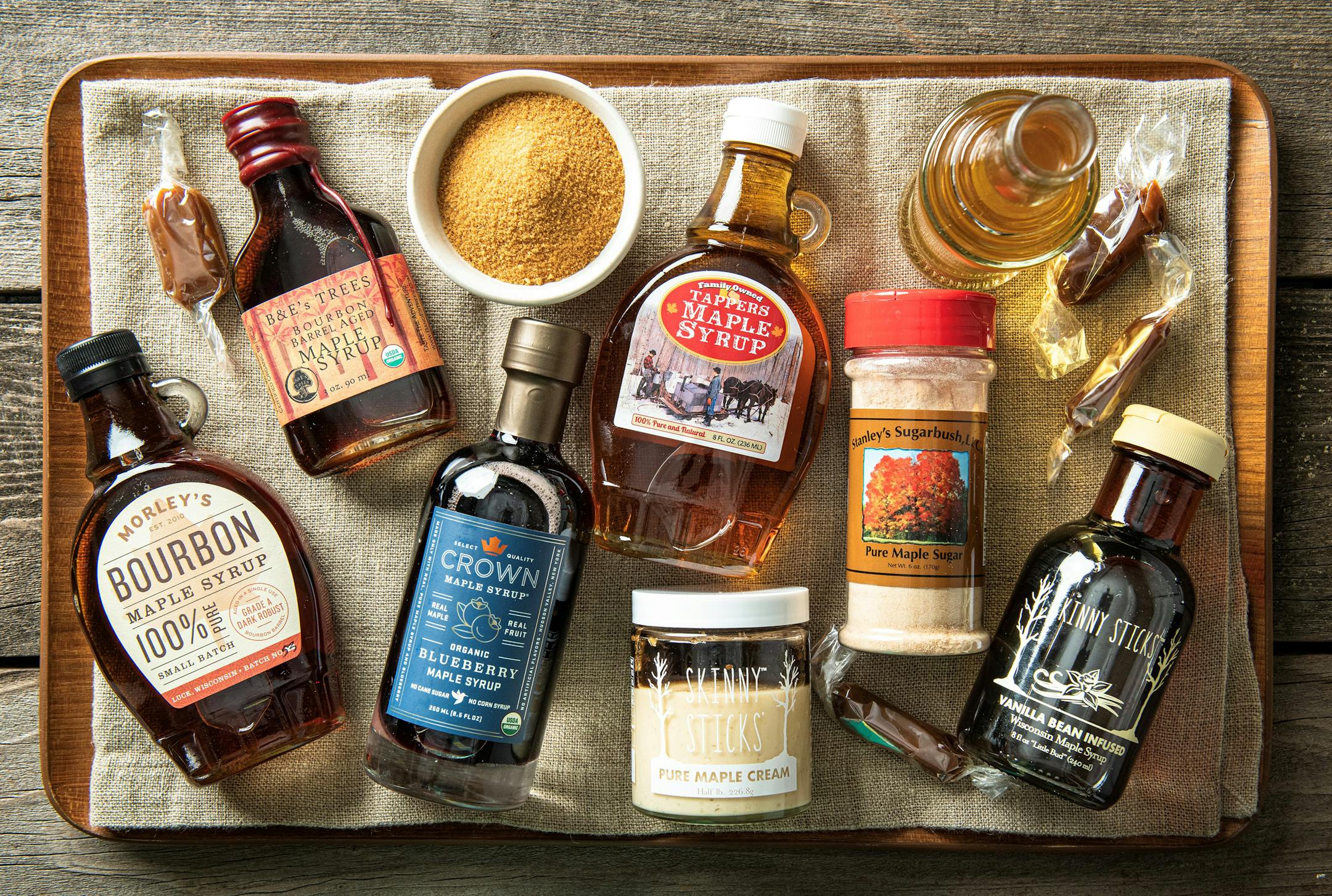
The U.S. Department of Agriculture and its Canadian counterpart grade maple syrup to simplify and define the differences in body and flavor, but all commercial syrups are considered grade A. Just note that the color of the syrup defines its character. The lightest, most golden syrup is the most delicate; the darker the syrup, the bolder the maple taste. A very dark syrup will be the thickest and most robust, and makes a delicious alternative to molasses.
When cooking with maple syrup and sugar, there are guidelines to keep in mind.
Maple syrup: To replace processed sugar with maple syrup, substitute 2/3 cup of maple syrup for every 1 cup of sugar. You'll also want to reduce the quantity of liquids in the recipe by about 1/4 cup and, if baking with maple syrup, lower the temperature by 25 degrees. However, you can substitute maple syrup on a one-to-one basis for molasses, agave and dark corn syrup.