

Torrential rain this week has triggered deadly flash flooding and landslides inthe Brazilian state of Rio de Janeiro, leaving a death toll of at least 348 asof Thursday.Media reports say that it was the greatest loss of life for a natural disasterin Brazil since 1967, when another flood tragedy took at least 400 lives atCaraguatatuba, east of Sao Paulo.
With at least 50 people reportedly still missing, officials have feared thatthe death toll will rise further.
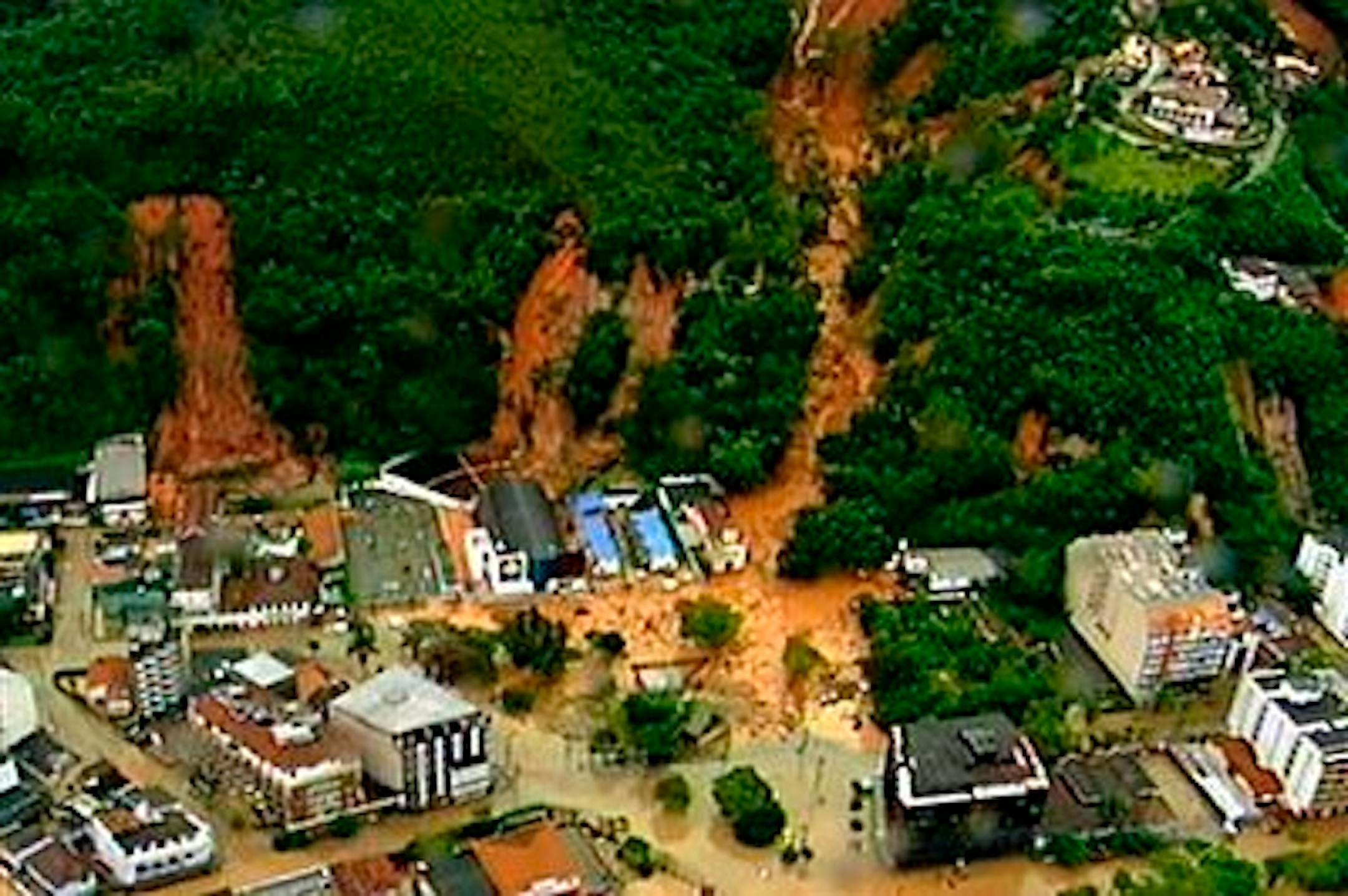
Aftermath of flooding,landslides in Teresopolis, Brazil on Jan. 12, 2011 (AP Photo/TVGlobo)The two hardest-hit cities were Teresopolis and Novo Friburgo, located in thehighlands north and northeast of the city of Rio de Janeiro.
Cloudbursts pelting already-saturated ground triggered walls of water thatreportedly burst through homes as people slept. Whole families died andhundreds of homes were either swept away or buried beneath earth and rock.
Weather observations from the area show rainfall of 3 to 6 inches, or 75 to 150mm, beginning Tuesday. But Metsul, an online weather blog, indicated thatrainfall may have reached 12 inches, or 300 mm, within a few hours at bothTeresopolis and Novo Friburgo, during the disastrous height of the event.
The siting of homes and business along the feet of steep, unstable slopes,along streams and at the bottoms of deep gullies, was cited as a contributor tothe high loss of life, according to Metsul.
January marks the height of the rainy season in this part of Brazil, normalmonthly rainfall being about 12 inches, or 300 mm.
AccuWeather.com meteorologists believe that the area will have daily showersand thunderstorms, including scattered flooding downpours, for at least thenext five to seven days. The risk of further flash flooding and landslides willpersist.

