

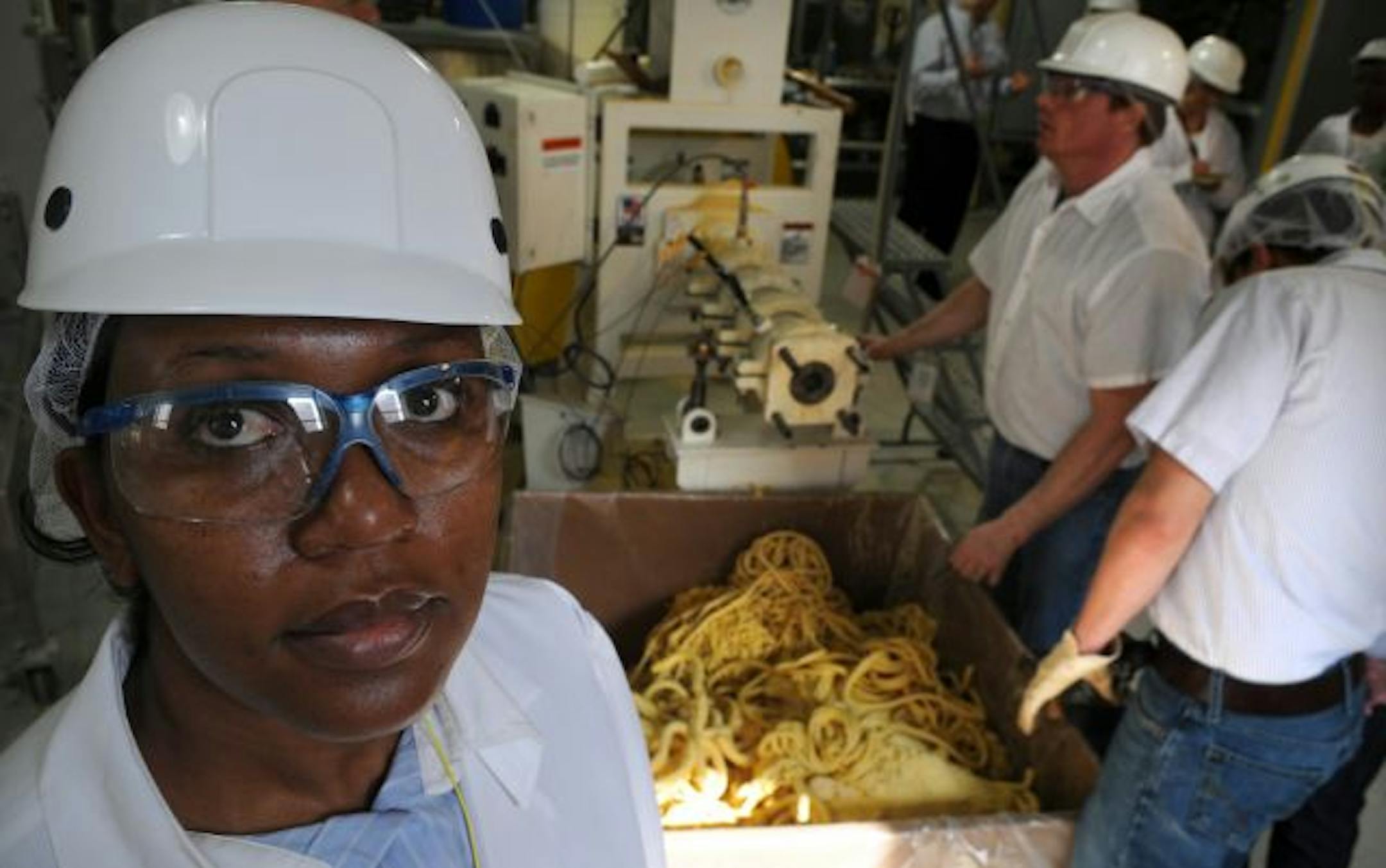
Wearing a white lab coat and clutching a wrench, Neema Mrema watched closely as scientists in a General Mills laboratory concocted a nutritional grain paste that she could replicate in her homeland of Tanzania.
Mrema learned how to create the paste, as well as how to repair the enormous machine grinding it during a recent six-week, high-tech training program donated by General Mills and staff volunteers.
Her training blitz in Minnesota represents a new type of philanthropy taking off across the nation. Instead of doling out cash, it involves donating brainpower and technical expertise through arrangements sometimes known as "tech philanthropy."
"Whenever [trainers] were talking, I'd think, 'How would this work in Tanzania?' I want to get home and get working," said Mrema, a food scientist from Dar es Salaam.
Donating technological know-how is a logical evolution for both philanthropy and corporate volunteerism, philanthropic leaders say. Instead of simply donating food to Tanzania, for example, having volunteers train someone like Mrema ensures the donation keeps on giving.
"We used to say there were cash contributions and in-kind contributions, plus employee volunteers," said Steve Paprocki, a veteran Twin Cities philanthropy researcher who teaches the subject at Hamline University. However, only about one in 15 companies contributed employee time.
"But there's been a huge shift in the past five years," Paprocki said. "The number of companies now giving out cash contributions [65 percent] is about equal to the number contributing employee volunteer programs."
Corporations are far more likely than Minnesota's philanthropic foundations to have in-house experts to offer technical training. Agricultural giants Land O' Lakes and Cargill are cases in point. Minnesota foundations such as the McKnight Foundation, which donates millions of dollars to crop research in Latin America and Africa, support training by paying experts in the host country to deliver it.


