

Therapists working with people at risk for suicide rely on the patient's words to determine how serious they might be. Researchers are hoping to change that.
With the help of a $3.8 million grant from the National Institute of Mental Health, they will analyze the differences in brain scans of suicidal and non-suicidal young adults to detect those most at risk and develop personalized therapies. The ultimate goal is to use brain imaging to predict who will attempt suicide, researchers said.
"We've shown retroactively we can tell who has made an attempt," said Marcel Just, a professor of psychology at Carnegie Mellon University in Pittsburgh, who is conducting the research with David Brent, endowed chair in suicide studies at the University of Pittsburgh. "But it would be enormously valuable if we can tell who's going to make an attempt. That could actually save lives."
Suicide rates have been rising, and it is the second leading cause of death among college students. By identifying levels of risk, "you may be able to give people at higher risk more intensive treatment," Brent said.
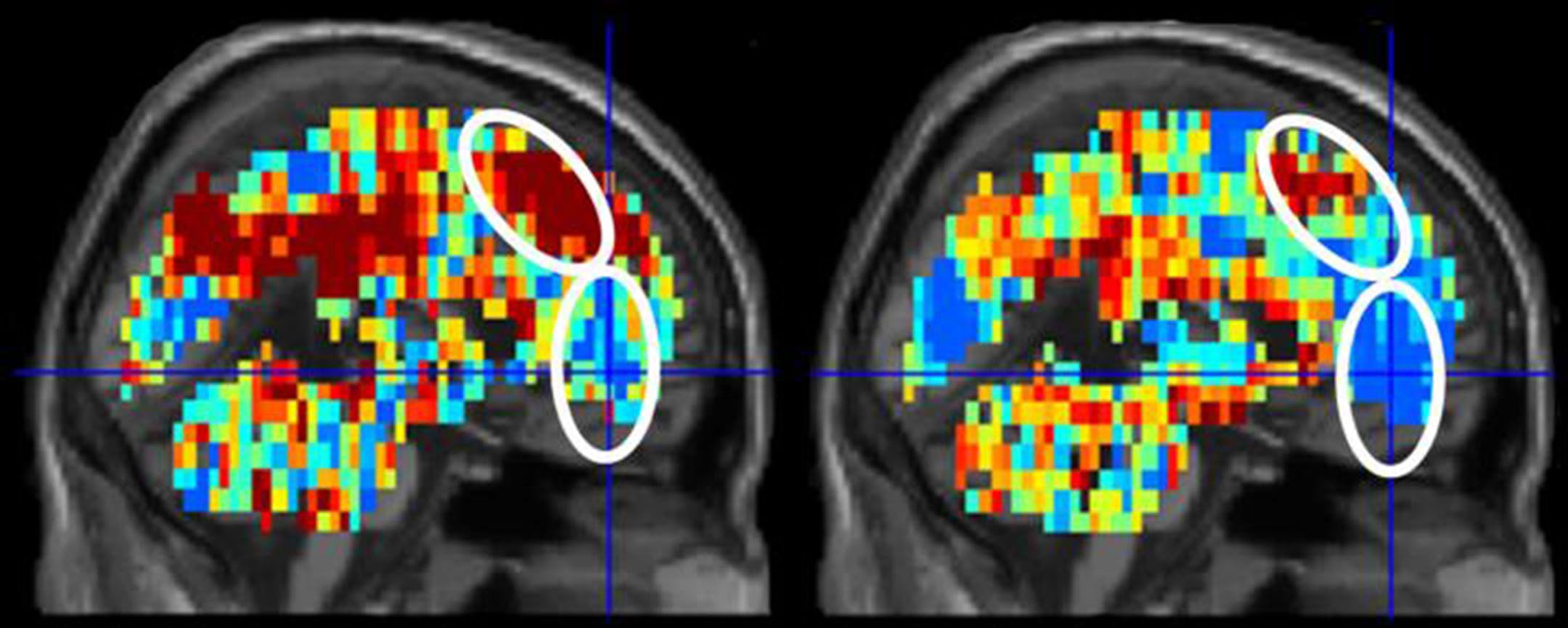
The government grant will be used to advance Just and Brent's previous research, published in Nature Human Behavior in 2017. In that study, two groups of young adults — one with suicidal tendencies and one without — were asked to think about a series of words while they underwent fMRI (functional MRI) scans.
The differences in the brain activity were distinct enough that a computer could determine with more than 90 percent accuracy whether a participant had suicidal tendencies or not based on the scans alone. It could also distinguish between a participant who had made a suicide attempt and one who had only thought about it. The findings suggest that a disorder changes the way concepts are represented in the brain, Just said.


