

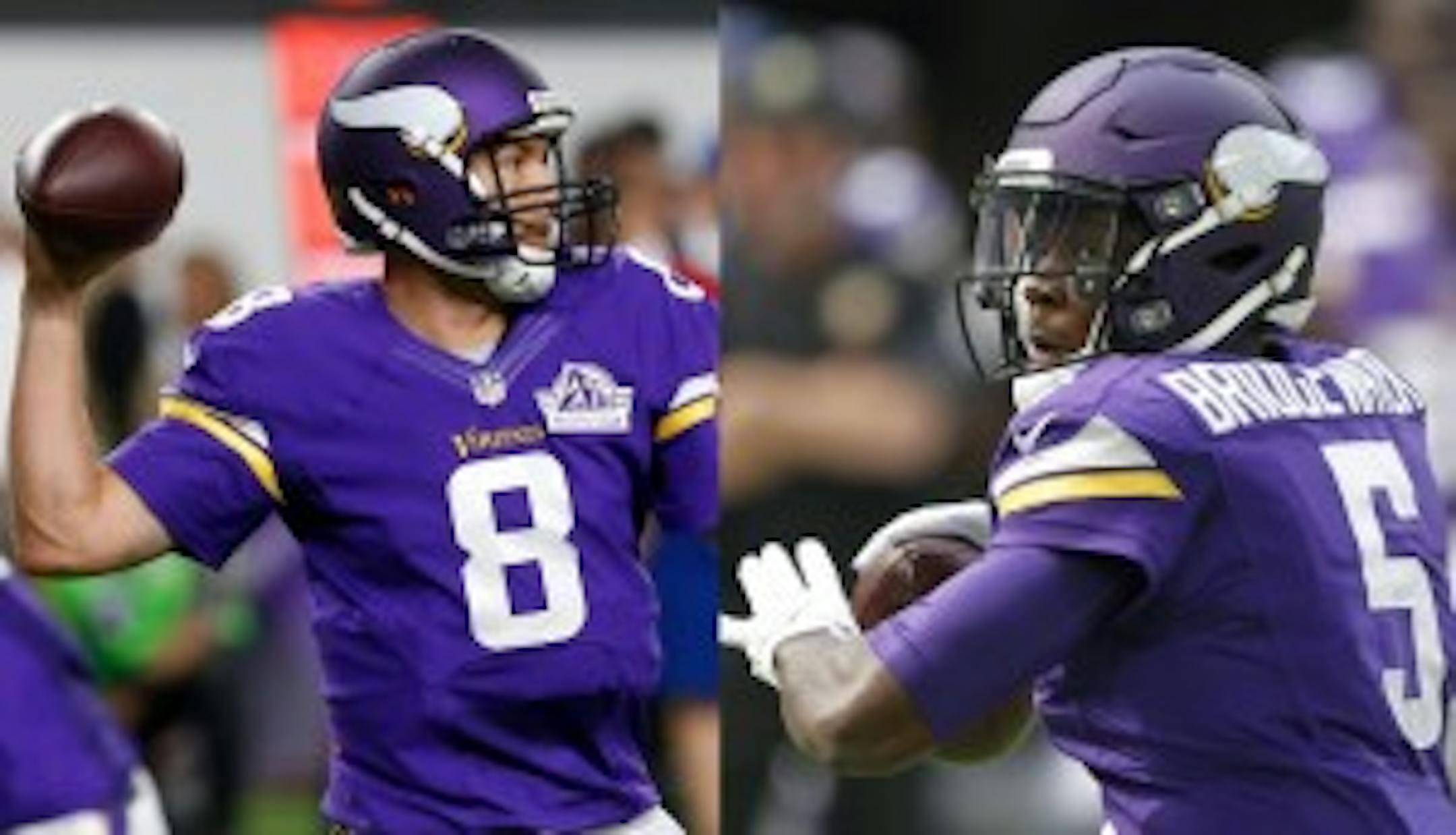
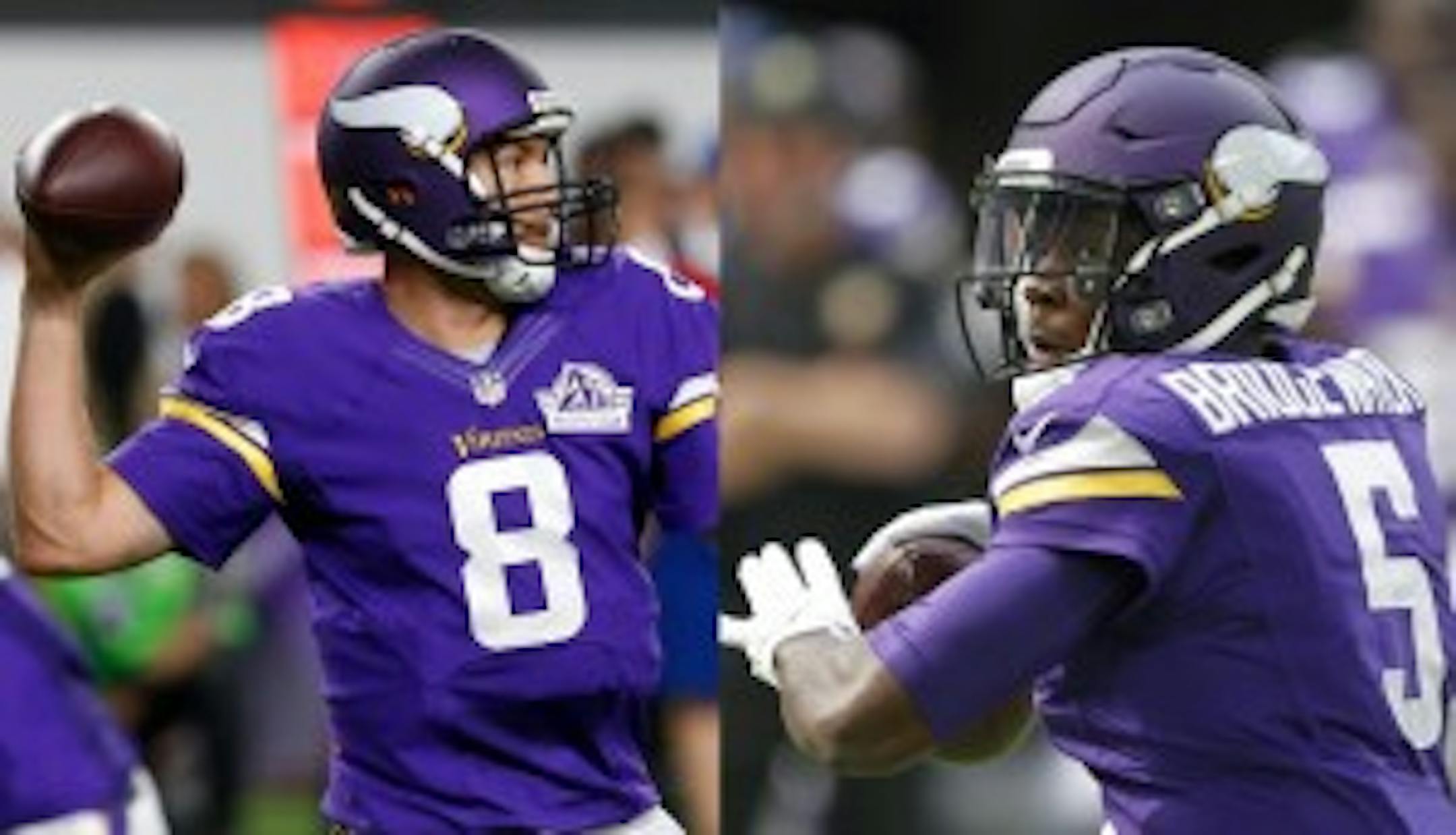
The comparisons between Sam Bradford and Teddy Bridgewater are as natural as they are unfortunate.
They're natural, of course, since one was supposed to be the starting QB for the Vikings this season and the other suddenly is. This sort of comparison happens all the time.
They're unfortunate since it's impossible to do a true side-by-side comparison. We can't simultaneously play out one version of the season with Bridgewater as the Vikings' QB and one with Bradford as the QB. They're also unfortunate because, well, they are different QBs — albeit with some similarities in how they achieve success/failure, but also plenty of differences.
So I hesitate to "go there," but let's face it: plenty of people are already there, even after one game at QB for Bradford. With that in mind, we asked Steve Palazzolo of Pro Football Focus about both quarterbacks when we had him on the line during Monday's Access Vikings podcast.
It felt like an opportunity to get an objective answer since A) Both QBs graded out quite similarly in 2015 — Bradford was No. 12 in the league with Philadelphia, Bridgewater was No. 13 with the Vikings –and B) PFF isn't generally prone to hyperbole or swayed too much by one-game bursts. You can listen to the entire podcast here (link is to the Star Tribune player, but there are also download options on iTunes and Google Play off that link). The Bradford/Teddy talk starts around 47:00.
But here are some main points from Palazzolo during our conversation about Bradford vs. Bridgewater — keeping in mind that in light of Adrian Peterson's updated injury news the QB position might be even more important that it was just a few days ago.
1) Going into this season, the two QBs were quite similar.
"Bridgewater's grade comes about because overall he does a really good job protecting the football. He doesn't make a ton of what I call big-time throws," Palazzolo said. "In our system we grade on 0.5 increments, and we can give .5, 1, 1.5. The best throws are the plus-1 or 1.5. Bridgewater doesn't have a ton of those but he also doesn't have a lot of those minus-1, minus-1.5 plays. Those are the balls that I call turnover-worthy plays. Because he does a pretty good job of moving the chains, getting the small positives but not turning the ball over and not getting the big negatives, he grades pretty well."


