

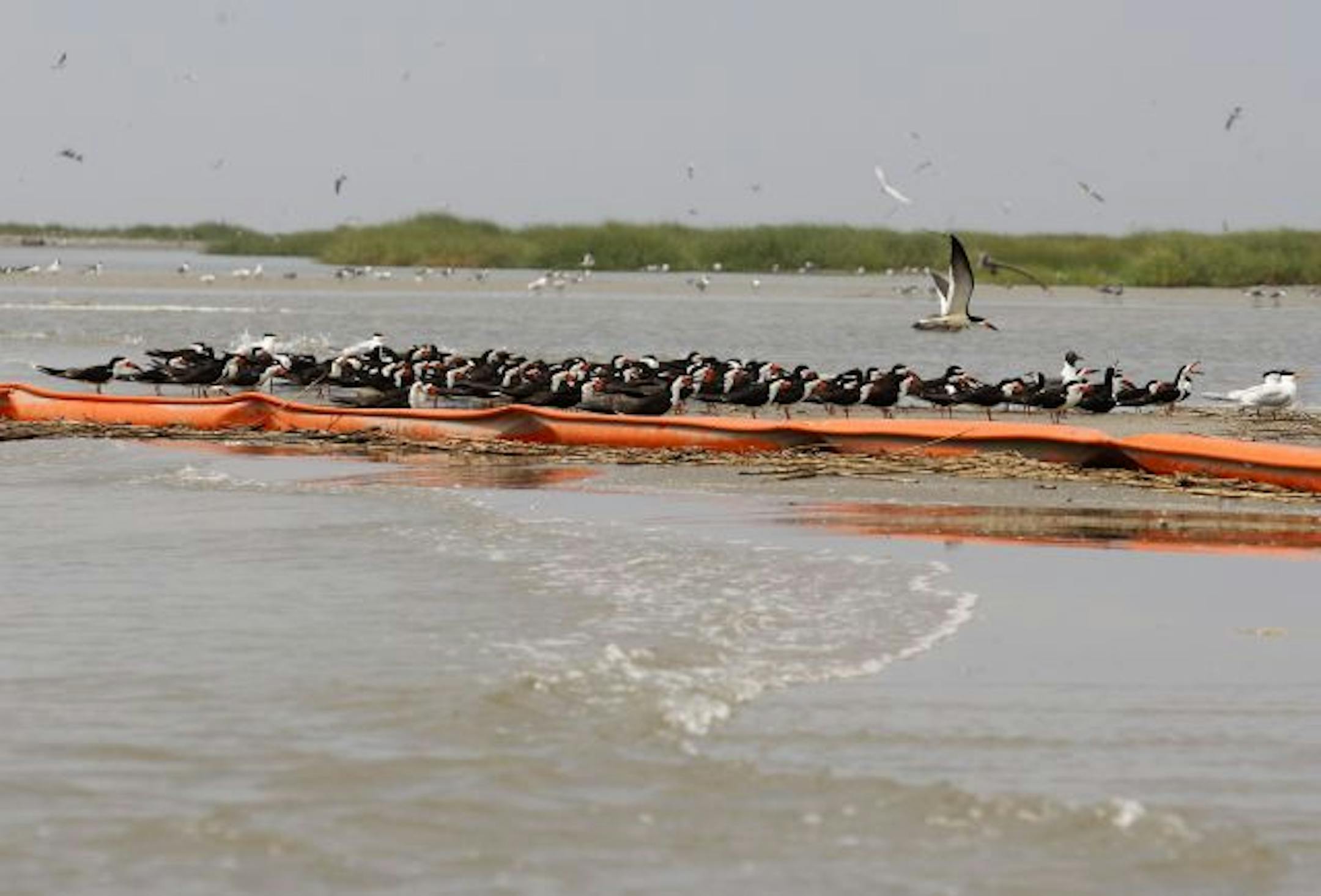
Tom Moorman is director of conservation planning for Ducks Unlimited Southern Region. In the interview below, he underscores the threat posed to ducks and other birds, as well as marine life and coastal wetlands, by the Gulf oil disaster. The region is recognized as one of the world's most fragile, and threatened, ecosystems.
Q What's the latest on the oil gushing into the Gulf?
A The spill is estimated at about 200,000 gallons a day, and has not been capped. As of this evening [Monday], the oil hasn't made landfall in coastal Louisiana, which is good news given the onshore winds we've had.
Q Is it possible to control the spread of the oil with the booms that are being laid on the ocean surface?
A They can block it under the right circumstances. But if the wind blows and the seas get rough, waves can overtop them. Also, they can wash ashore. If the weather is fair and seas are calm, I think they can protect the highest-priority areas, at least for a little while. But if this thing goes on for weeks or months, it's problematic.
Q How is Ducks Unlimited reacting to the threat the spill poses to the fragile coastal wetlands of Louisiana and Mississippi, and to the nearly countless bird and wildlife sanctuaries along the Gulf Coast?
A We've been concerned about the Gulf Coast, particularly its coastal wetlands, for a long time. This region has been in an ongoing ecological crisis, losing about 20,000 wetland acres a year. About 4.7 million ducks have wintered in the Mississippi River coastal marshes of southeastern Louisiana historically, a number that varies annually. The region is one of DU's top five international conservation priorities.
The spill has real potential to exacerbate that. If the oil comes onshore into the marsh and coats the vegetation, killing it, the soils become exposed and erode, and the rate of land loss accelerates. What's important are not only the coastal wetlands, but the marshy lands surrounding them, in which there are freshwater ponds used by waterfowl. This is very important wintering duck habitat.


