

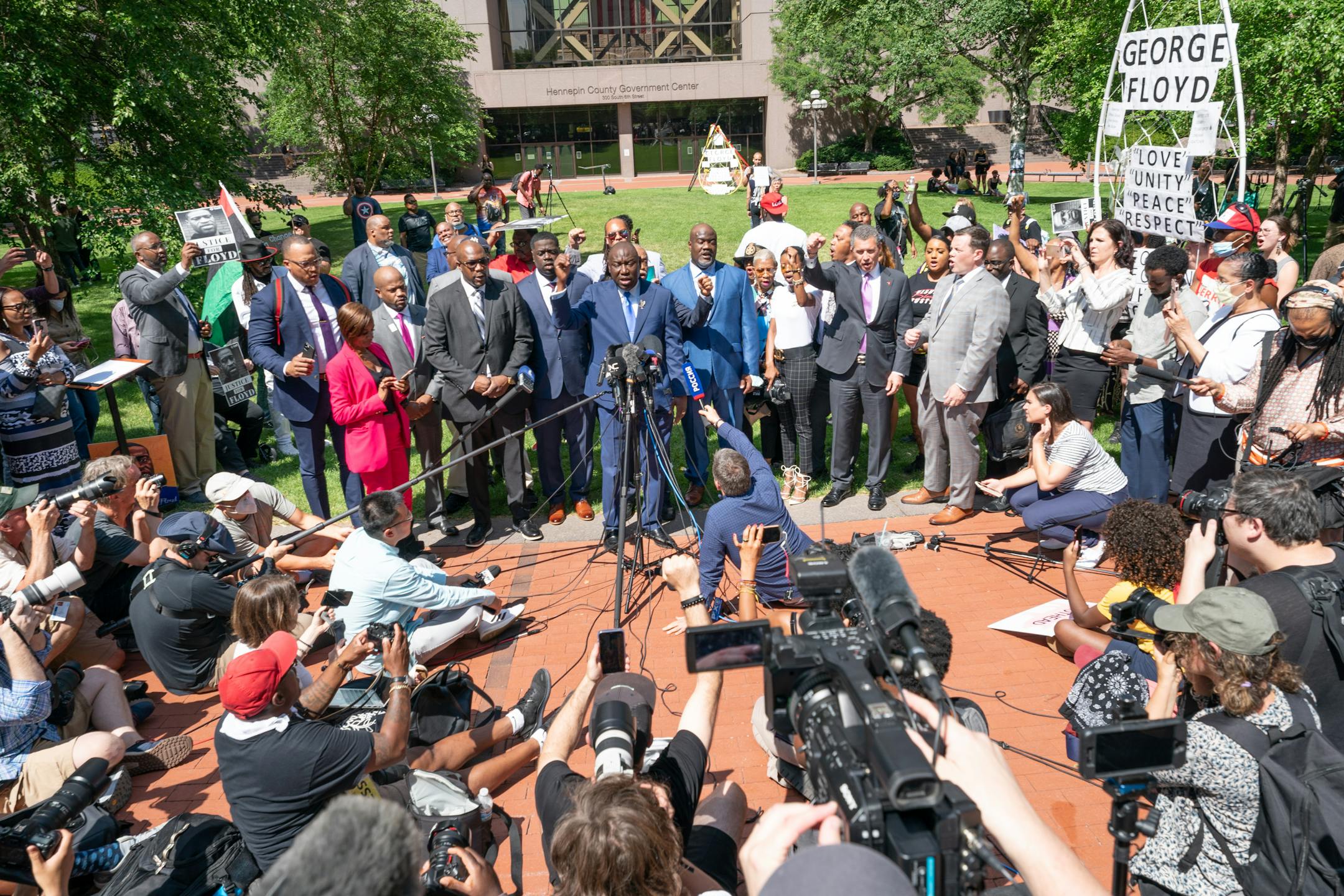
FROM AN EDITORIAL IN THE LOS ANGELES TIMES
Shame on Congress for blowing police reform. Shame on members for squandering the brief moment after the murder of George Floyd in May 2020 when nationwide attention was riveted and modest but important reforms were possible.
Shame on them for turning the debate on policing back over to the extremists: police unions that demand no change and the zealots who insist on eliminating police entirely.
It's not even clear what issues separated the key Republican, Sen. Tim Scott of South Carolina, from Democrats Sen. Cory Booker of New Jersey and Rep. Karen Bass of California over a package of reforms to protect Americans from police abuse. The public sticking point had been over whether to roll back qualified immunity, a legal principle that protects governmental agents from personal liability for their actions.
But it's hard to believe that was the real snag, especially after reports earlier in the summer that they would let that issue go for now and focus on the other reforms in the package. Nor is it easy to accept that they couldn't follow California's lead and raise the legal standard for acceptable use of force or even mandate collection of data from local police departments so there was a common and complete repository of information on police shootings.
The reach of a federal bill would be limited in any event, because it could not compel any local police agency to change its actions, except by offering or withholding federal funding. The true value of the George Floyd Justice in Policing Act, which passed the House last year and again this year, or its Senate counterpart, would have been its expression of congressional leadership, consensus and forward momentum on police reform.
And the biggest statement made by their failure is the lack of those very same things. A close match in power between parties in Congress was in theory meant to spur cooperation and compromise in order to get things done for the American people. In practice, though, it generally means that bills are passed and rejected as part of a chess game whose object is to burnish the credentials of the players rather than to achieve important changes in law.
That's especially true in the 50-50 Senate, where Democrats have only the most ephemeral edge because the Democratic vice president can break the tie, and because they achieved that tie only as a result of their surprise victories in the two Georgia runoffs on Jan. 5 (most likely helped by President Donald Trump's tantrum over losing re-election), and because Senate Republicans expect to be back in the majority in little more than a year.


