In 1991, botanist Rodrigo Bernal was driving into the Tochecito River Basin, a secluded mountain canyon in Colombia, when he was seized by a sense of foreboding.
Two palm experts were with him: his wife, botanist Gloria Galeano, and Andrew Henderson, visiting from the New York Botanical Garden. They were chasing the Quindío wax palm, the tallest of the world's palms.
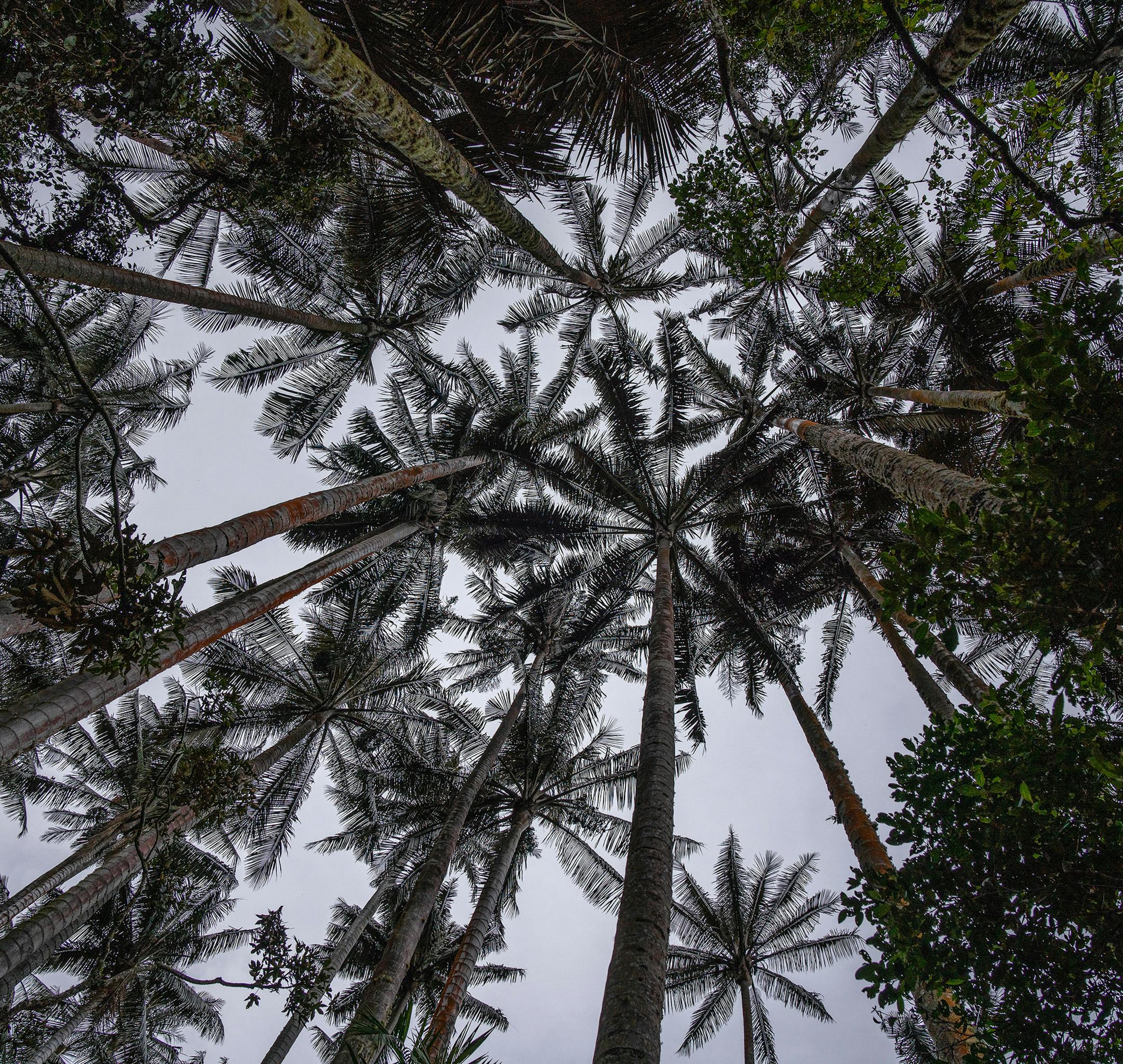
Wax palms have long intrigued explorers and botanists. Until the giant sequoias of California were discovered, wax palms were believed to be the tallest trees on Earth. A thick wax coats their trunks, something not seen in other palms, and they live where palms aren't supposed to: on the chilly slopes of the Andes, at elevations as high as 10,000 feet. This has made them notoriously hard to collect and study.
The Quindío wax palm was named Colombia's national tree in 1985, but the distinction came with little protection. Many were marooned in pastures and vegetable fields, remnants of forests past. Wax palms cannot reproduce outside a forest: Their seedlings die in full sun, or are eaten by cows and pigs.
In Colombia's largest known stand of the palms, only a couple of thousand remained. But the scientists had heard that there were hundreds of thousands in the Tochecito River Basin — making it the world's biggest wax palm forest, if the rumor proved true.
But the canyon was controlled by guerrillas with the Revolutionary Armed Forces of Colombia, or FARC. As a field scientist, Bernal often found himself in lawless corners of the country. But with Henderson in the car — a foreigner, an easy target for kidnapping — the solitude became terrifying. But they had ventured far enough to see and to photograph lush stands of the palms cascading down mountaintops.
Bernal decided that if he couldn't study Tochecito's palms, he would have to forget them. To the scientists' surprise, they were able to return in 2012, after the army had driven out the FARC. In the guerrillas' absence, they found, the last giant stands of wax palms faced new and dire threats. Now Bernal and his colleagues are trying to save the palms, and study them at the same time.
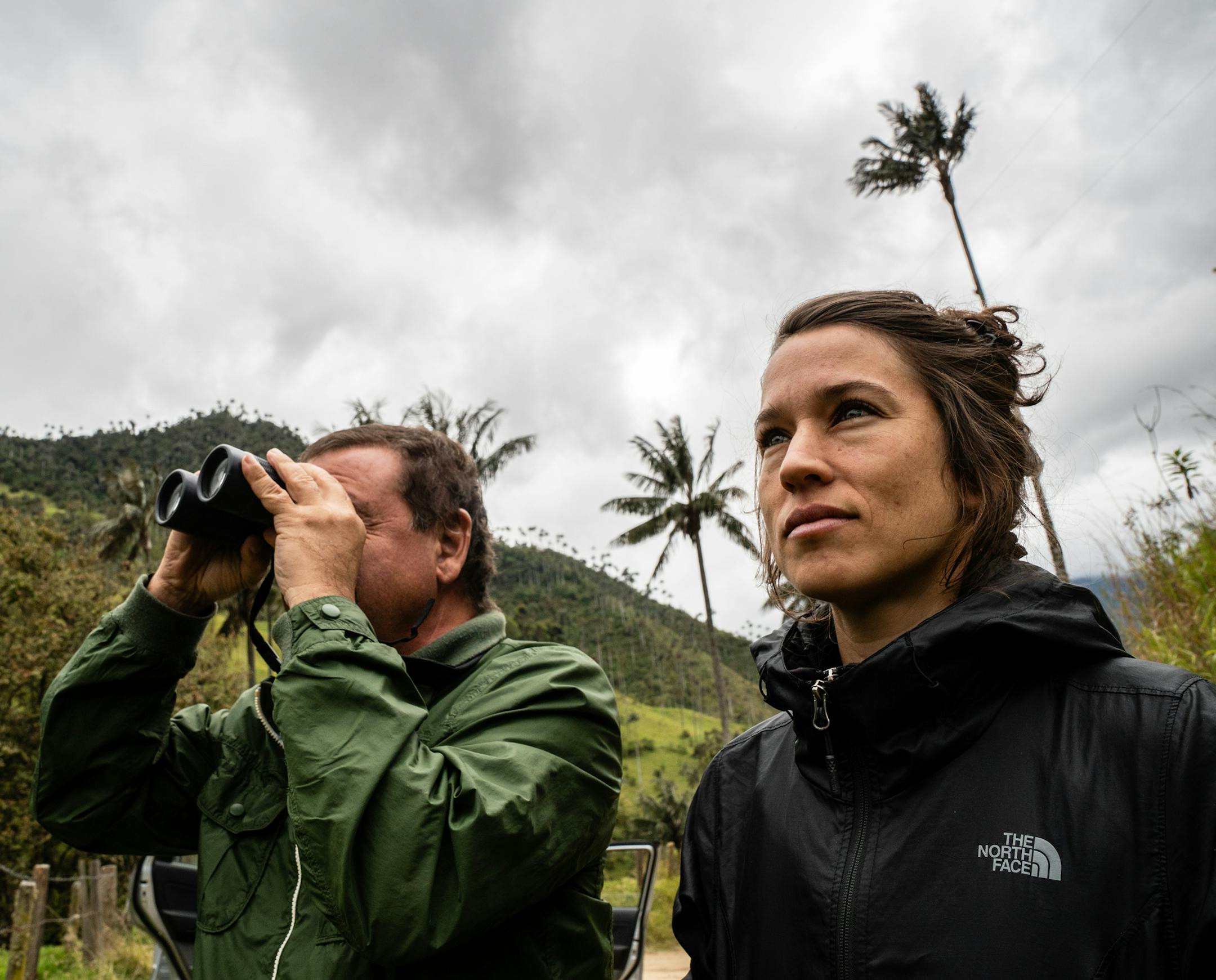
By the time Tochecito became safe to visit again, the scientists had a new collaborator: María José Sanín, now a botanist at CES University in Medellín. Most of what is known about wax palms comes from Bernal, Galeano and Sanín. Galeano died of cancer in 2016; since then, the research team, once a trio, has mainly been a duo.