Need ideas for new activities? Here are suggestions for things to do in the parks, in the woods and on the water, ranging from vigorous to indolent.
In the parks
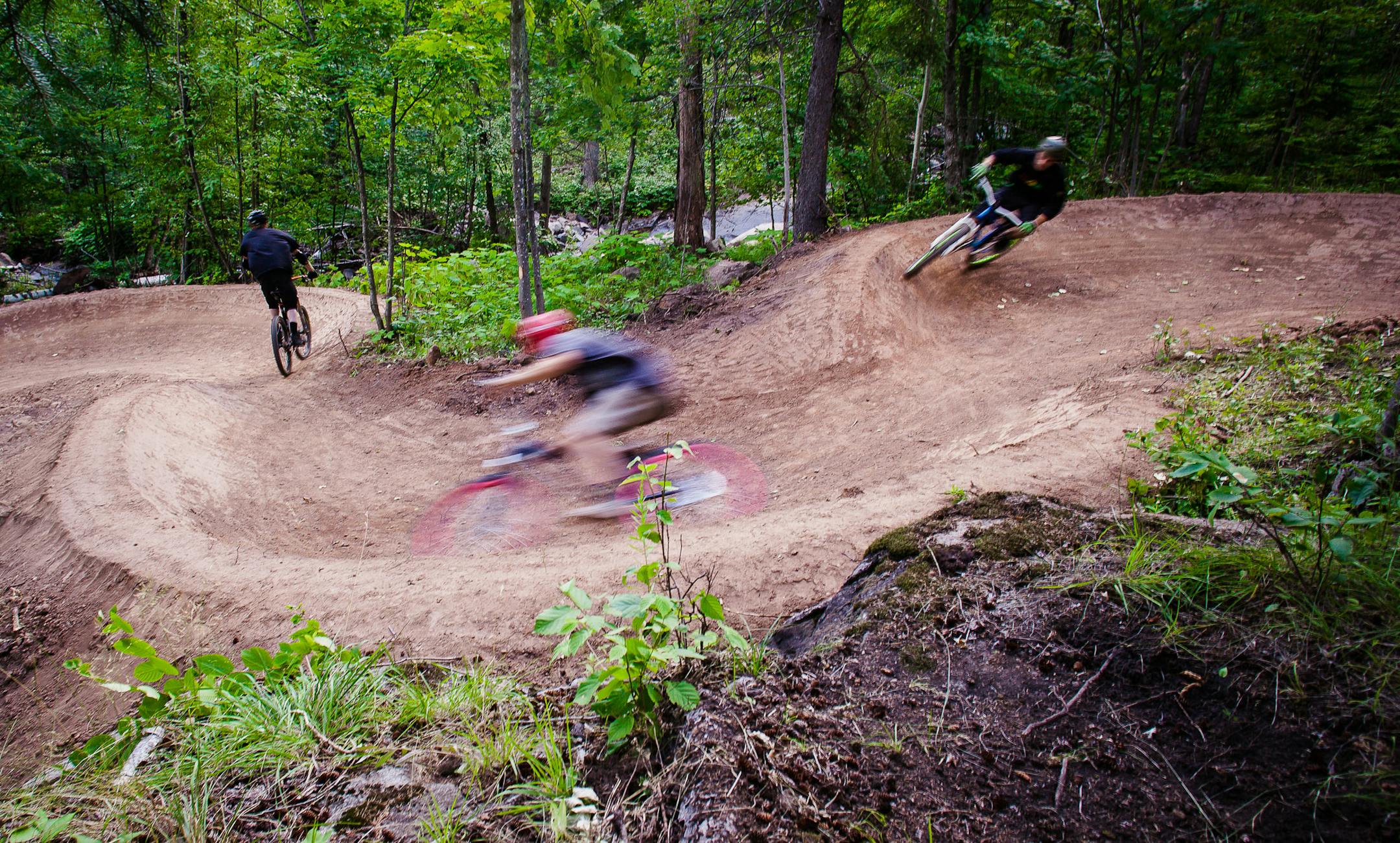
If the paved bike trails are too crowded, maybe it's time to give mountain biking a try. There are more than a dozen mountain bike trails in the Twin Cities metro area managed by the Minnesota Off-Road Cyclists organization (morcmtb.org).
That's more than 100 miles of "single-track," or dirt trails just wide enough for one bike at a time. The trails are set up to go in one direction, so unless you're passing or getting passed, you often won't encounter other cyclists except at the trailhead. A mountain bike or fat-tire bike works best, but trails are available for all levels of expertise. Some people are even using electric-assist bikes designed for off-road use.
If organized sports have to be canceled this summer, that means a lot of fields won't be occupied by soccer or softball games. Why not put them to use by flying a kite?
An ideal place to set a kite aloft is a wide open park field without many people or trees around. You can also try flying one from the shore over a lake, suggests Dave Herzig, board member of the Minnesota Kite Society. Watching a kite dancing in the wind is calming, Herzig says. "There seems to be something reassuring about it."
For beginners or someone who hasn't flown a kite since childhood, Herzig recommends getting a delta-style kite made of ripstop nylon, which can be found online or at a local kite store. And never attempt kite-flying near a power line or when there's a chance of lightning.
You just need a couple of stout trees and you could be gently rocking in the breeze, reading a book, taking a nap or watching the clouds drift by thanks to a new generation of lightweight, portable and compact nylon hammocks used by everyone from backpackers to urban hipsters.
These hammocks, sold by outdoor retailers like REI, can be set up in minutes with adjustable straps that can be attached to any pair of trees a suitable distance apart. They've been so popular that many park systems in the state have websites devoted to hammock etiquette and best practices for slinging your hammock so it won't damage the trees. Use straps at least an inch wide, and attach to tree trunks at least 12 inches in diameter, suggests the Minnesota Department of Natural Resources.
![Bob O'Hern, the self-proclaimed "general manager" of Hidden Beach, took in the scene while relaxing in a hammock Wednesday evening. ] AARON LAVINSKY • aaron.lavinsky@startribune.com They all add up to make the so-called Hidden Beach at Cedar Lake the top spot for problem calls to the Minneapolis Park Board police. The problems are so bad that the Kenwood-Isles neighborhood group kicked in $5,000 to cover police overtime hours. Safety at the East Cedar Beach is one of the neighborhood's top prior](https://arc.stimg.co/startribunemedia/SDT5KNNFG6SRU4ICD27PFV24HM.jpg?&w=1080)
![Ukrainian mushroom forager Olena Johnson has a knack for finding the edible boletes, especially the king bolete, or porcini which pops up in pine forests.] Second part in our occasional series about mushroom hunters and foragers, representing different ethnic communities in the metro area. RICHARD TSONG-TAATARII • richard.tsong-taatarii@startribune.com](https://arc.stimg.co/startribunemedia/FPX2JJJVL5YGSNMNQIQEHLZOIU.jpg?&w=1080)