

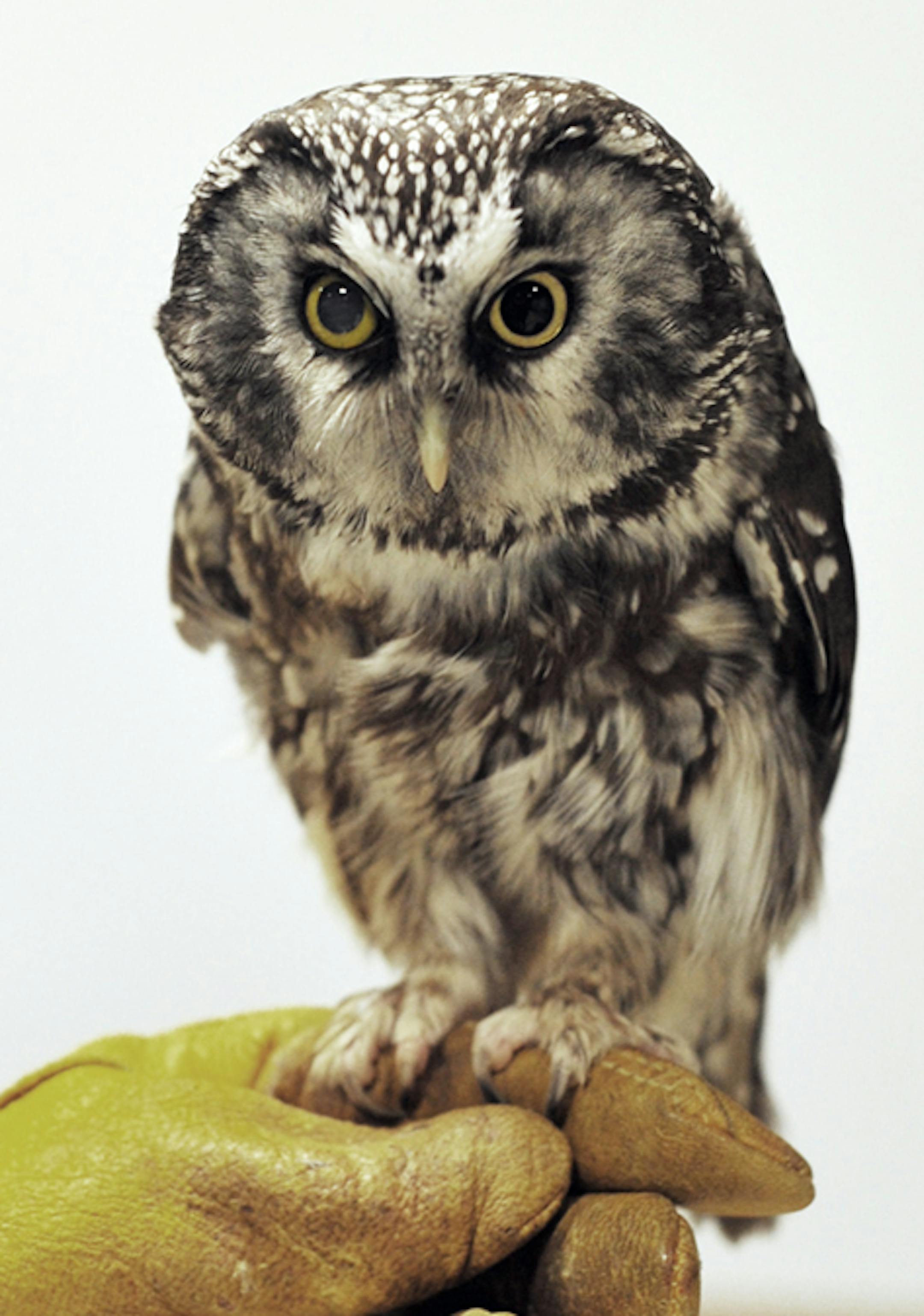
What do you feed boreal owls recovering from winter misadventures here?
That's the kind of question answered at the Raptor Center at the University of Minnesota campus in St. Paul after an influx of boreal owls moved south from their Canadian homes. This tiny polar owl has been seen in northern Minnesota in unusual numbers over the past three months.
Two are at the Raptor Center. One was delivered with an injured eye, the other undernourished.
So what do you feed them? Mice and day-old chicks — dead, frozen, thawed and chopped. In limited quantities, two mice and one chick per day.
The owls are getting the nourishment they need for recovery and eventual release. They aren't fed all they might eat, however, because they tend to get fat. No, really — owls can get fat.
They'll eat as much as they're given because in the wild, birds eat as much as they can whenever they can, given that the next meal is unpredictable.
The owls' main dish in the wild is a red-backed vole. At this point in my interview with Lori Arent, Raptor Center clinic manager, I asked what I considered to be a dumb but necessary question: Since the owls take much of their prey from beneath snow cover, and since they locate prey by sound, do red-backed voles somehow sound different from other small rodents?
No (just as I thought!). These voles sound like other voles or mice or shrews. And if the catch isn't the preferred species, the owl does not say sorry and move on. Caught is synonymous with eaten.


