

The death of an adult child is a stab in the heart, enrolling parents as members of a club no one should join. Closure is a necessary fiction, a wink at our mortality, a cheap self-defense mechanism. Death of an adult child -- still your "child" at any age -- overturns the natural order of things.
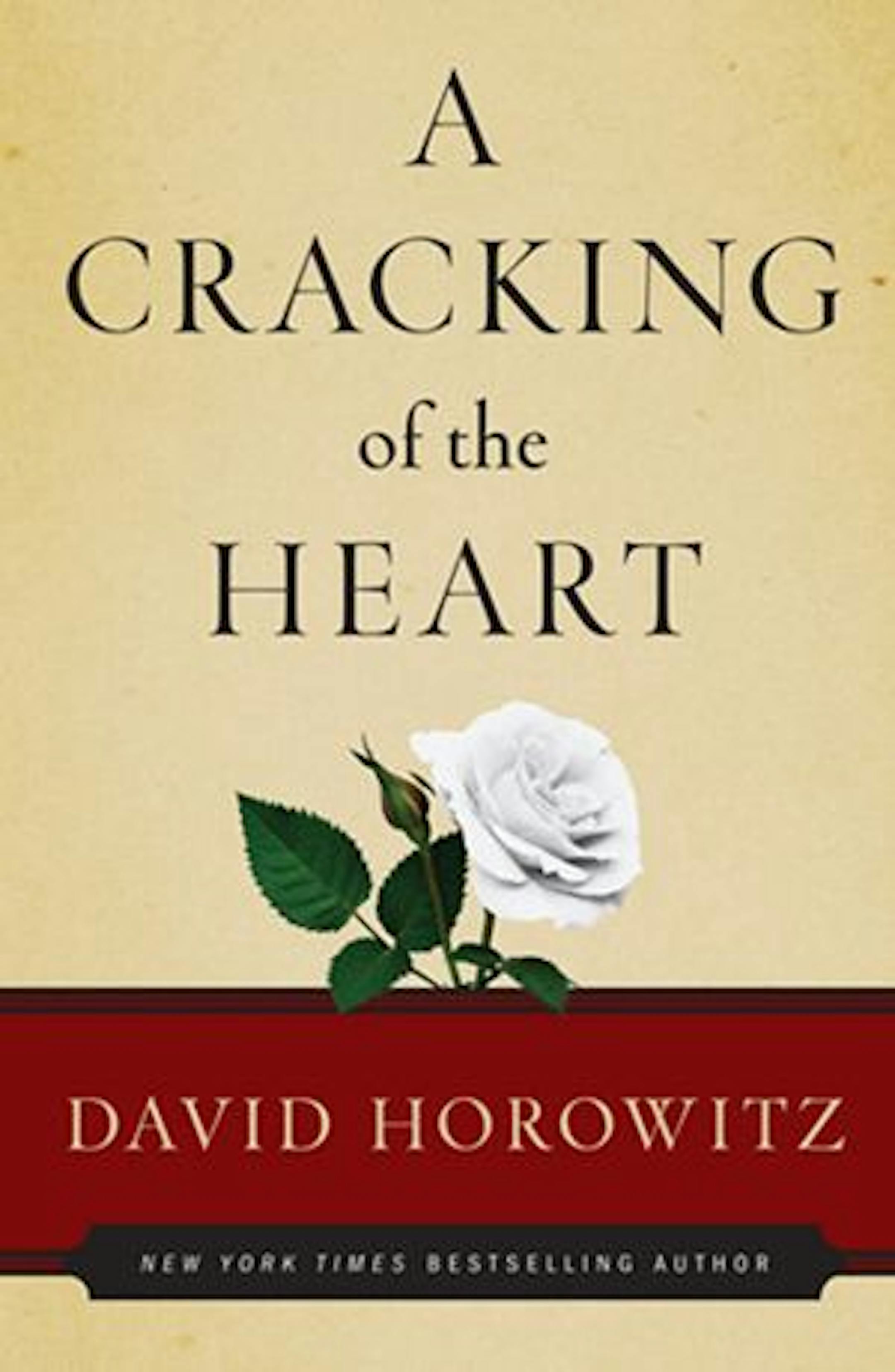
David Horowitz, author of mostly political tomes and a bestselling autobiography, "Radical Son," recalls the death of his courageous, spirited daughter Sarah, at age 44, in "A Cracking of the Heart" (Regnery Press, 256 pages, $25). It is a deeply told story of a father's love.
Sarah Rose Horowitz's was an affliction-plagued life, an internalized battle for life's meaning amid a sea of troubles. Her challenges stemmed from Turner syndrome, a rare genetic disorder depriving her of hearing and mobility, but not a sense of humor.
Sarah, who died of natural causes, was "taken from us without warning in her 44th year, leaving a wake of vacancy and heartbreak behind," Horowitz writes. She had renewed her family's faith, Judaism, coupling it with a belief in Buddhism's "Right Mindfulness." Her lifelong journey was inspired by the phrase "Justice, justice shall you pursue, that you will live," her father recalls, citing her favorite biblical line since childhood (Deuteronomy 16:18-20).
She was drawn to "a fusion of two spiritual worlds" by Rabbi Alan Lew of the Beth Shalom congregation in San Francisco, who also led a meditation group called Mayor Or ("Source of Light"). "Sessions with Rabbi Lew buoyed her spirits and began an introspective journey that would lead her out of the slough of frustration and anxiety that at times threatened to engulf her," Horowitz writes.
Still, self-understanding and acceptance eluded her, perhaps repudiated by "anger, anxiety and social anxiety." These universal feelings "were probably the same ones that distracted her the rest of her life." Horowitz describes, "through a hail of tears," his daughter's essential goodness, her attempts to make the world a better place. She traveled to El Salvador to build homes, to Uganda to teach and to the slums of India to help sexually abused Hindu girls, all through American Jewish World Services.
Her final journey to Iowa came just before her March 2008 death. She signed up for the Obama primary campaign. "She marched into a heartland winter ... to knock on doors and bring Americans she had never met to join in her campaign of 'Yes, We Can,'" he writes with approval -- even though he disagreed with her choice of candidate.
Paging through her manuscripts, Horowitz found talent in spades in an unfinished novel, in her poetry, in journals of self-discovery. Sparkling samples of her stylish writing dot every chapter of "Cracking," making it all the more a worthy read, a masterpiece of the grief genre.

