

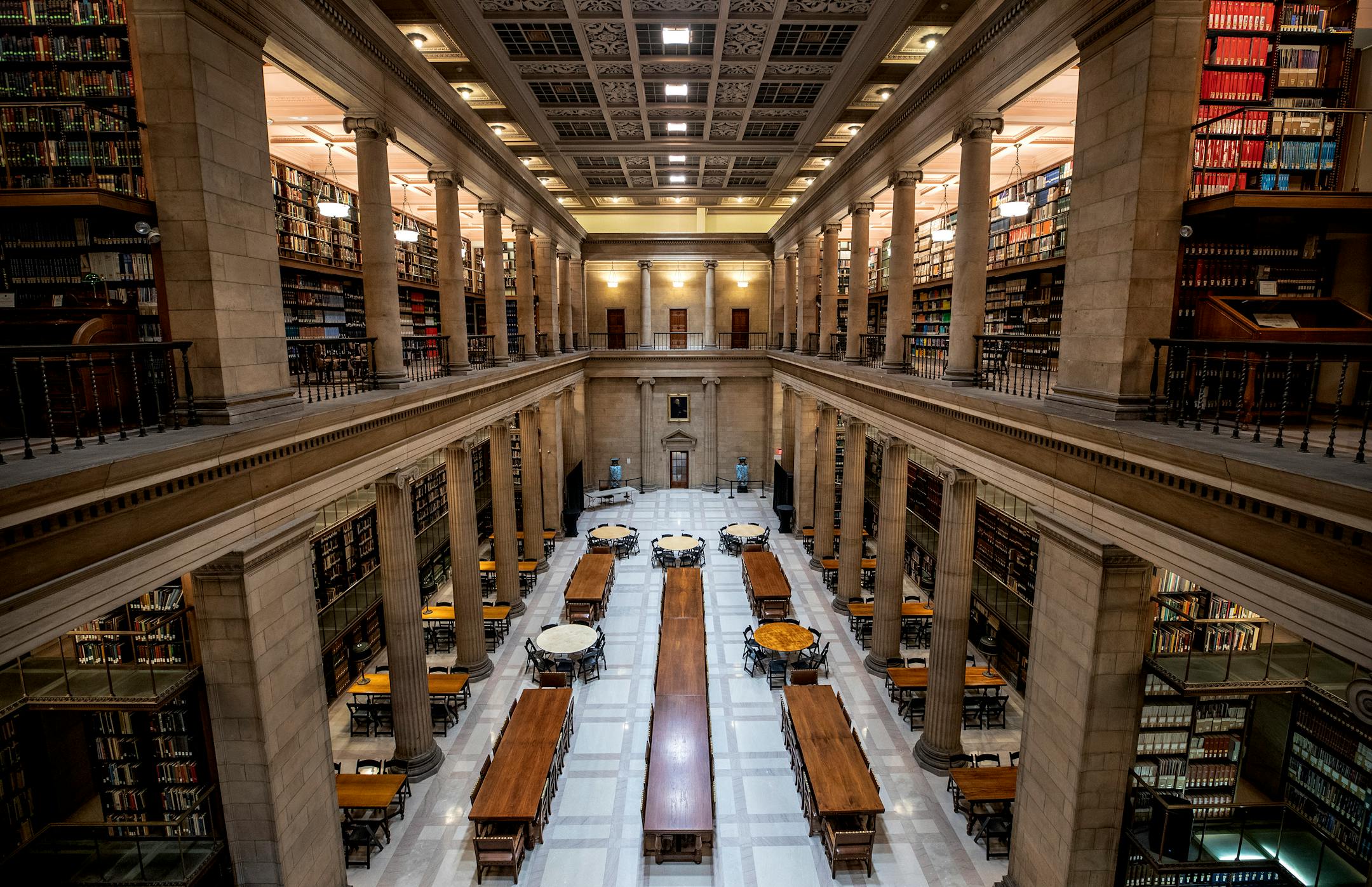
Celeste Ng gets it.
The "Little Fires Everywhere" author recently told the Star Tribune that as a child she spent long afternoons in the library and checked out armloads of books. As a college student, she shelved books to earn money. Her latest novel, "Our Missing Hearts," incorporates libraries, with librarians as the heroes.
I wonder if she's kept every library card or memorized the bar code so she could check out books if the card is forgotten? I have, on both counts, because I'm all about libraries, too.
It's not that I never buy books. When I was much younger, I would sneak off to the mall bookstore — a scholarly stuffed owl in the branches of a fake tree greeted customers — while my mom grocery-shopped. With my allowance tucked into my red patent leather wallet, I would look over the books, calculating what I could afford but most often leaving without buying anything. There were just too many to choose from and I only had so much to spend.
It was easier to make a decision when my mom shopped at the grocery store across the street. A nearby drugstore had a wire rack of books featuring girl detectives like Trixie Belden. There were fewer books and they were more likely to be in my price range, but it was still sweet agony to leave with just one.
The library, however, offered stacks and stacks.
I've never tired of running a finger along the spines, reading the titles, noting the jacket art and finally pulling a book from the shelf and flipping through its pages, knowing the only decision I have to make is figuring out how many I can physically carry out. All that's needed is a card (or a memorized bar code!) to take books home. Kind of miraculous, really.
Yes, it's true that if a book has just come out or is popular — for instance, Colleen Hoover's "Verity," published in 2018, has 276 Dakota County library patrons waiting for it — you will have to be patient while your name works its way to the top of a potentially long holds list.


