

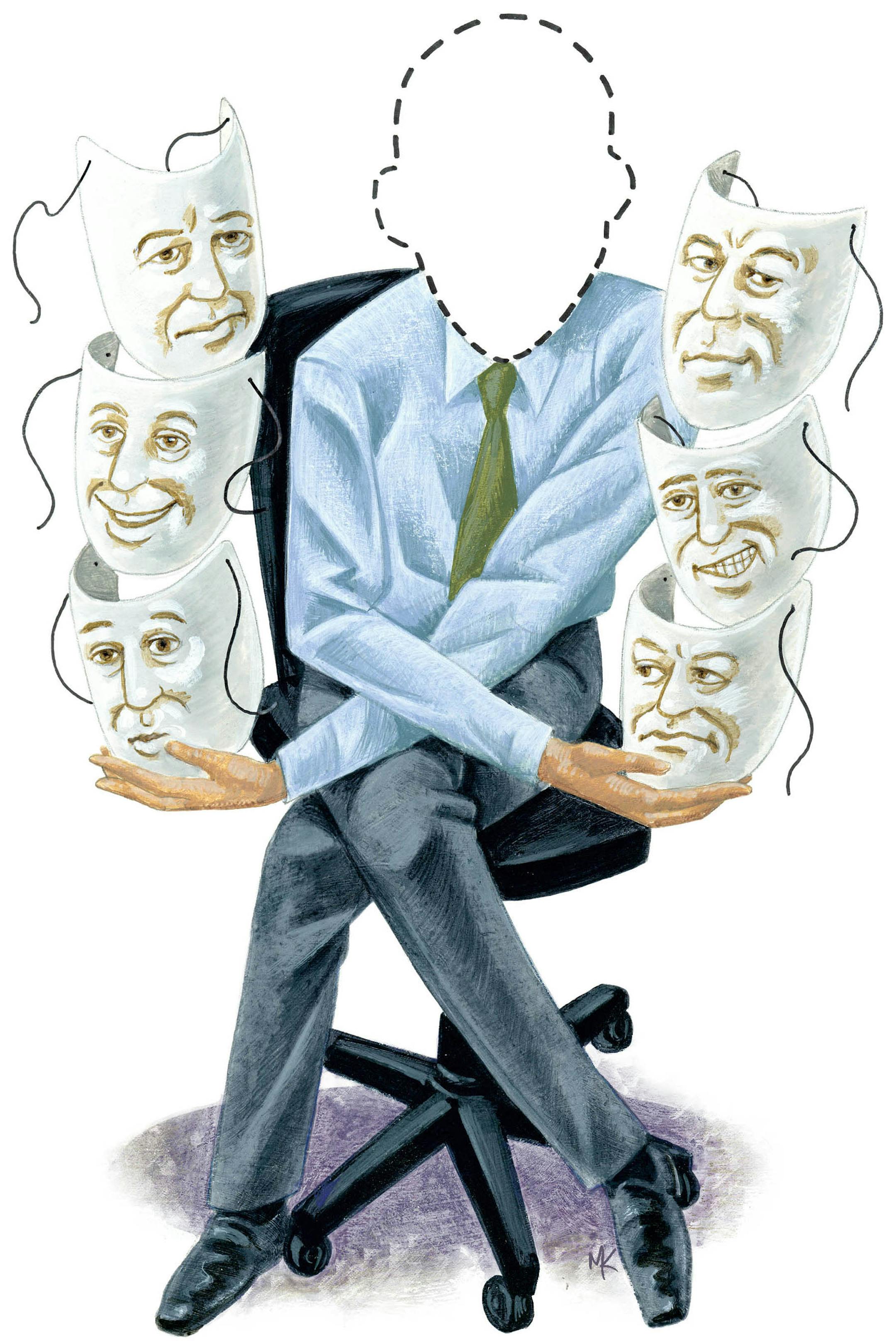
Why do men and women in the workplace cover their "neck dimples"?
What does it mean when you're pitching an idea and your listener makes a "tongue show"?
How does a gesture traced back to a lizard's "high stand" find its way into the boardroom?
The answers are not in office memos or phone messages, but bodies. And psychologists, ethologists and executive consultants say that body language in the business world often speaks louder than words.
A classic 1971 study by UCLA psychologist Albert Mehrabian showed that less than 10 percent of what audience members remembered from a speaker was verbal. About a third of the impact came from tone of voice. The rest, more than half the recall, involved body language -- gestures, facial expressions, posture, movements.
It's communication that starts from the moment you meet someone, executive coach Carol Kinsey Goman says. People decide whether you're likable, credible and trustworthy within seconds. That's why the consultant from Berkeley, Calif., suggests adjusting your demeanor in advance.
Say you're at a conference and turn around to introduce yourself to someone. Do it with a smile, eye contact, a body that leans slightly in toward the other person (which shows interest) and an "eyebrow flash," the slightly raised eyebrows that are a universal sign of recognition.
The right kind of eye contact is important. Imagine a triangle with the base at the listener's eyes and the peak in the middle of the forehead. That's the "business gaze" zone where you should be concentrating, Goman says.


