

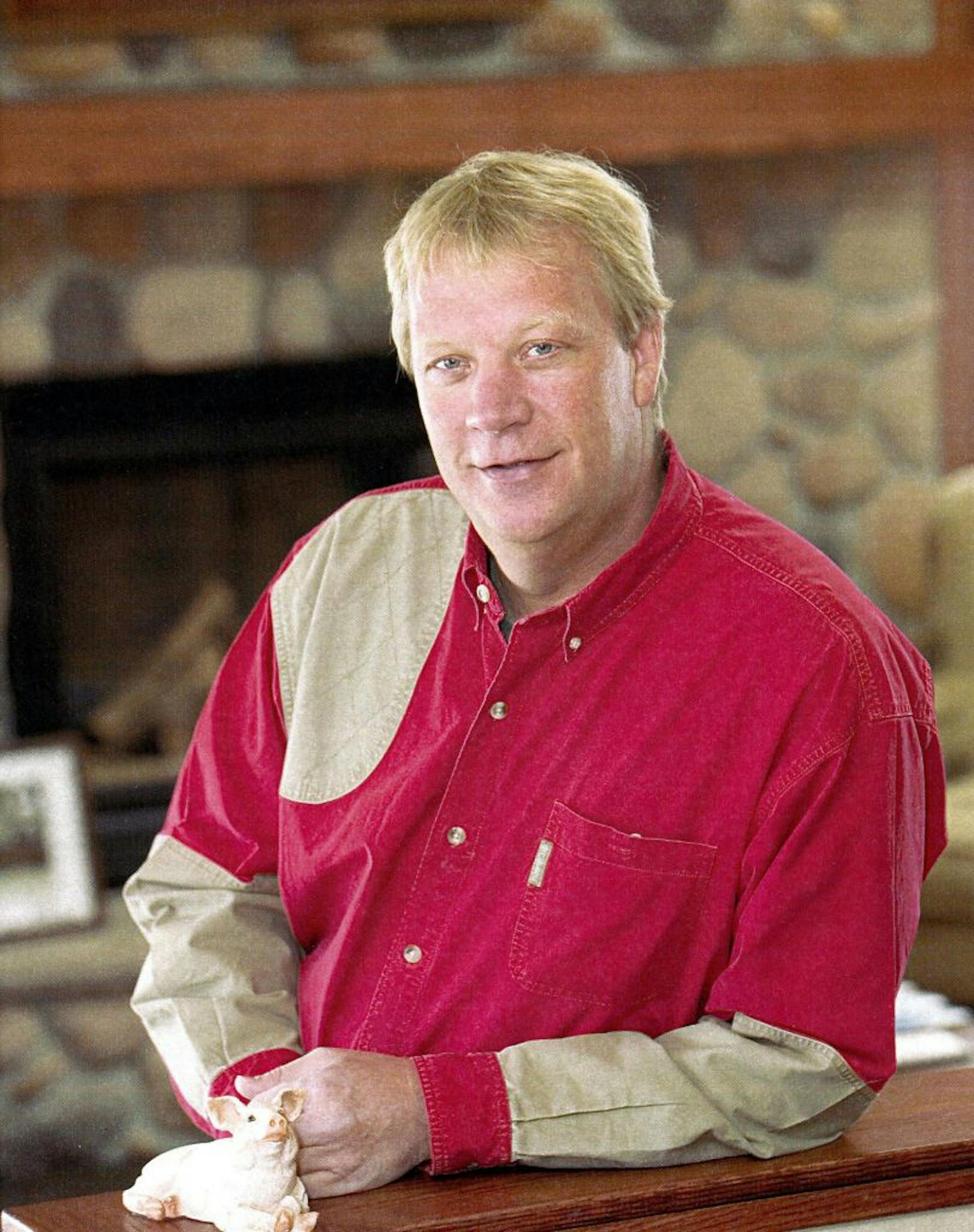
If there's any justice, Bob Christensen is in hog heaven.
The 51-year-old Sleepy Eye pig farmer died unexpectedly Nov. 3 from a heart attack near Kansas City, Mo., while doing one of the things he loved most: helping his 14-year-old son and other young people with a deer hunt.
Christensen found his life's work at the age of 13, when a neighbor gave a couple of bred swine to him and his brother Glen. After graduating from high school, Christensen went on to build one of the largest hog-production companies in the United States with more than $500 million in annual revenue and some 1,200 employees.
"He would think pigs 24-7, and he would talk pigs 24-7," said Dr. Tim Loula, a swine veterinarian and biosecurity expert from St. Peter who was appointed to the company's advisory board. "He was a dreamer," Loula said. "He accomplished many things that I heard him talk about 30 years ago."
Christensen Farms describes itself as one of the largest family-owned hog production companies in the world, with operations in Minnesota, Iowa, Illinois, Nebraska, Colorado and South Dakota. It has connections with 450 independent farms and markets enough pork to feed about 14.5 million people, according to the University of Minnesota.
In the early 1980s, Christensen Farms took the risk of building its own feed mill to control costs. Christensen told the National Hog Farmer magazine that a tour through North Carolina and Georgia hog operations in the mid-1980s enlightened him about the efficiencies of a modern pig operation.
Christensen capitalized on the 1985 farm crisis by paying struggling farmers to finish raising his pigs in their rapidly emptying confinement facilities. He later anticipated supply problems by building his first 1,200-sow farm. A series of deft acquisitions helped the company grow into an industry behemoth that has drawn respect from corporate competitors.
The National Hog Farmer lauded Christensen in 2006 as a visionary master of the industry. The Minnesota Agri-Growth Council bestowed its Distinguished Service Award on him in 2007, and he received the prestigious U of M Siehl Prize for Excellence in Agriculture two years later.


