

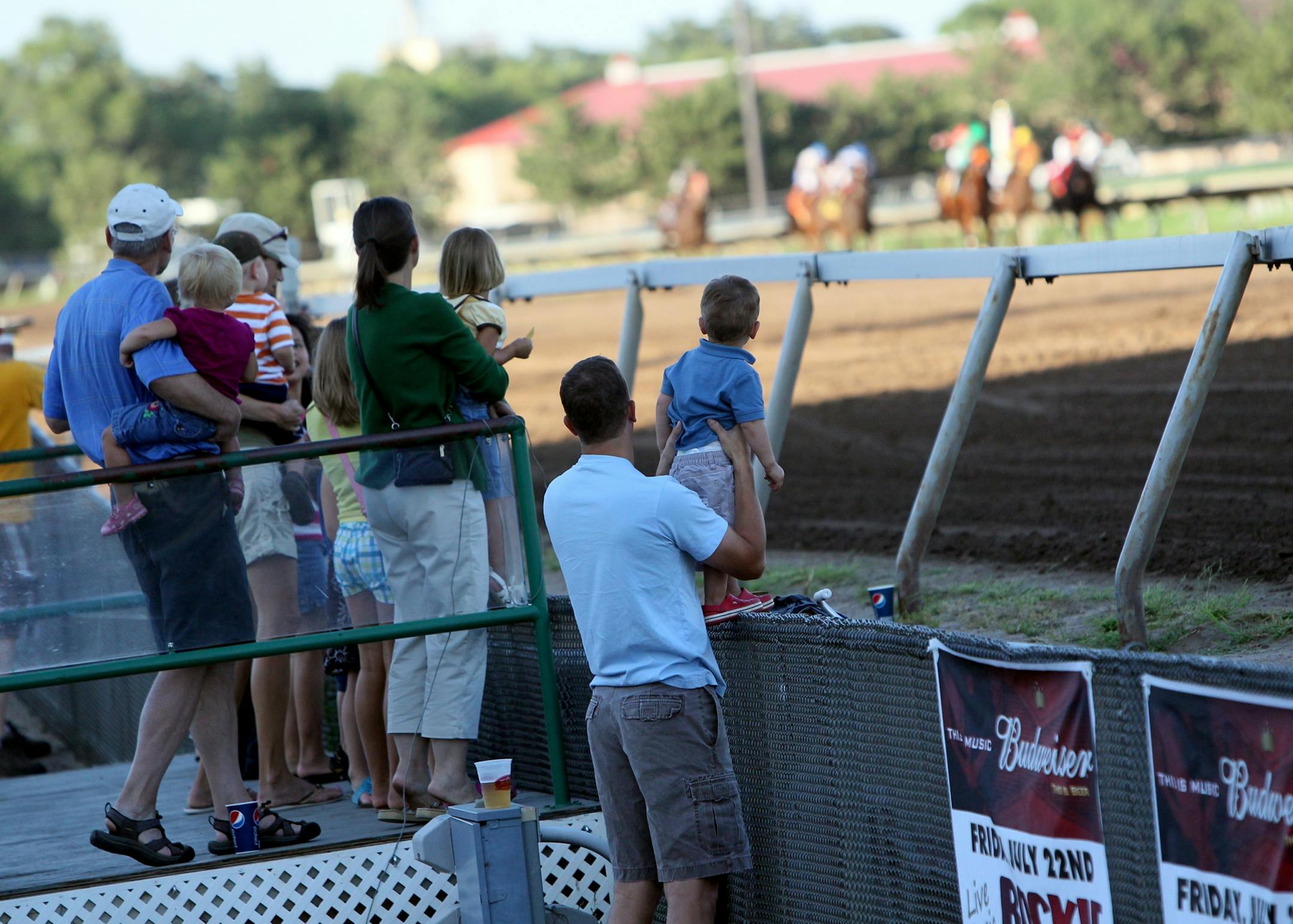
Dave Astar looked out his window last Saturday to see Nice To Meet Me hanging out in the pasture, relaxing with a handful of retired racehorses. Ordinarily, Astar already would be thinking about the summer to come, making plans to prepare the 4-year-old thoroughbred for another racing season at Canterbury Park.
The horse still is sound, and Astar said he remains fast enough to win a couple of races this season at the Shakopee track. But even if everything goes perfectly, Astar projected he could earn only about $18,000. Take out the cuts that go to the trainer and jockey, and Astar would be left with $14,400 -- slightly less than it would cost to train and race the gelding during the 62-day season.
So Astar will keep Nice To Meet Me on his farm near Hastings, while he contemplates moving his racing operation to a state that has enriched its purses through racino profits. Allowing Minnesota to join those states will be discussed in the legislative session that begins Tuesday. As lawmakers consider adding slot machines to Canterbury Park and Running Aces Harness Park to fund a Vikings stadium, schools and other causes, they should not forget the core beneficiary: a state racing industry in desperate need of a lifeline.
Astar noted that he's not the only one disappointed that Nice To Meet Me will stay home. If the horse were to race, Astar would have spent $15,000 on trainers, veterinarians, grooms, farriers, transportation and state taxes and license fees. That's for just one horse at a track that typically stables 1,200 horses every summer.
Many more jobs and businesses are supported by Minnesota's farms and breeding operations, which have dwindled because of Canterbury's low purses. That will continue without an infusion of racino money, which has resuscitated the racing industry in 13 states.
"He's a good, healthy horse, but it doesn't make sense to run him here any more," Astar said. "I've been in the business for a decade in Minnesota, and I love it. But gross purses are down 40 percent since 2005, and expenses are up 25 percent.
"This will probably be my last year. If racino passes, I would change my view. Without racino, I can't see [continuing to race in Minnesota], and most other people can't see it, either."
Legislation proposed


