

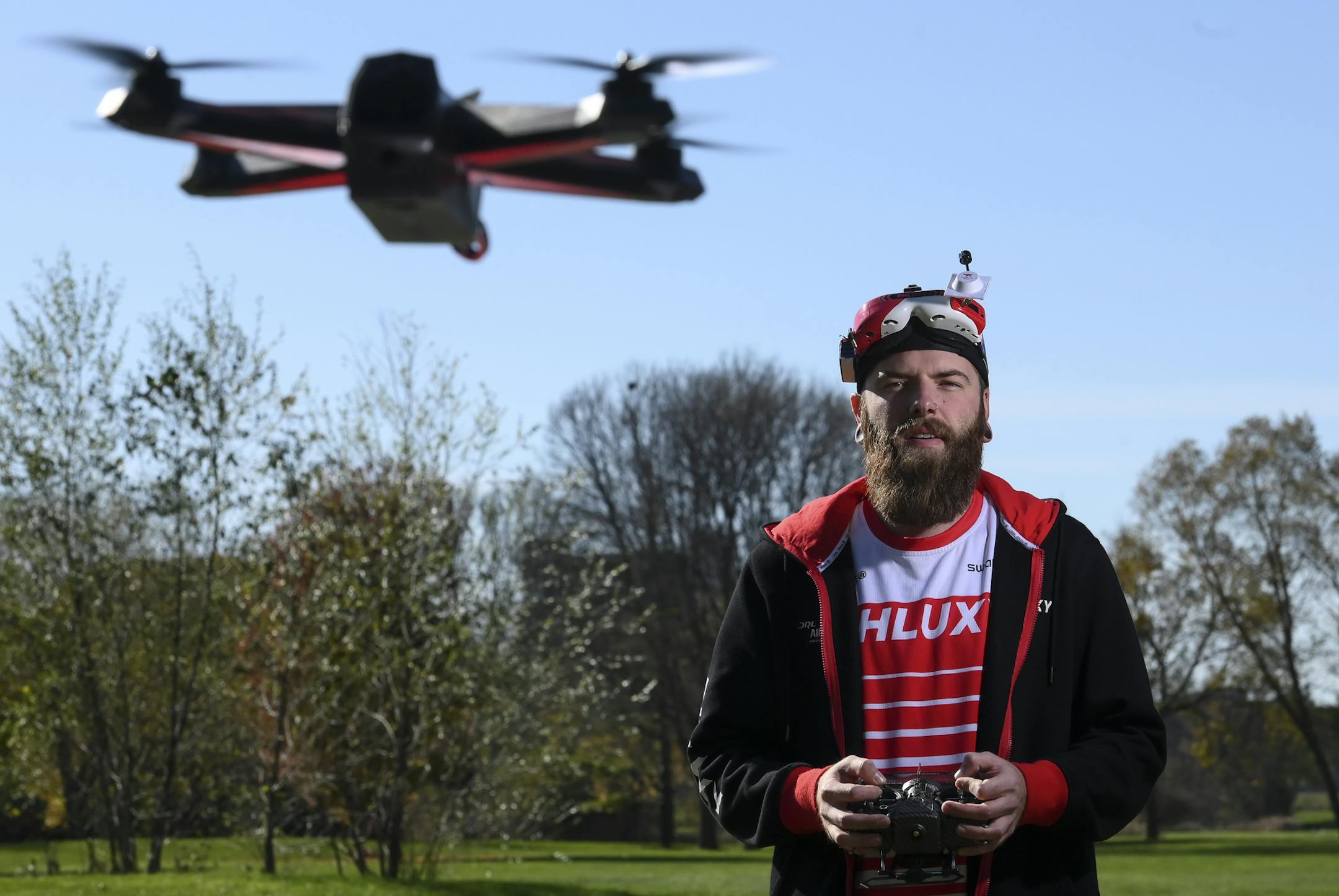
On a sunny October afternoon, in a deserted Edina park, a black drone the size of a dinner plate takes off from the grass and zooms across the expanse. It roars like a mechanical mosquito. Or a high-pitched blender possessed by the devil.
At rest, the X-shaped craft, with a propeller on each arm, looks like a very cool toy. But as the drone accelerates — 0 to 90 mph in a second — then loops, flips and dives, it's reassuring to know it's in the hands of someone with FAA certification.
Chris Spangler, who grew up around the corner and now lives in Bloomington, controls the drone with a small radio like those used for remote-control vehicles. The 28-year-old has tattoos on his arms, a small silver nose ring, thick plugs in his pierced ears, and a bushy brown beard trimmed to the shirt collar. His fit, compact build suggests that if he couldn't beat you in a footrace, he would surely humiliate you on a skateboard. Wearing a pair of opaque goggles makes him look like an android, as he stands in the grass, motionless except for his thumbs.
When Spangler dons his red and white jersey, with his racing name "Phluxy" emblazoned on the chest, he transforms into one of 12 elite pilots competing in the Drone Racing League (DRL), the dominant professional circuit. DRL, launched in 2016, hosts drone races at stadiums around the country and then broadcasts them on NBC and Twitter — a recent race at St. Paul's Allianz Field will air Nov. 7.
Spangler, who quit his job in IT to race full time, earns $75,000 a year from DRL, along with a certain niche celebrity. Three years ago, when he started flying drones, he didn't know an experience that feels like being "Luke Skywalker flying through the Death Star," as he puts it, could be his dream job — a "perfect storm" of his interests in all things techie, mechanical and adrenaline-inducing.
Drone racing is a sort of real-life video game that merges the virtual and physical worlds. And if the recent rise of e-sports, or competitive video gaming, is any indication, there's a large audience interested in watching technology-enabled competitors exert their minds and their fingers.
Professional drone racing has already started to tap that potential: DRL's 2019 season debut drew nearly 500,000 viewers on TV and more than 6 million on Twitter. But earning a berth in the entertainment world's big leagues hinges on getting more people to watch. And a lot of that has to do with the charisma of pilots like Phluxy.
Drone racing takes off
Organized drone racing is less than a decade old, and has come a long way since ragtag groups of guys (the activity is heavily male-dominated) gathered in fields to fly through courses marked with something as unsophisticated as balloons.


