

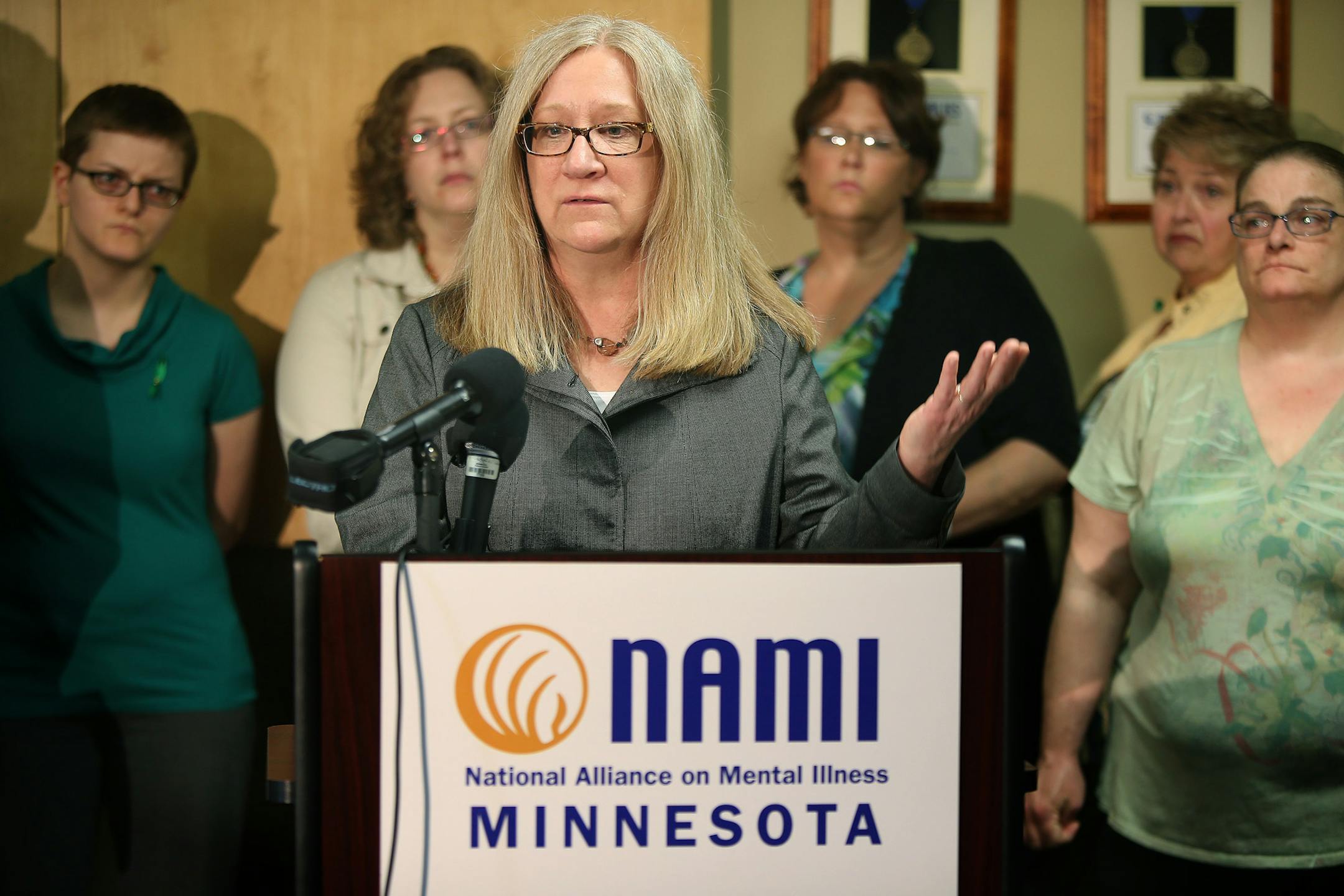
Shaken by revelations that a patient was beaten to death in his room at the Minnesota Security Hospital, families are demanding new and unprecedented measures to strengthen oversight of the state's largest mental hospital.
"It breaks my heart that it came to this — that a man is now dead — for these problems to come into focus," the mother of one patient said Thursday during a news briefing in St. Paul.
Saying they are frustrated by years of inaction, parents and advocates called for outside, independent experts to review therapy protocols and staff training at the hospital, the state's core treatment facility for people who are mentally ill and dangerous. They also called on the state to give patients and their families a greater role in developing therapy plans, among other demands.
The call for reform comes just days after the Minnesota Department of Human Services (DHS) released a harshly worded investigation that pinned much of the blame for the bloody January killing of Michael F. Douglas, 41, on the hospital and its staff, calling the incident "an unacceptable failure" by the hospital.
Investigators concluded that some hospital staff chose to spend long hours inside protected offices rather than interact with patients; and that Douglas' killer had twice asked to see a psychiatrist on the day of the killing but was denied. DHS Commissioner Lucinda Jesson responded to the report by calling for a radical change in the hospital's culture and a "tidal wave of training" at the facility.
In interviews Thursday, mentally ill patients and their families painted a disturbing picture of a treatment center that provides little actual treatment, and where supervision is so lax that patients and staff live in daily fear of assault.
"I feel like someone could kill me at any time on any day," said Travis Shon Johnson, 40, who is diagnosed with bipolar disorder and has been a patient since March. "It's completely unsafe here."
DHS Inspector General Jerry Kerber said he is open to discussing new approaches with advocacy groups, including external monitoring of the hospital. His office is ordering that a mentor be added to every work shift, to work shoulder-to-shoulder with staff to demonstrate how to respond to "high-tension situations," he said.


