

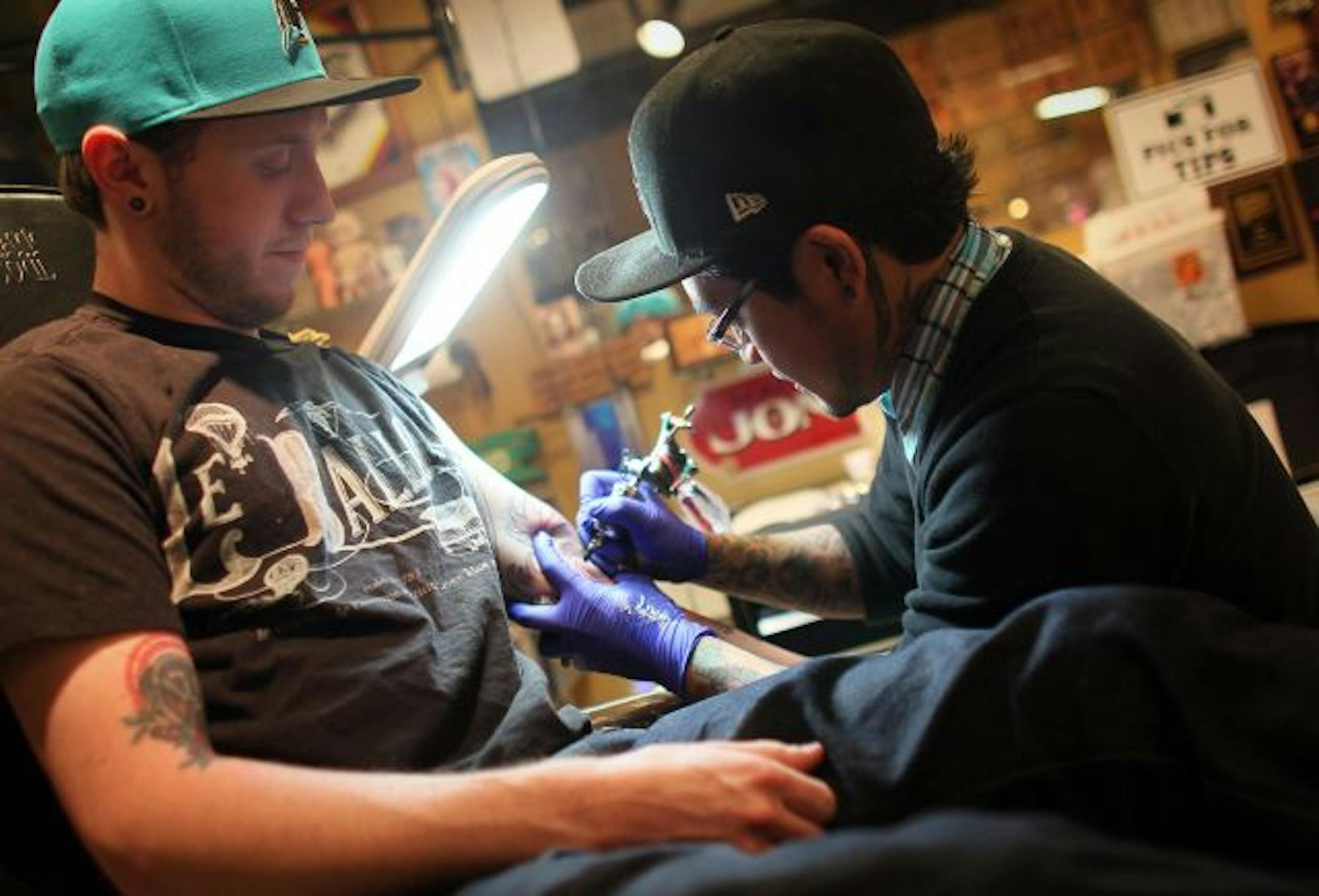
Some months ago, Dr. Jed Gorlin noticed two trends he didn't like: The number of young Minnesotans getting tattoos seemed to be rising, and so was the number of young donors being turned away at local blood banks. Blood centers had a policy of turning away donors for one year if they had a new tattoo, for fear of blood-borne diseases.
Gorlin, the medical director at Memorial Blood Centers, joined his colleagues in supporting a new state law that would require licensing and inspection of what is known as the "body art" industry.
The law took effect last July, tattoo parlors have started applying for provisional licenses, and soon an inspector from the Minnesota Department of Health will begin making the rounds to see that they comply with new state rules. The law forbids tattoo artists from re-using needles and ink, among other safety measures, to prevent transmission of hepatitis C.
Blood bank directors hope the changes will open the spigot again for young donors -- a group they were beginning to worry about.
A recent survey by the Pew Research Center estimated that 38 percent of Americans between ages 18 and 29 have at least one tattoo. Half of them have between two and five.
From 2000 to 2009, American Red Cross blood banks in Minnesota deferred about 8,500 potential donors because of tattoos and other similar restrictions. Nick Gehrig, a Red Cross spokesman, said that doesn't include "self-deferred" individuals who knew the rule and never showed up.
Blood bank directors, who like to get people into the donation habit at an early age, worried that they were losing the next generation of Minnesota donors.
"We want this to become a lifetime habit to save lives and donate blood," said Dr. David Mair, medical director of the American Red Cross. "The younger you start, the more it will become a lifelong commitment."


