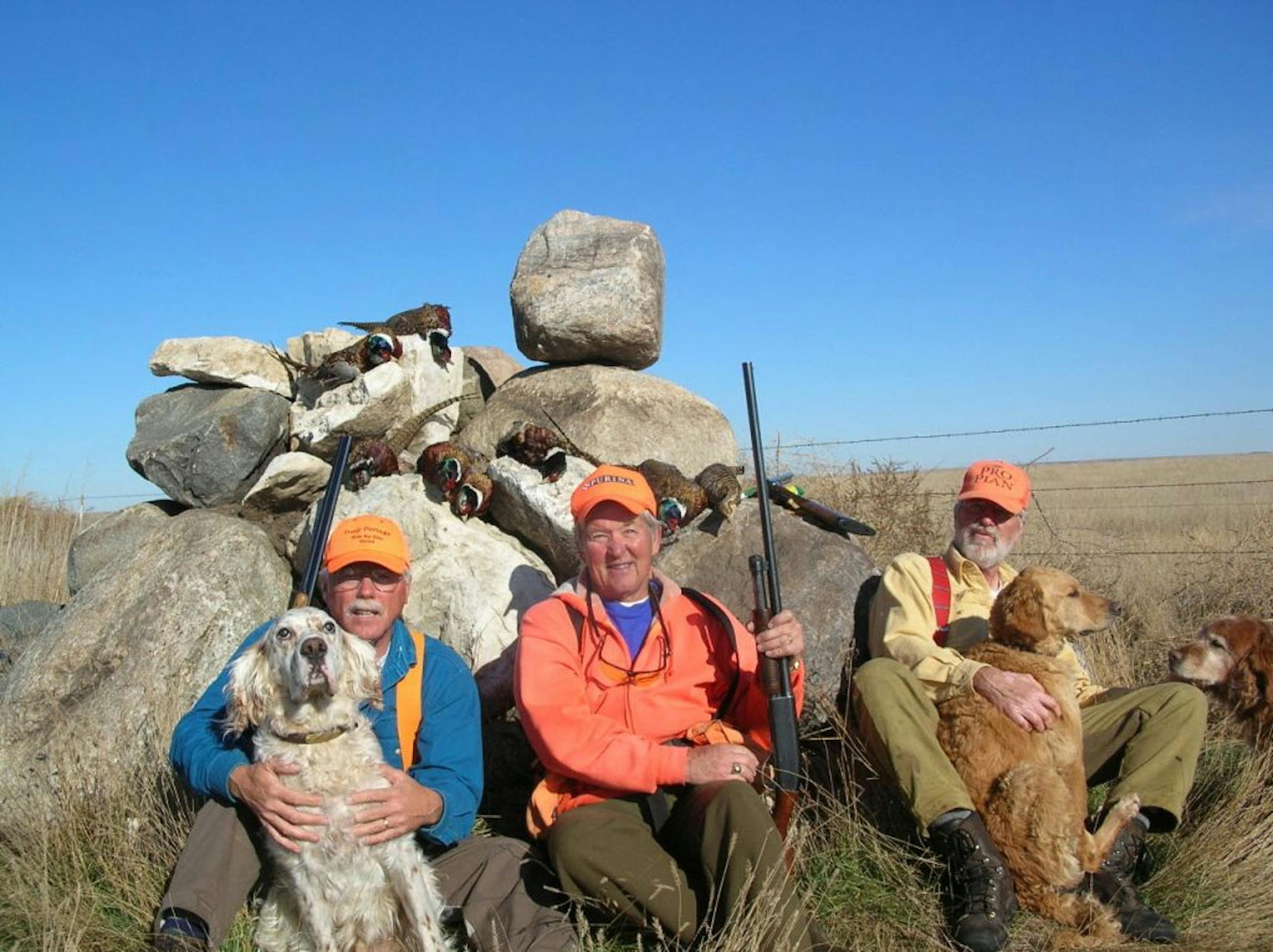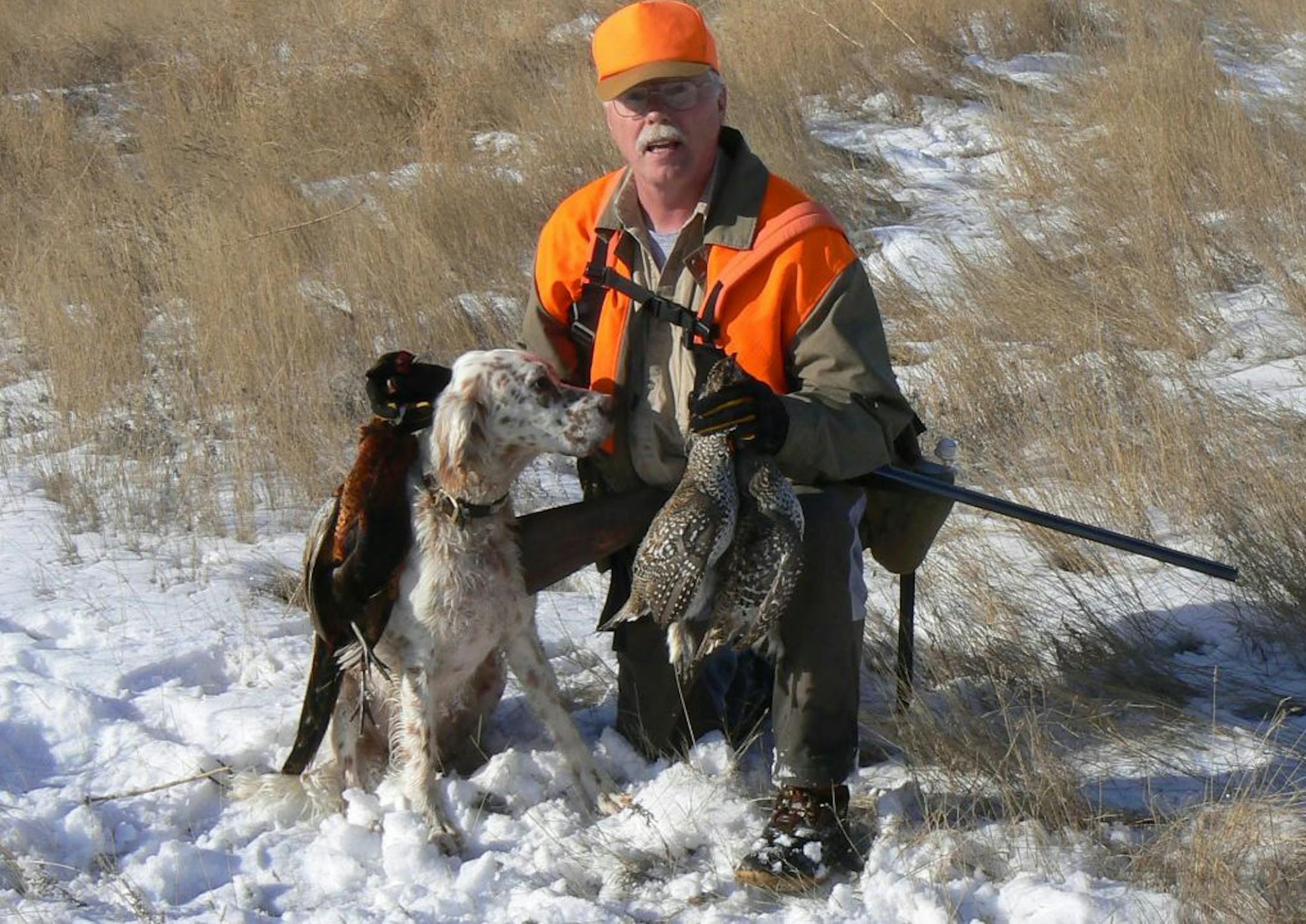
Watch Norm Moody's English setter, Golly, work a field for pheasants or sharp-tailed grouse, and you'd never know the dog has a major handicap.
"People who see us hunting have no idea he's blind," said Moody, 64, an avid upland bird hunter who lives near Hackensack, Minn.
This month, 11-year-old Golly (pronounced Gully) hunted sharp-tailed grouse, pheasants and prairie chickens on South Dakota's expansive National Grasslands with Moody and his two hunting buddies.
"He quarters back and forth just like a regular setter," Moody said. "When he gets on a scent, he goes into slow motion and I know right away he's on a bird. Then he locks up and points."
And when the bird flushes and Moody shoots it, somehow Golly knows where to look for the downed bird.
"He usually heads right for it," Moody said. "I think it's the sound, the fluttering of the wings, and he heads in that direction and finds it."
Said hunting buddy Don Collins, 70, of Delano: "He's miraculous -- just a super dog. He almost brings tears to your eyes."
Though Moody lives in the north woods, he no longer hunts Golly there for ruffed grouse, and instead hunts 35 days each fall in the open prairies of South Dakota, North Dakota and Saskatchewan where his dog is less likely to run into anything. Barbed-wire fences pose problems, but Moody keeps his dog away from them.