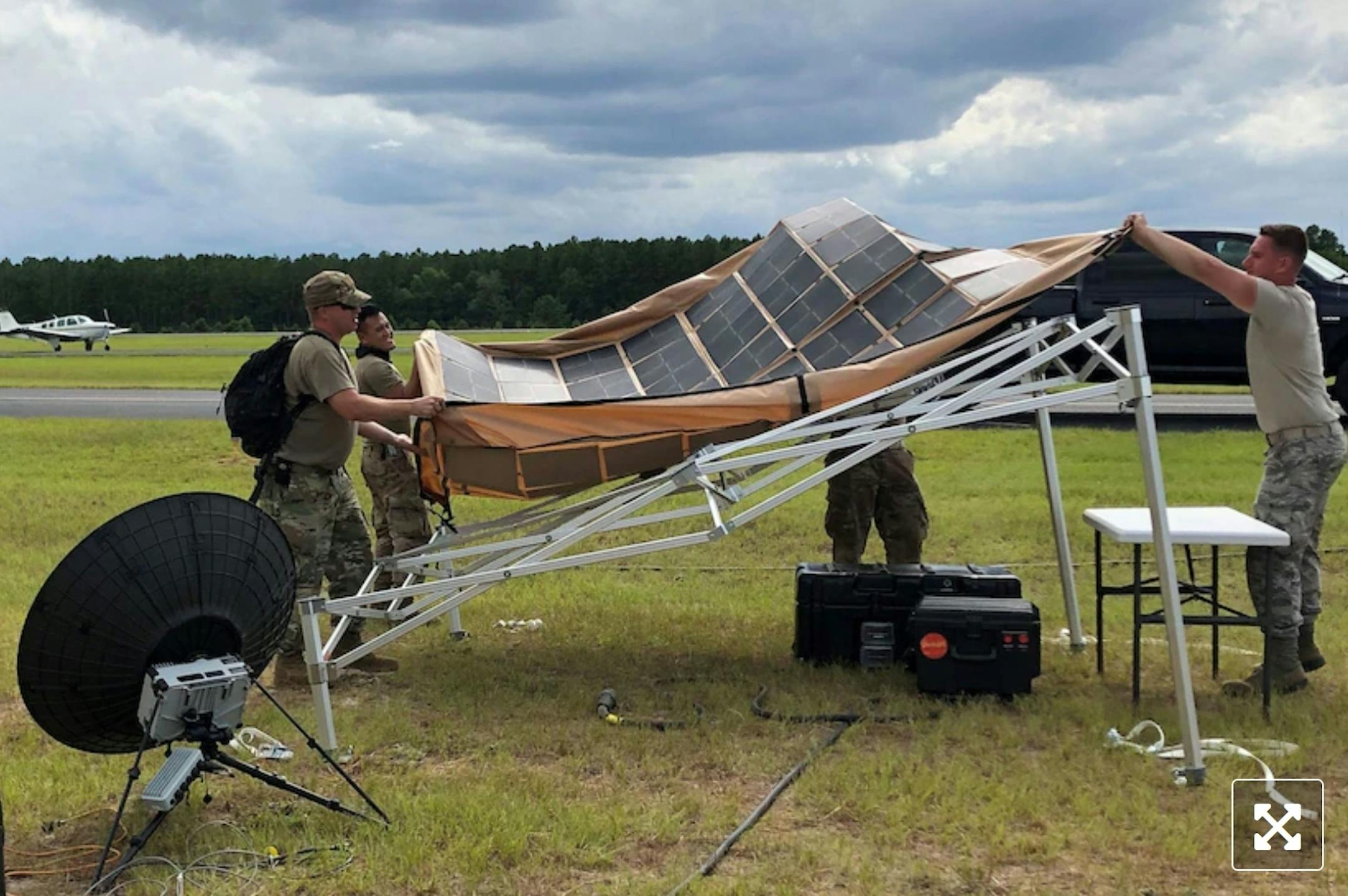
Airmen set up solar panels to augment the power grid and reduce the demand for fuel at the exercise Agile Gator deployed location in Dodge County, Ga., last year. (Air Force 1st Lt. Ryan Samolewski/The Minnesota Star Tribune)
Combating Climate Change Factors Into Defense Budget Request. Here's the intro to a post by the U.S. Department of Defense: "Secretary of Defense Lloyd J. Austin III has said there is little that the department does that isn't impacted by climate change. The President's Fiscal 2022 Defense Budget Request reflects that reality. Droughts, wildfires, sea level rise, increasing numbers of destructive storms and more are concerns for DOD. "If you think about what generates missions, we know that extreme weather events … are affecting conditions on the ground in lots of places around the world," Joe Bryan, DOD's senior climate advisor, said. The Defense Department must take climate change under consideration in forming strategy, conducting operations and buying equipment and capabilities. In one of his first executive orders, President Joe Biden said climate change will be a fundamental part of national security planning..."
(The Minnesota Star Tribune)
Lakes Are Losing Oxygen: Climate Nexus has headlines and links: "Climate change is contributing to falling oxygen levels in lakes across the world, according to a study published in the journal Nature yesterday. Previous studies have shown falling oxygen levels in individual lakes, but this study is the first to look at so many lakes globally, as researchers gathered data from nearly 400 lakes in the United States, Canada, Europe, Asia and South America. The study found that in the past 40 years, oxygen levels have fallen nearly 19% in deep waters and 5% in surface waters, which is up to nine times faster than the oxygen loss in oceans. Low oxygen levels in lakes can suffocate wildlife and threaten drinking water quality. In some lakes, oxygen levels increased at the surface, likely because warmer temperatures can drive algal blooms, which temporarily release oxygen. This oxygen increase does not benefit deep waters, though, and algal blooms can release toxic chemicals and produce methane, further contributing to climate change. "This study proves that the problem is even more severe in fresh waters [than in oceans], threatening our drinking water supplies and the delicate balance that enables complex freshwater ecosystems to thrive," said Curt Breneman, dean of science at the Rensselaer Polytechnic Institute, which led the study." (The Guardian, Associated Press, E&E $, Sydney Morning Herald, Minnesota Public Radio, Axios)
File Image (Miami Dade County/The Minnesota Star Tribune)
A 20-Foot Sea Wall? Miami Faces the Hard Choices of Climate Change. Here's one wall that may, in fact, actually get built. Yahoo News reports; here's an excerpt: "...Build a wall, the U.S. Army Corps of Engineers proposed in its first draft of the study, now under review. Six miles of it, in fact, mostly inland, running parallel to the coast through neighborhoods — except for a 1-mile stretch right on Biscayne Bay, past the gleaming sky-rises of Brickell, the city's financial district. The dramatic, $6 billion proposal remains tentative and at least five years off. But the startling suggestion of a massive sea wall up to 20 feet high cutting across beautiful Biscayne Bay was enough to jolt some Miamians to attention. The hard choices that will be necessary to deal with the city's many environmental challenges are here, and few people want to face them..."
(Paul Douglas/The Minnesota Star Tribune)
Biden's Only Climate Plan is in Jeopardy. Grist explains: "When President Joe Biden unveiled his $2.25 trillion "American Jobs Plan" in early April, many climate activists breathed a (small) sigh of relief. Although the plan was smaller than the $10 trillion progressive Democrats had proposed spending on revamping the country's infrastructure, it was, in many ways, a Green New Deal in miniature. It included huge spending on clean energy, a civilian jobs program known as the "climate corps," and a push to get electric cars on the road all across America. It was without question Biden's primary plan to cut carbon emissions. The only one. The big one. Now, however, there is rising concern that the "big one" may not be so big after all. Key features of the bill — like a requirement to produce electricity from clean sources, or hundreds of billions of dollars in support for electric vehicles — are in contention as Republicans and Democrats tussle over the price tag..."
(Climate Central/The Minnesota Star Tribune)
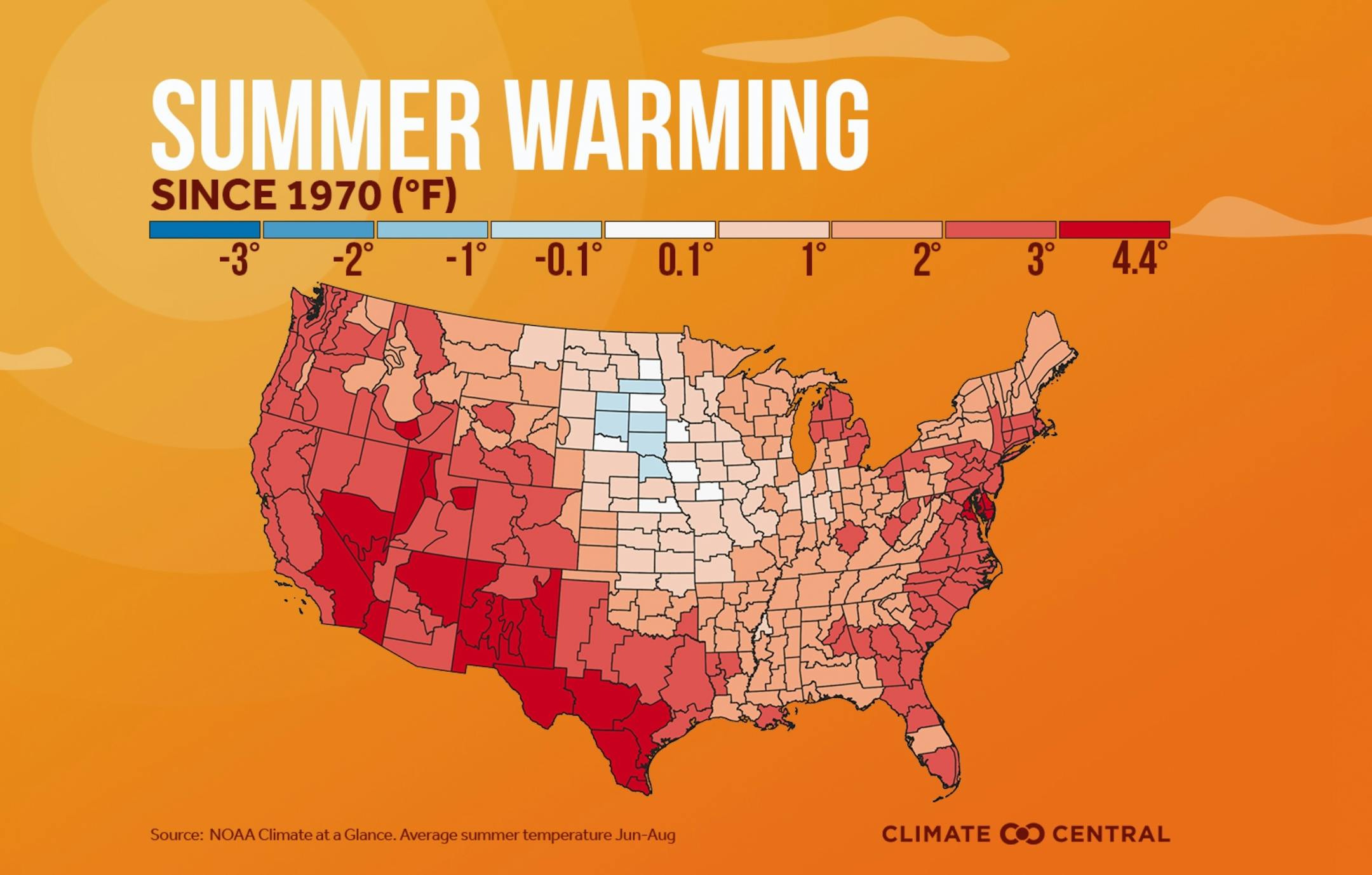
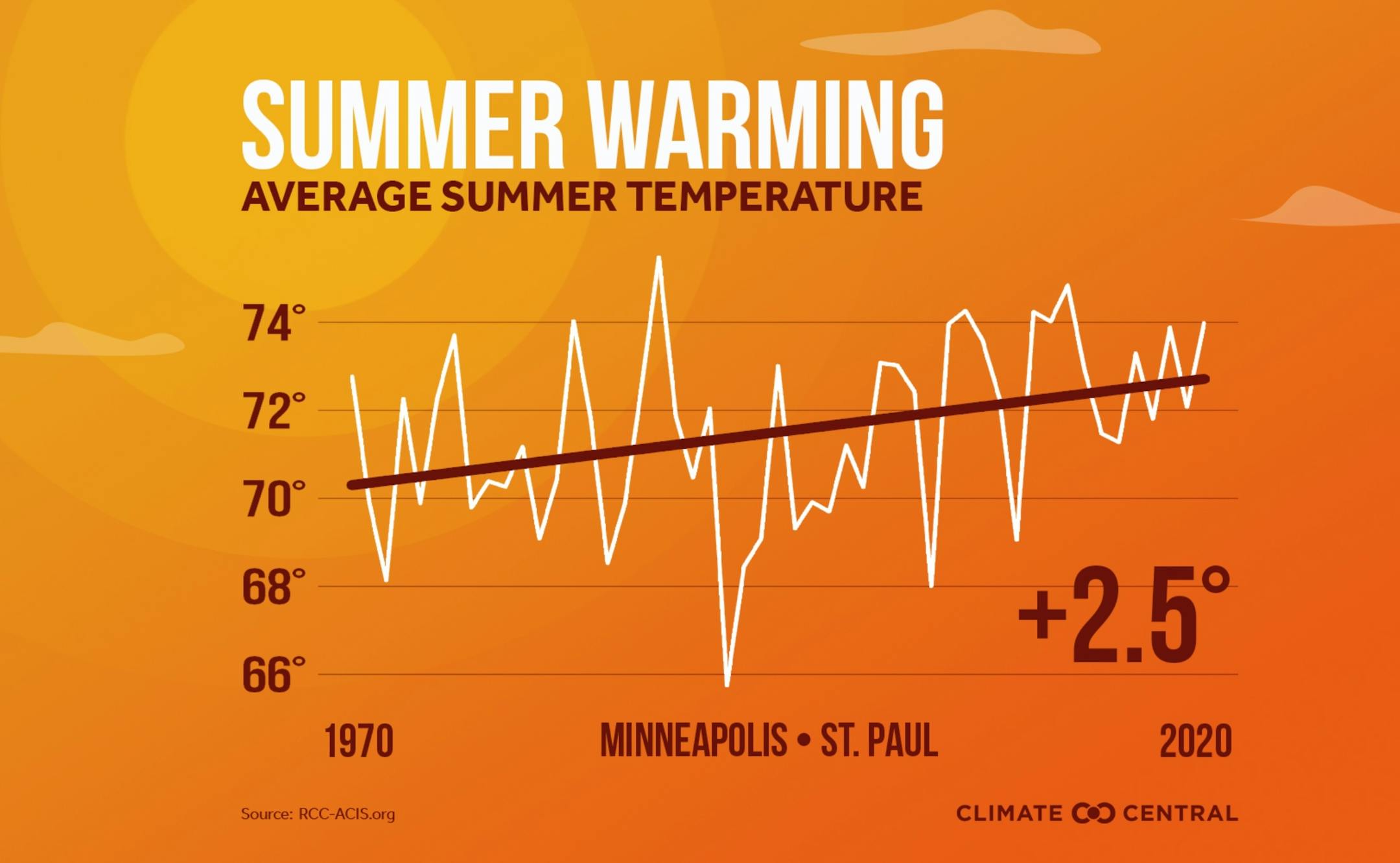
Summer Temperature Trends. Since 1970 slight cooling has been observed over the Dakotas during the summer season, while most of the USA has warmed up significantly, especially nighttime temperatures. Here's a good overview from Climate Central: "A Climate Central analysis evaluated 51 years of summer temperature data in 246 U.S. locations. Results show an overall warming trend for the summer season, with:
(Climate Central/The Minnesota Star Tribune)
(Climate Central/The Minnesota Star Tribune)
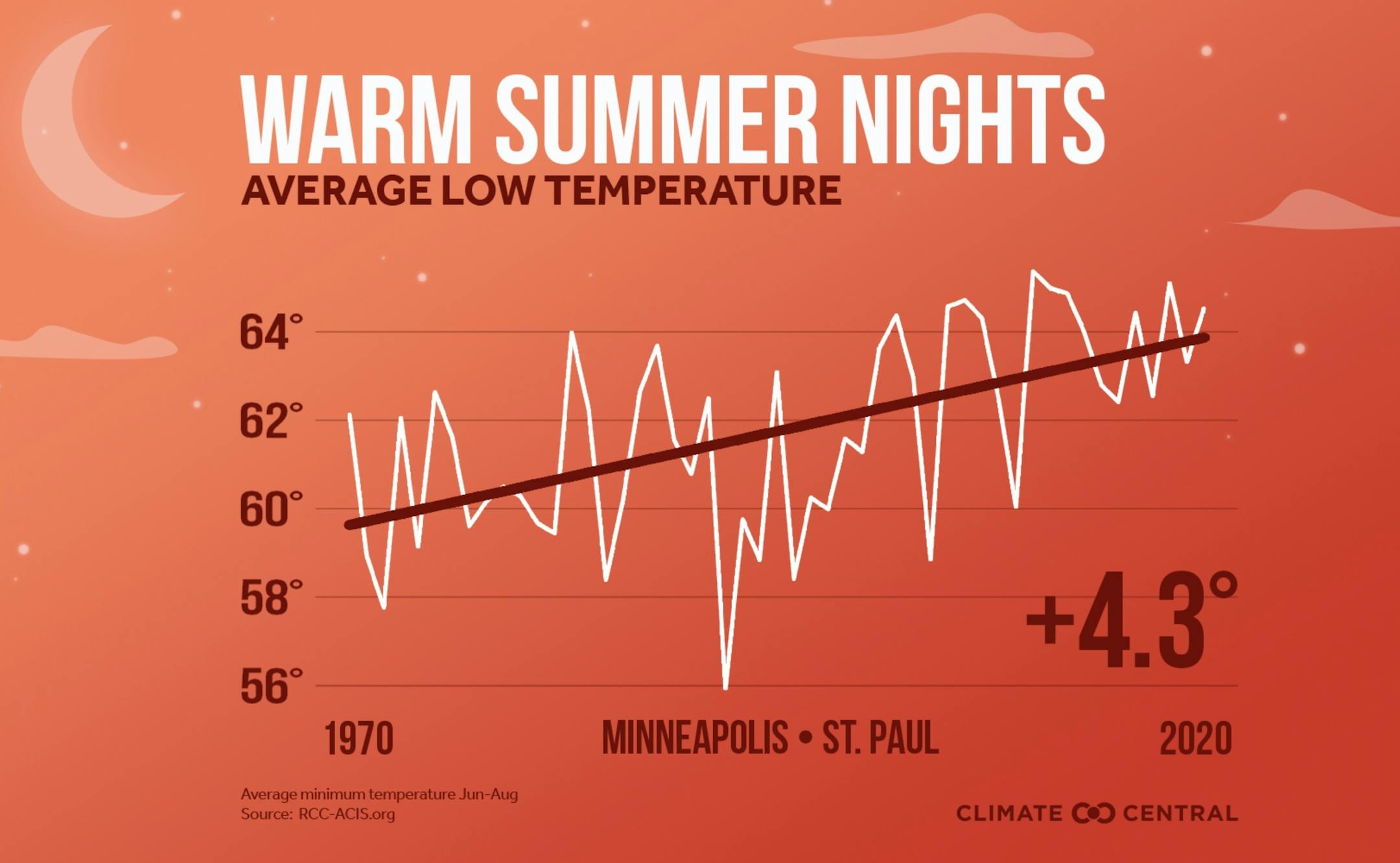
Summer Nights Warming Faster. Data crunched by Climate Central shows a 4.3F rise in nighttime temperatures since 1970. More moisture in the atmosphere (higher dew point temperatures) prevents temperatures from falling as much as they would in a drier atmosphere. Humidity levels are trending upward during summer months, more 70-degree dew point days, and nights are consistently warmer and more uncomfortable.