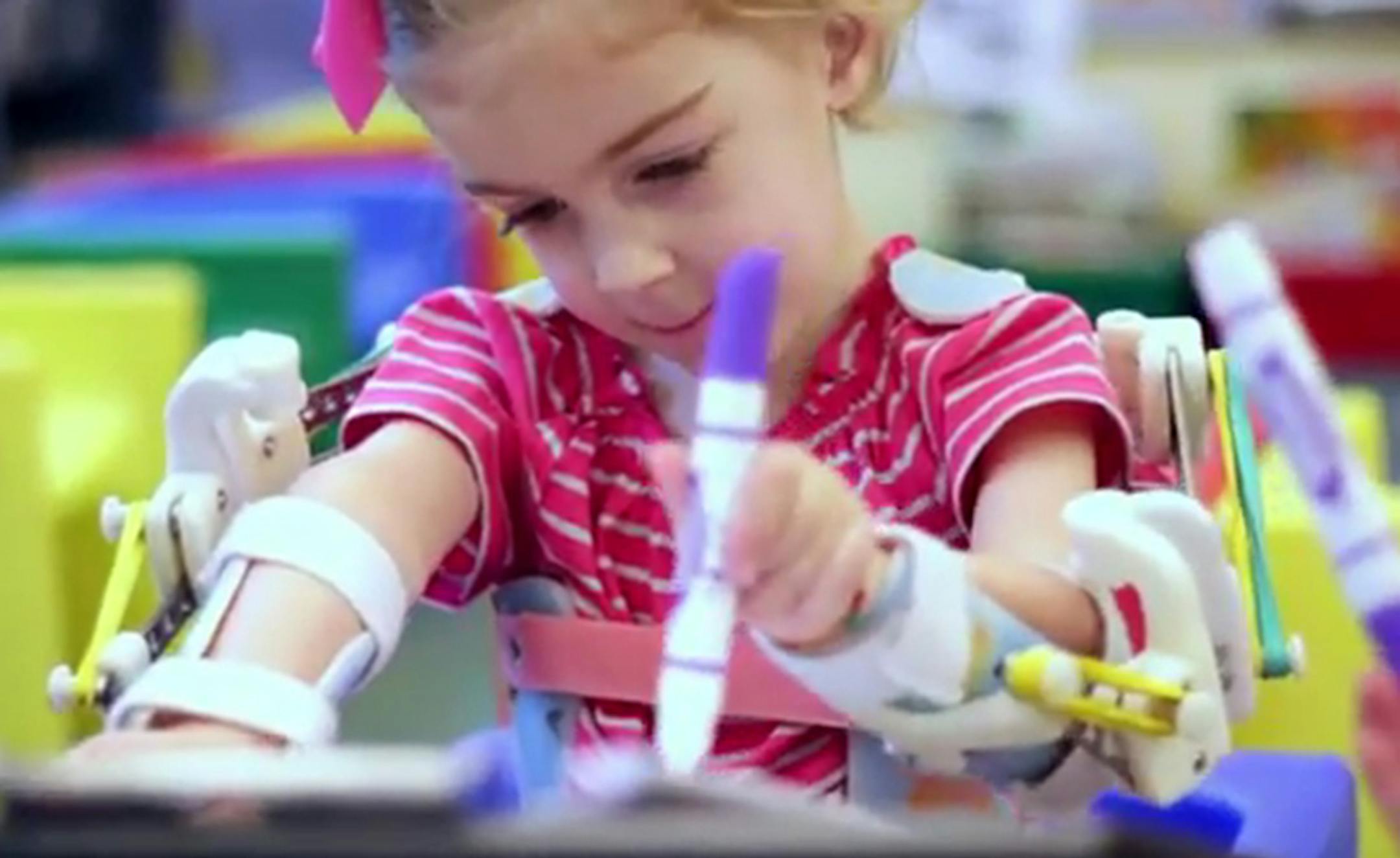
They're called magic, but they help disabled children do the most ordinary tasks by themselves.
"Magic Arms" allows 5-year-old Emma Lavelle to take a sip of water, practice writing her letters and give her mom a hug. Without them, Emma — who was born with a rare neuromuscular condition — doesn't have the strength to lift her arms on her own.
Engineers at a Delaware hospital invented the device, which amplifies arm strength. Hospital staff custom-make and fit them one at a time — using a 3-D printer from Stratasys of Eden Prairie — and cannot keep up with demand.
That hospital now is negotiating with a Blaine industrial design firm to create a nonprofit that could help increase production and distribution of the devices to children around the world.
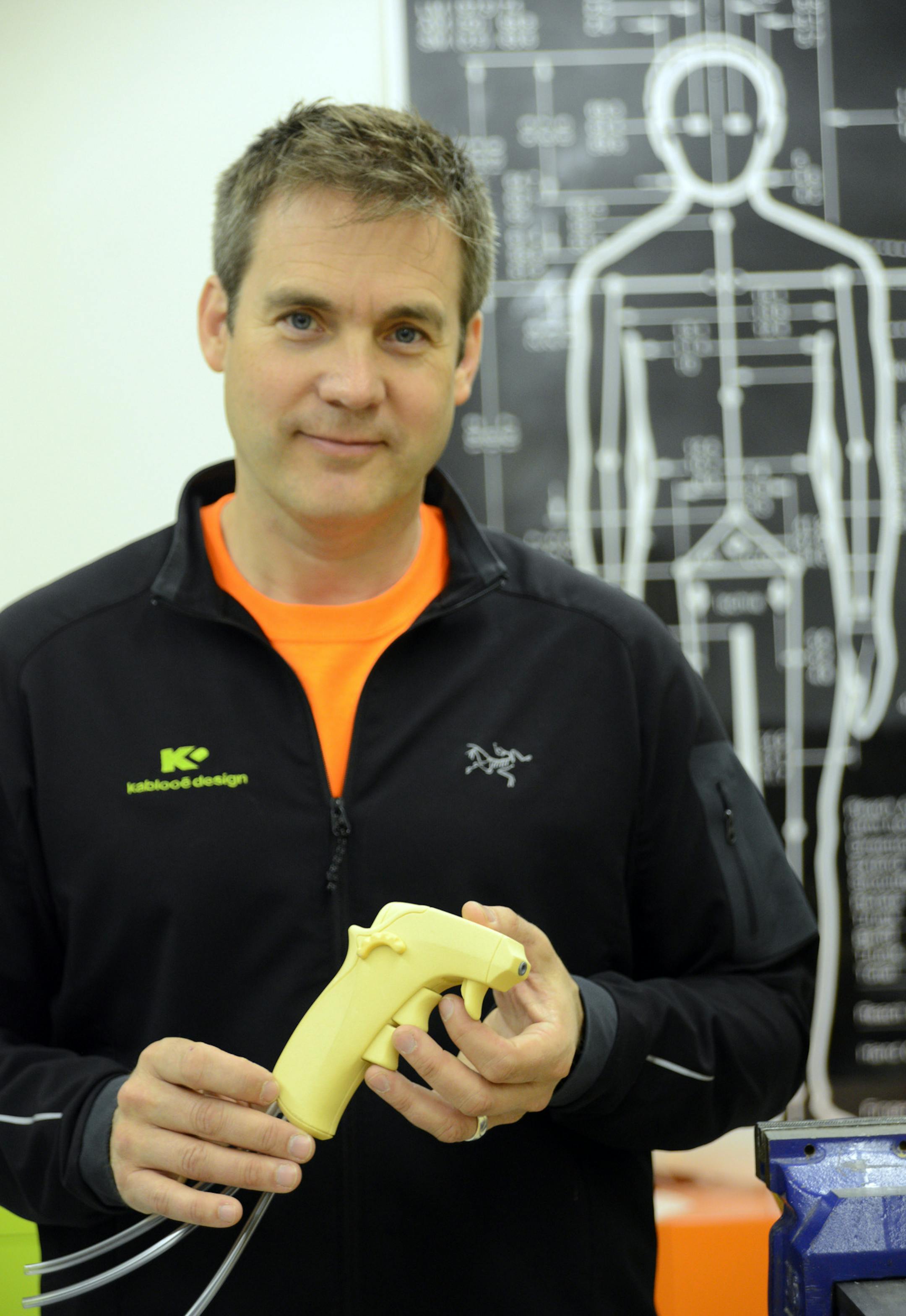
Tom KraMer, owner of Kablooe Design, has worked as an industrial designer for more than two decades. His 13-person firm has designed everything from medical devices to milkshake machines. His goal is to further improve the Magic Arms design — officially known as the Wilmington Robotic Exoskeleton, or WREX — and make a "fit kit" so parents can equip their children with the device without traveling to a hospital. He wants to provide them to disabled children at little or no cost.
"When I saw [a] video of Emma, I thought someone has to get this to more kids, and a little voice inside me said, 'Why not me?'" said KraMer, a father of five.
"We are all working together to get this to as many kids as we can," said Tariq Rahman, director of orthopedic research at Nemours/Alfred I. duPont Hospital for Children in Wilmington, Del.
Rahman, who was one of the WREX inventors, and his team came to Blaine in April to discuss details.