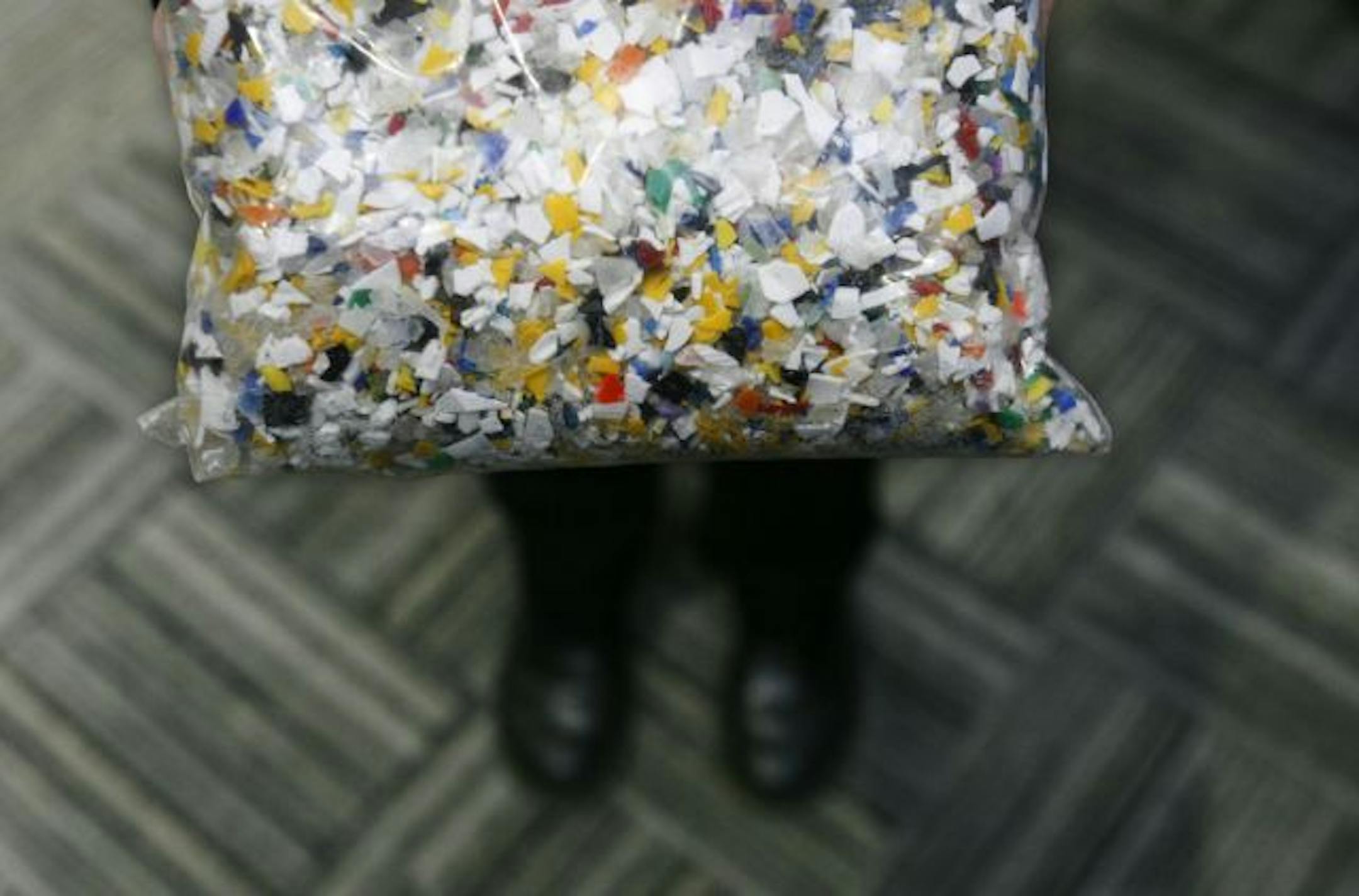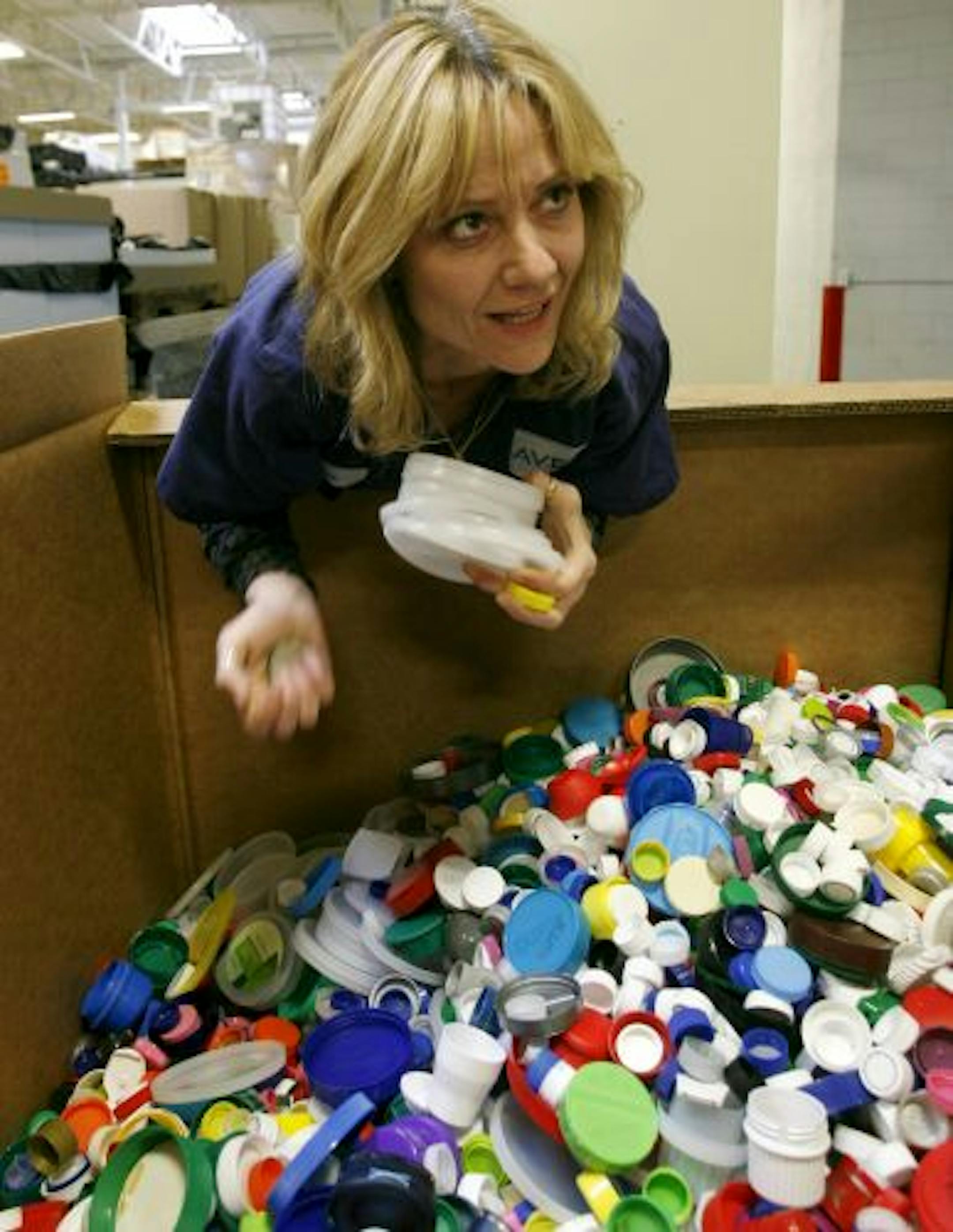
Every day, thousands of plastic bottle caps arrive at Aveda Corp. in Blaine.
The caps of many colors come in sacks, boxes and bags. They arrive by mail, auto and hand; from churches, schools, businesses and households. They come from as near as down the road, and as far away as Honolulu. Stacks of discarded packages with return labels from Illinois, New York, North Carolina litter warehouse bins.
Donors get nothing in return for making the trek or paying the postage to Blaine, except the good feeling that comes with recycling, said Aveda spokesman Evan Miller.
The bottle caps -- from water, soft drinks, shampoo, it doesn't matter -- are turned into new caps for Aveda's hair-care products. And the process can be repeated indefinitely, Miller said. They won't be thrown away. Indeed, just last week, about 30,000 pounds of caps left Aveda to be recycled.
By most measures, Aveda's four-year-old cap recycling program is a ringing success. But while Aveda is saying, "Yes, we'll take your caps for recycling," many municipalities, such as Minneapolis and St. Paul, are saying, "No. Caps can't be recycled; throw them away."
Clearly, people want to recycle caps, and they will go to some lengths to do it, so why can't it be easier? Why can't it be a part of curbside plastic pickup?
It's not feasible, industry and civic recycling experts say.
"The recycling facilities were designed on the bottle," explained Dianna Kennedy with Eureka Recycling, St. Paul's recycling hauler. Bottles are made of No. 1 plastic resin, but the caps use No. 5. They are different kinds of plastic, with different melting points.