

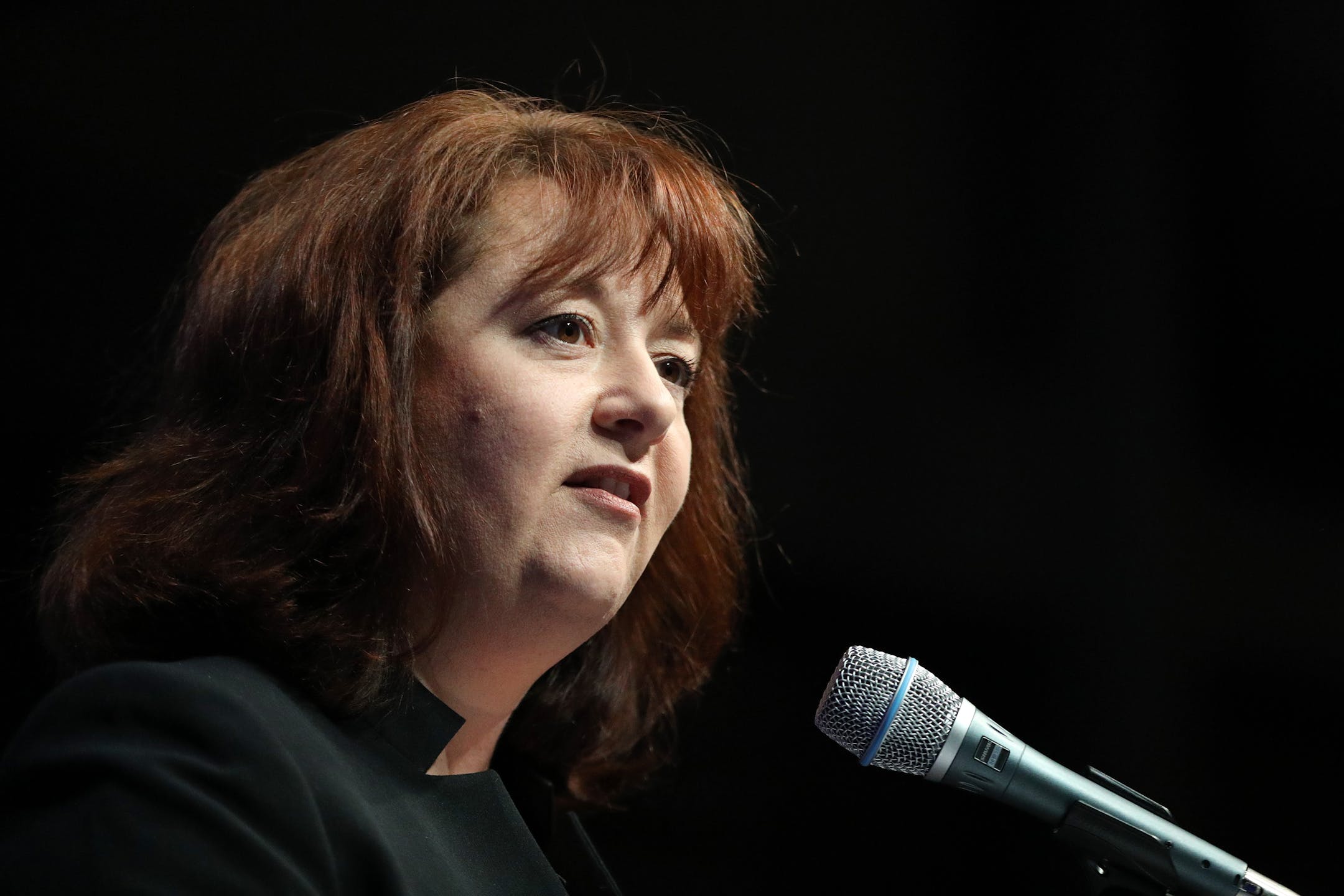
State Auditor Julie Blaha could hardly envision a global pandemic posing once-in-a-century challenges when she launched her now-annual "State of Main Street" studies of local government financial health three years ago.
Last week's release provided the state's first look at how federal pandemic relief dollars helped cushion the economic blow of the pandemic's 2020 onset while highlighting local responses to a crisis that was global in nature.
"You saw local governments respond to a global pandemic and be able to pull off some amazing things in record time, record complexity and record volume," Blaha said in an interview after the report's release. "All while their cat is walking across their keyboard because they had to work from home."
This year's State of Main Street was in part the product of five listening sessions around the state and used 20-year local government financial trends to contextualize the 2020 data. That was important to understand the effect of the federal CARES (Coronavirus Aid, Relief, and Economic Security) Act relief money on local governments around the state.
Blaha pulled together staff, local elected leaders and the head of a Big Lake nonprofit to present the findings last week during a hybrid in-person and virtual address at the State Capitol.
Brenda Geldert, executive director of Options, Inc., a Big Lake nonprofit that helps people with developmental and intellectual disabilities find work and shelter, described how preexisting connections with her surrounding governments helped keep her organization afloat.
With Options' financial resources strained, Geldert said city, county and township leaders reached out to include her in their CARES grant applications. It encouraged her staff, she said, to believe that hope was not lost.
"More importantly for us is that they all expressed just that golden part of humanity: their desire to protect the most vulnerable in their communities," Geldert said.


