

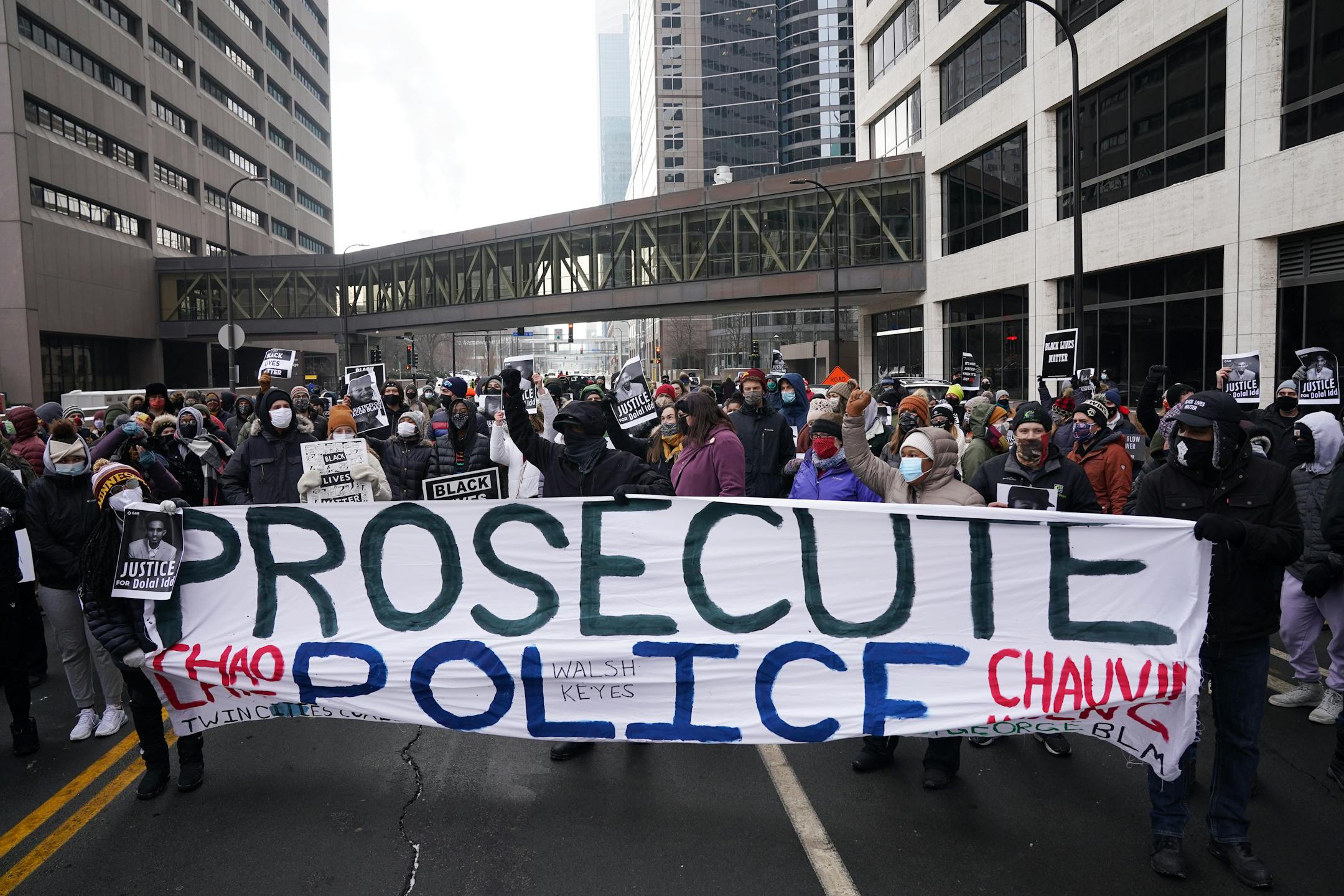
Minneapolis always prided itself for being a progressive place where everyone could thrive. At least, that was true for white people. Black residents all too often faced persistent racism and inequality — in education, homeownership, income and employment — and in the way the police treated us.
For years, the Minneapolis police have persistently abused Black residents, even children. Several years ago I saw a white officer confront a Black boy who looked to be about 10. He grabbed the boy by his shirt and slammed him against the hood of a police car. I confronted the officer and notified the white police chief at the time. The chief shrugged as if there was nothing he could do.
It took the police murder of George Floyd in 2020, and an uprising by outraged residents, to finally call attention to the brutality and injustice Black people face every day here and around the country.
Those of us who had long fought for a reckoning over police abuse in Minneapolis expected to see a critical examination of the practices, laws, policies, contractual requirements and spending that undergird policing. We expected a well-thought-out, evidence-based, comprehensive plan to remake our police department.
Instead, what we got was progressive posturing of a kind seen throughout the country and a missed opportunity to bring about real change and racial justice.
This was made plain Nov. 2 when voters rejected a proposal to replace the Minneapolis Police Department with a new Department of Public Safety. While many white progressives embraced the ballot measure as a sign of progress, many Black residents like me raised concerns that the plan lacked specificity and could reduce public safety in the Black community without increasing police accountability.
The city's largest Black neighborhoods voted it down, while support was greater in areas where more white liberals lived.
The measure would have removed from the city charter a requirement for a minimum number of police officers per resident and enacted "a comprehensive public health approach" to public safety "which could include licensed peace officers (police officers), if necessary." (Emphasis added.) It would have also diluted the mayor's power over the police by having the chief executive and the City Council share control, and would not have required the head of the proposed new department to have any law enforcement experience.


