

The first vote Tracy Hatfield ever casts in Minnesota will belong to Barack Obama.
Here in the heart of north Minneapolis' black community, on a block dotted with board-ups and Section 8 subsidized rentals, this once homeless mother answers the door with her 3-year-old grandson, Travonte, clinging to her leg.
"I can't wait to vote," Hatfield, 44, tells Veronica Andrews, an area church member who is out on her first door-knocking drive for Obama, the Democratic presidential candidate.
"It's not a black thing, it's not a white thing," Hatfield says. "It's just different. Everyone around here is going to vote. I wish the kids could vote."
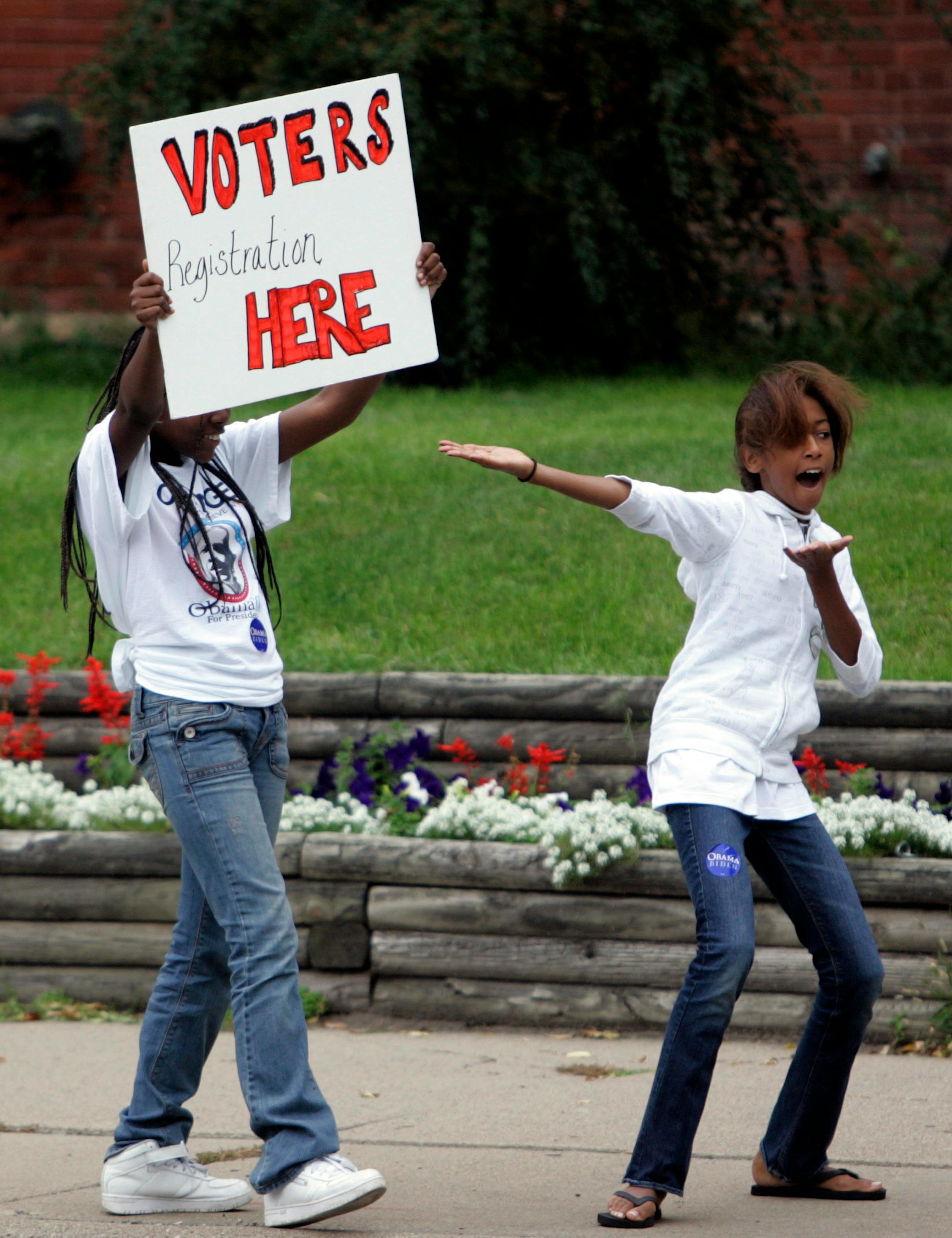
This year's presidential campaign is expected to generate record voter turnout in black communities across the nation -- partly through the efforts of young, new volunteers such as Andrews, joining a black political mobilization that hasn't been seen in decades. National efforts to date have registered an estimated 1.3 million new voters, more than 60 percent of them minorities.
In critical battleground states such as Florida, the Obama team is targeting 600,000 black voters who are registered to vote but who don't show up regularly on Election Day. A big turnout by new, or newly revived, black voters there and in other pivotal states such as Virginia and North Carolina could redraw the electoral map for Obama on Election Day.
But some registration drives that are drawing in multitudes of minority voters are under fire. One group that claims to have registered more than 1 million new voters nationwide is being accused of submitting piles of fraudulent voter forms in several battleground states. The group, known as the Association of Community Organizations for Reform Now, or ACORN, says the complaints are overblown or false. Republicans are among ACORN's loudest critics. At a campaign stop in Bethlehem, Pa., supporters of John McCain interrupted his remarks Wednesday by shouting, "No more ACORN."
Other voter sign-up initiatives are plainly tapping into voter fervor. In Minneapolis, going door-to-door on a brisk Saturday morning, Andrews hears it again and again: It's not because he's black. It's the man. It's change.


