

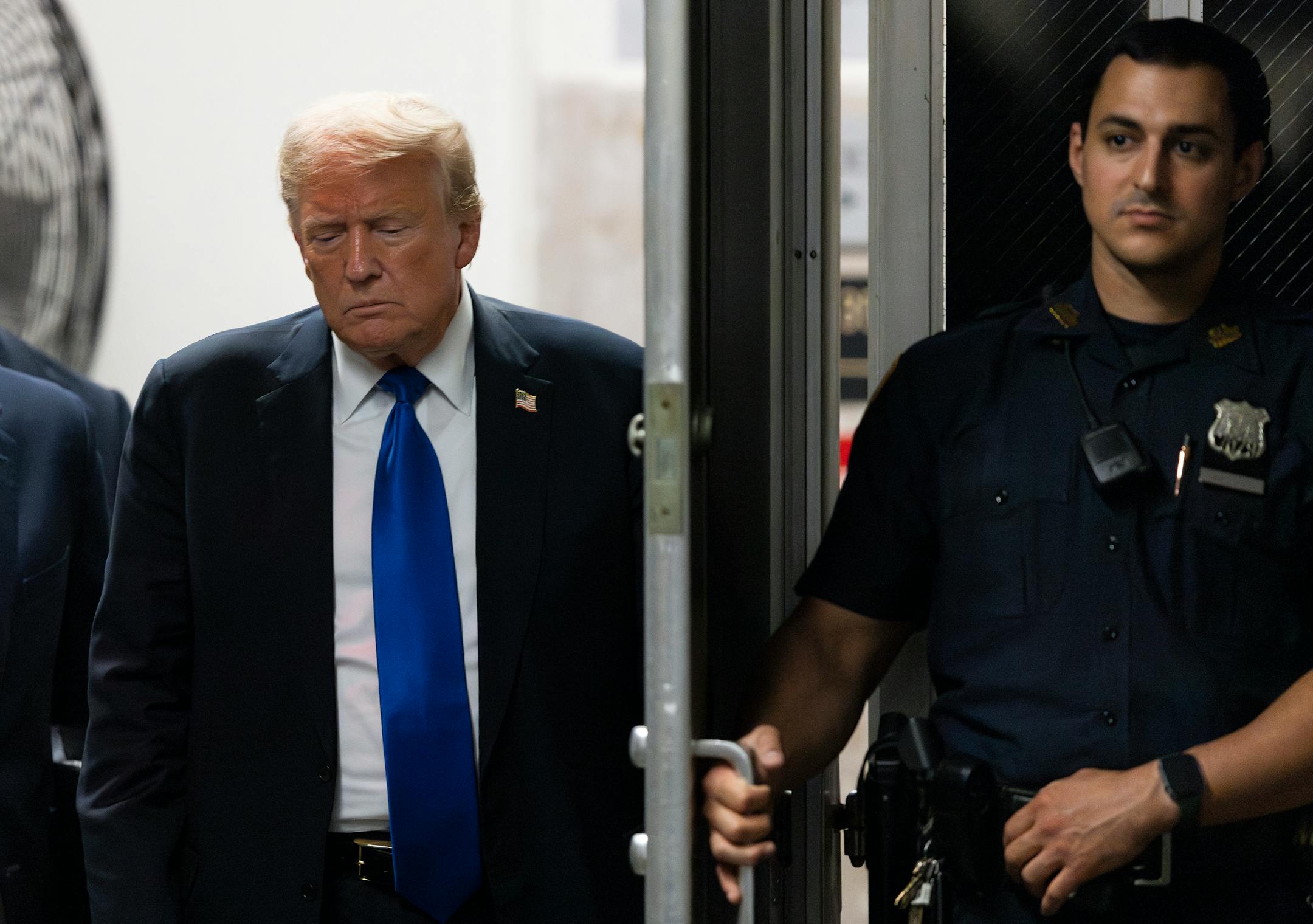
NEW YORK — As Donald Trump lambasted the guilty verdict of his hush money trial this week, he stood inside a Manhattan courthouse that was the site of one of the most notorious examples of injustice in recent New York history. And he had a part in that.
It's the same courthouse where five Black and Latino youths were wrongly convicted 34 years ago in the beating and rape of a white female jogger. The former president famously took out a newspaper ad in New York City in the aftermath of the 1989 attack calling for the execution of the accused in a case that roiled racial tensions locally and that many point to as evidence of a criminal justice system prejudiced against defendants of color.
But on Friday, a day after making history as the first U.S. president convicted of felony crimes in a court of law, Trump blasted that same criminal justice system as corrupt and rigged against him.
''This is a scam,'' he said of the case brought by the Manhattan District Attorney's Office led by Alvin Bragg, the first Black person in the role, and overseen by Judge Juan Merchan, who is of Colombian descent.
''This is a rigged trial. It shouldn't have been in that venue. We shouldn't have had that judge,'' the presumptive Republican presidential nominee said Friday from Trump Tower in Manhattan.
Some Black Americans found irony in Trump railing against the injustice of his own conviction, in a courthouse where five Black and Latino teenagers were wrongly convicted in a case Trump supported so vociferously. The Central Park Five case was Trump's first foray into tough-on-crime politics that preluded his full-throated populist political persona. To many, Trump employed dog whistles as well as overtly racist rhetoric in both chapters of his public life.
But lately, in his outreach to Black and Hispanic communities, Trump has adopted the language of criminal justice reform advocates. He claims Black Americans and Latinos can relate to him because prosecutors are out to get him like they have been out to get many men and boys in their communities.
''Donald Trump's conviction is going to be a problem for him with many Black people because, guess what, many Black people do not like people who violate our criminal laws,'' said Maya Wiley, a New York civil rights attorney and CEO of the Leadership Conference on Civil and Human Rights.


