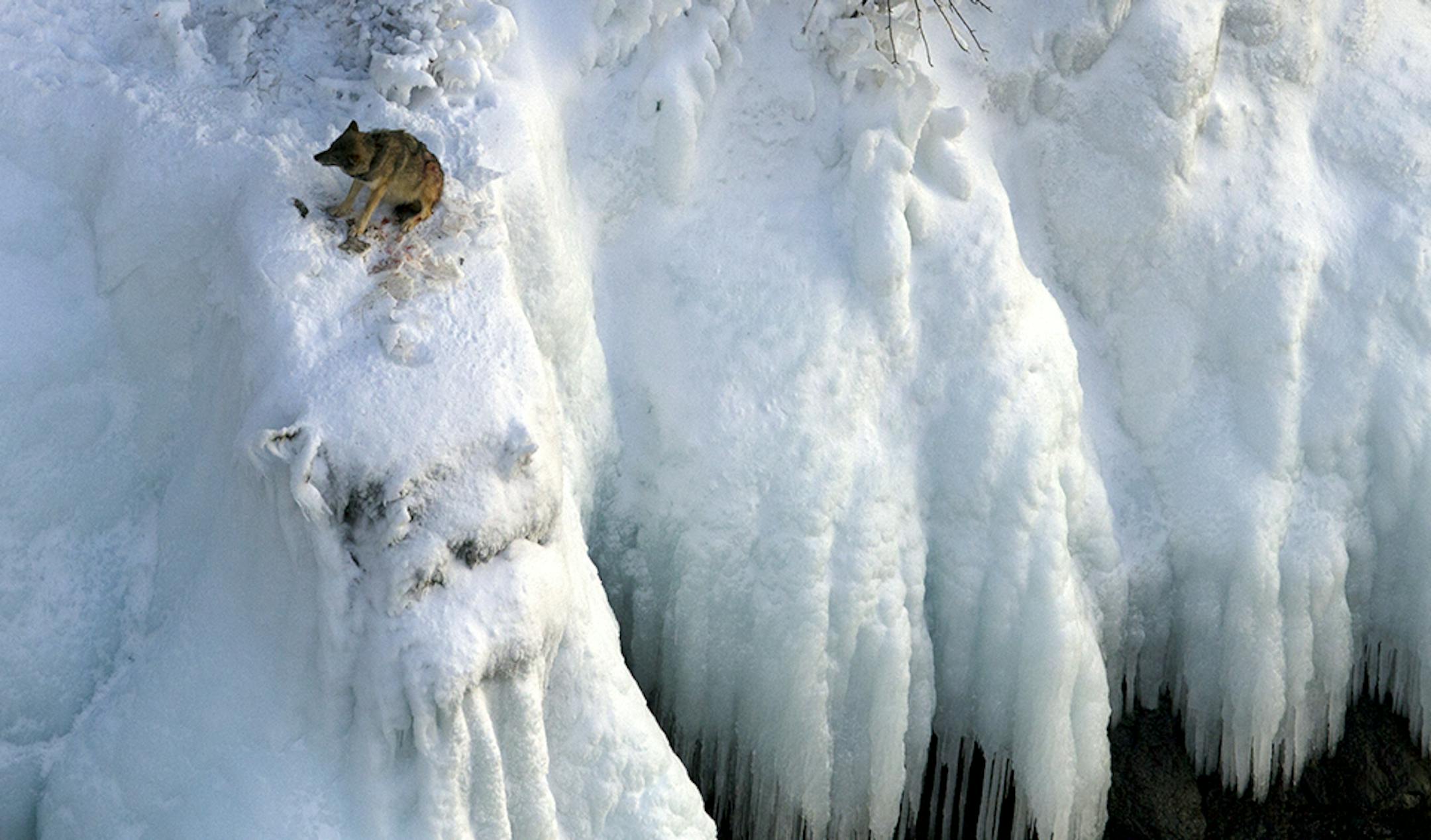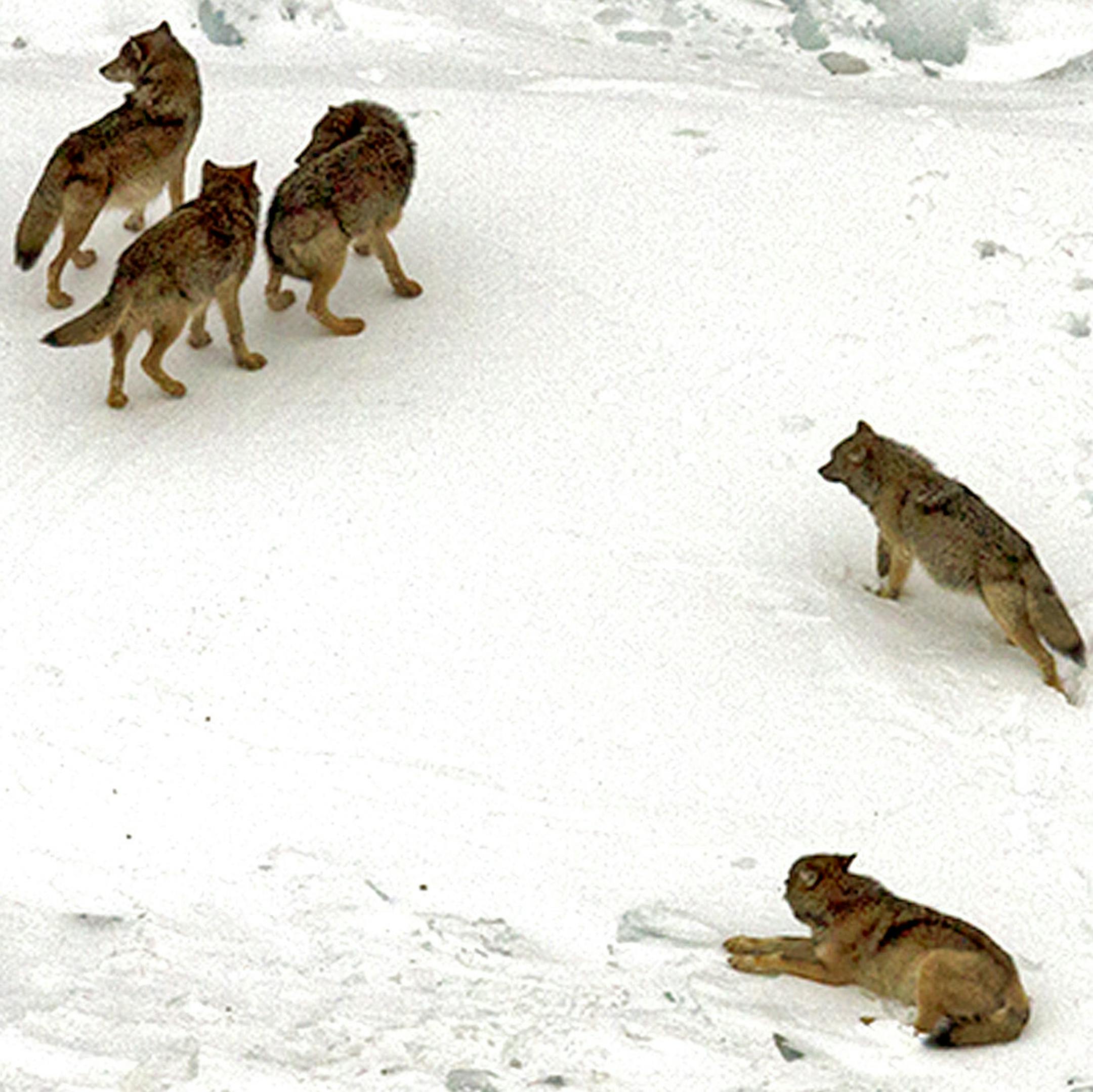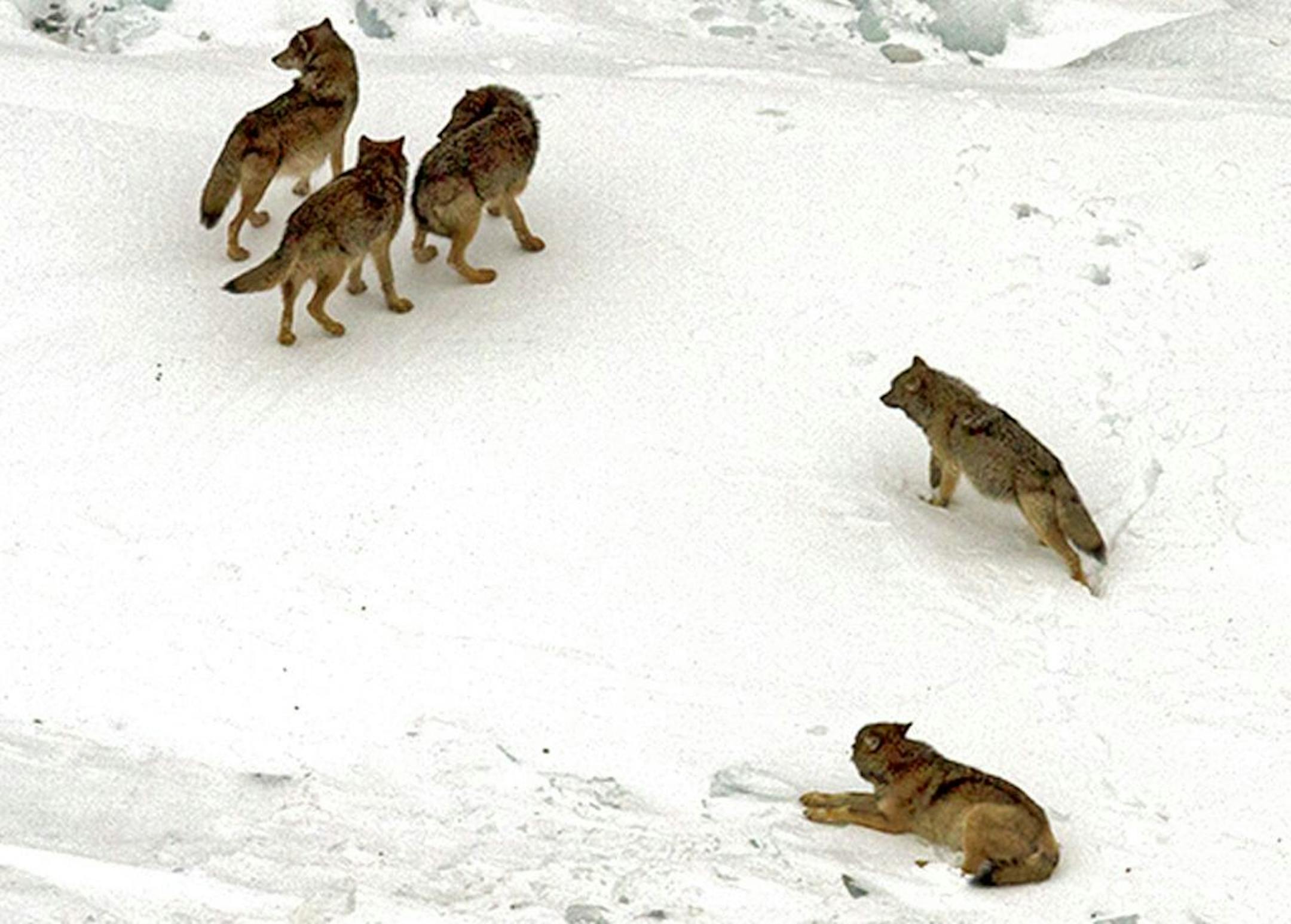
It's only February, and already it's been an extraordinary winter for the wolves of Isle Royale.
At least two new healthy pups, and perhaps three, have survived their first perilous months of life — proof that the famous wolves, which number less than a dozen, may not be dwindling after all.
And twice this winter, the bitter cold that has halted shipping across Lake Superior has also created temporary ice bridges across the 20-mile channel between Isle Royale and the Minnesota-Ontario mainland, raising the tantalizing possibility that once again wolves could either leave the island or arrive on their own four feet.
Both developments are likely to only confound a precedent-setting decision that faces the National Park Service: whether to intervene in nature's course and bring new wolves onto the island in an effort to preserve them and the critical balance between the predators and their primary prey, moose. Conservationists say the decision could establish new policy on managing critical species in national parks everywhere and even change the definition of wilderness as a place where only nature is allowed to rule.
The wolves, which once numbered as many as 50, are at their lowest ebb since researchers first began tracking them in the 1950s and are closely followed by naturalists all over the world. Scientists running the Isle Royale wolf study today, from Michigan Technological University say they fear that even with the new pups, they could die out, largely as a result of inbreeding.
At best, the new pups "might extend the amount of time the population can bump along," said Rolf Peterson, who has been studying the wolves and moose along with John Vucetich for years.
In a series of e-mails sent from the island this week, Peterson said that even now the number of wolves is too small to keep the moose population in check and the forest ecosystem in balance. Since 2006, moose numbers have more than doubled to nearly 1,000. That's far less than their peak of nearly 2,500 more than 30 years ago, but the rate of growth is dramatic.
The huge mammals depend on balsam firs, one of the primary species of trees on the island, as a major part of their diet. If they eat too many, then other trees would take over and, in the long run, neither wolves or moose would survive.