

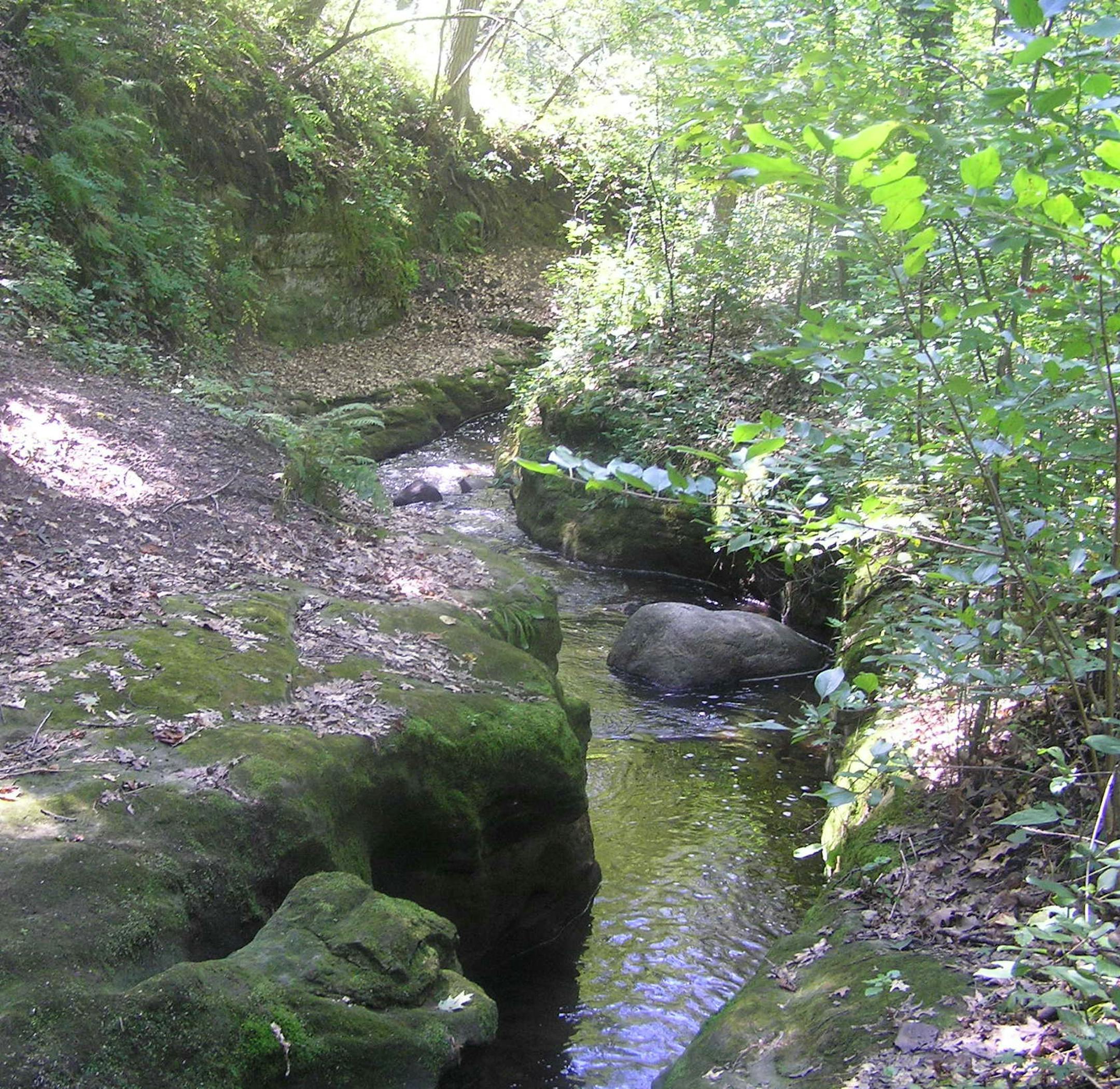
Some complainers say the Twin Cities is too flat. But just east of St. Paul is an inspirational lookout where you can admire the skyline, the mighty Mississippi River Valley and some of the prettiest hills in the Twin Cities. You might even see a bald eagle as you look down from this bluff top. The new Fish Creek Natural Area Greenway is a high point for people who love wild spaces and beautiful parks.
On Dec. 11, 2013, Maplewood finalized the purchase of 70 acres of undeveloped land to be open to the public and preserved as open space. The Fish Creek parcel is one of the last wild places in the Mississippi wildlife migration corridor, an international flyway. Its scenic spots range from undisturbed prairie to oak savanna to quiet creekside trails and a small waterfall. It's just 7 miles from the state Capitol so naturally it nearly became a housing development.
Second chance for wild spaces
"Until pretty recently, Maplewood was a rural suburb, even though it's so close to downtown St. Paul. And then boom, everything changed," said Virginia Gaynor, the city's natural resources director. "In the early 1990s, residents became nervous about the pace of development and the loss of open space."
In 1993, citizens approved a $5 million bonding bill designed to preserve open space. As a result of that referendum, Maplewood now has 14 neighborhood preserves. But at the time of that bonding bill, the Fish Creek land was not for sale.
Years later, when the property did come on the market, the referendum money was already spent. And besides, the Fish Creek land was now listed at more than $10 million. A developer nabbed it, and in 2006, at the height of the building boom, planned a 350-unit housing development. When the market crashed, the property went into foreclosure. The land came on the market again in 2011, this time valued at only $2 million — a bargain. But the city still didn't have the money.
Instead, the Fish Creek Initiative, a citizen group founded by resident Ron Cockriel, rallied conservation and hunting groups, corporate sponsors, individual donors and foundation grants to buy the land. The Conservation Fund acted as a holding partner, buying the land and holding it until the city and its partners, Ramsey County and the Ramsey-Washington Watershed District, had raised the needed funds. When the city purchased the site last December, it had enough funds to cover 62 acres of the site. Gov. Mark Dayton signed two bonding bills earlier this month that finally provided the city with enough cash to permanently protect the park's final eight acres.
"This is one good thing that happened because of the economy tanking. It put the price tag within reach and made it available at the same moment people were rethinking how we approached the last pieces of undeveloped land in the metro," said Gaynor. "It's a very special and unique place, and we are so thrilled we got a chance to save it. The stars just aligned over Fish Creek."


