

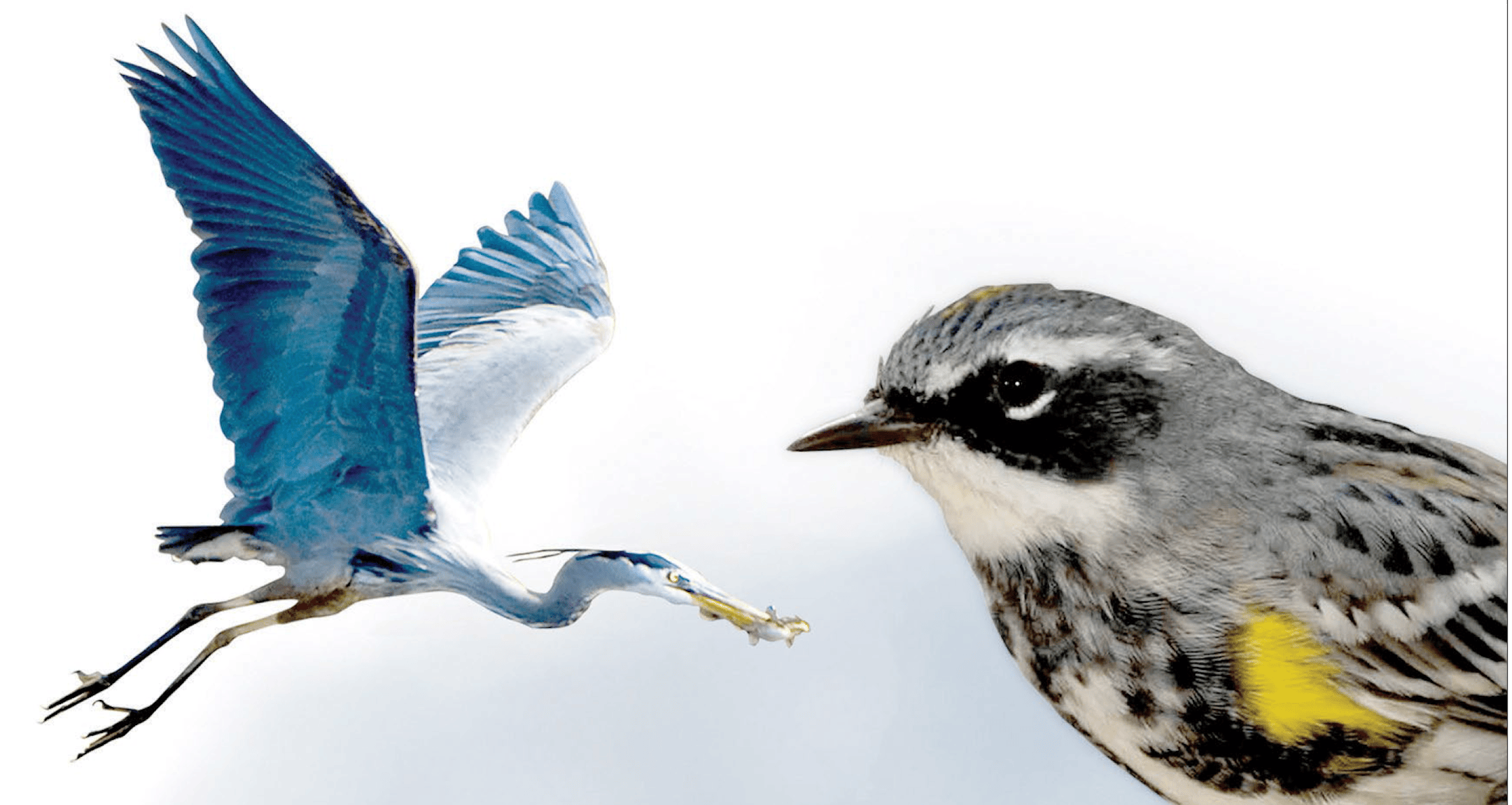
Don Del Greco found a seat on a stump in the moonlit woods of Maplewood State Park at 4:30 a.m. in late April. He didn't have long to wait. By 4:45, song sparrows began singing and a barred owl made its last calls of the wee hours. By 5 a.m., robins joined the chorus, and then came what he really wanted to hear: the song of the yellow-rumped warbler.
"It was just amazing," said Del Greco, a lifelong birder and manager of the park. "It was the first flush of warblers we've seen."
Yellow-rumped warblers, which typically weigh less than two quarters, arrive after migrating thousands of miles from the southern United States. Other warblers have a more arduous journey, coming from as far as Brazil, Columbia and Costa Rica, and often flying farther north than Minnesota. They arrive in their brightest colors and sing their loudest songs for breeding season.
Peak numbers of songbirds should be passing through northwest Minnesota just in time for the Festival of Birds on May 19-22.
The festival has drawn all levels of birders from across the nation and Canada to Detroit Lakes since it began 19 years ago. It sparked the 200-plus-mile Pine to Prairie Birding Trail that was dedicated in 1999 and expanded into Manitoba in 2009, said Cleone Stewart, tourism director for the Detroit Lakes Regional Chamber of Commerce.
Minnesota's first birding trail ties together 45 areas along the intersection of three biomes: western prairie, eastern hardwoods and northern conifer forests. Close to 275 species converge along the corridor and are viewable within an hour's drive.
"You can lean one way and hear the veery thrush," said Del Greco of his 9,250-acre park where rolling woods abut waving fields of grass. "You lean the other way and hear the bobolink and meadowlark. It's a tug of war between forest and prairie."
Wetlands, potholes provide habitat
It takes only a drive northwest on Interstate 94 to see why the region stretching from Fergus Falls toward Detroit Lakes attracts birders. Vehicles roll past great blue herons and white egrets wading for dinner in the lakes and seasonal ponds called "prairie potholes" that flank the highway just past the Otter Tail County line. White pelicans circle like synchronized fliers as they search for a place to land.


