"That's too much information," the man told me. "I've gotta run."
I was halfway into answering a question about kingfishers. (If you ask me a bird question, I will try to give you a complete answer.)
Why this kingfisher interest? In 50 years of looking, give or take, I've found two kingfisher nesting burrows. One was in a private sand pit. The other, found in early May, is in a municipal maintenance yard.
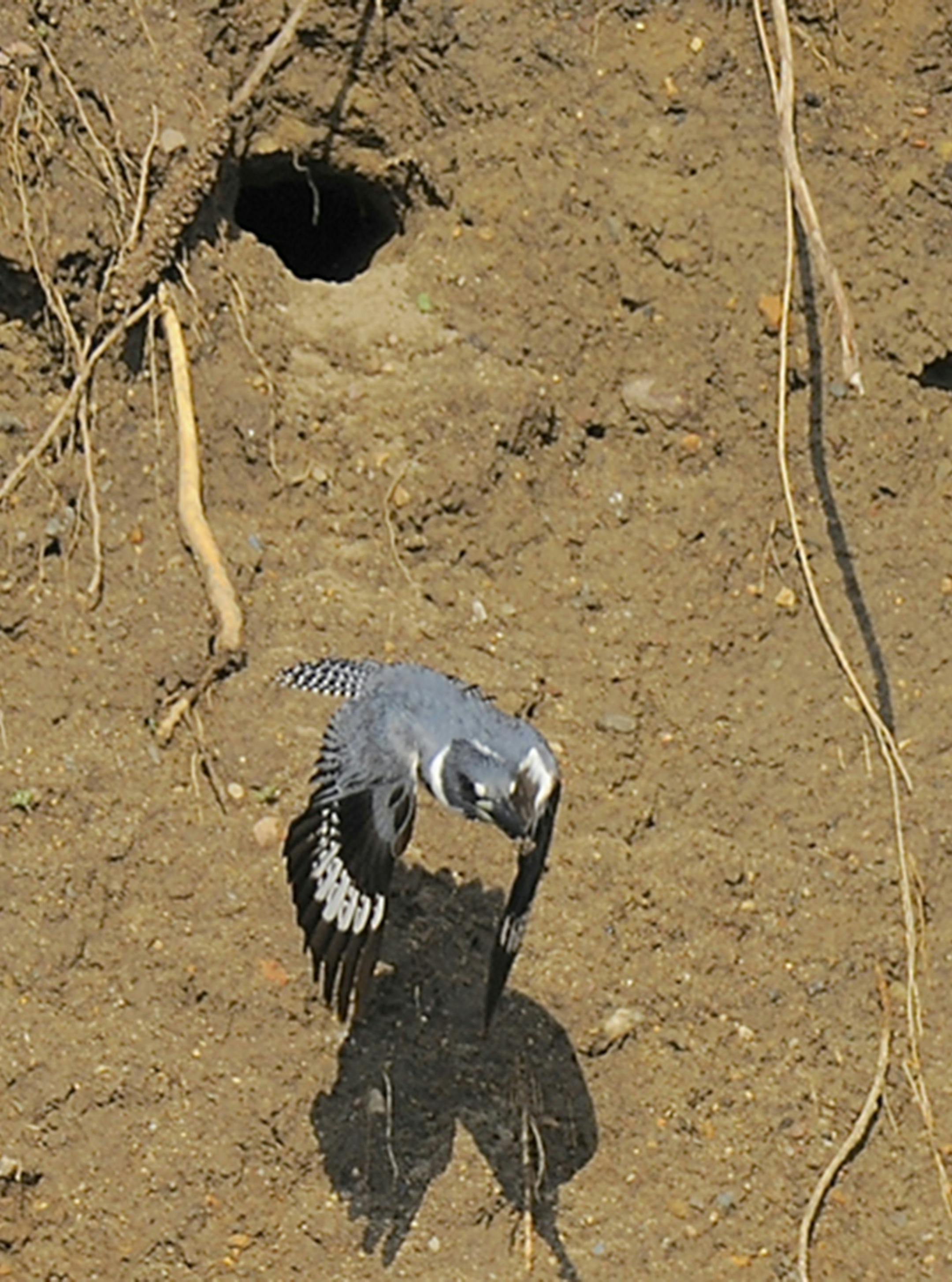
Following the bird's rattling call, I watched a kingfisher disappear into a fist-sized hole on the steep side of a large dirt pile. Dumb luck. I was given permission to observe.
Belted kingfishers are common throughout North America. They are shy birds, easily disturbed. You often see them flying away, the distinct call trailing.
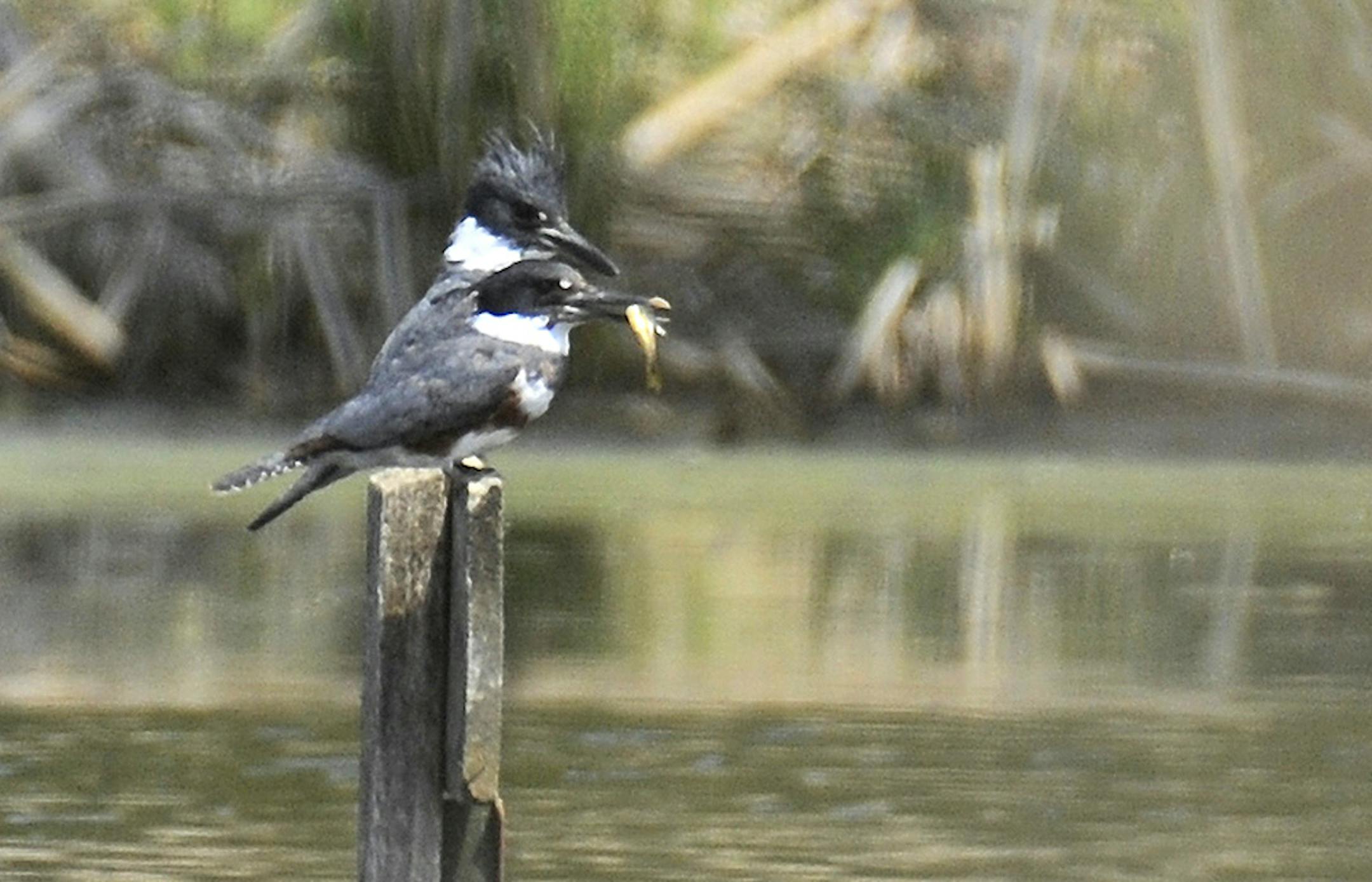
You can find them on power lines over rivers, on bridges, boat ramps, lakeside light posts, anything with height and diving opportunity. Their fishing technique is to plunge.
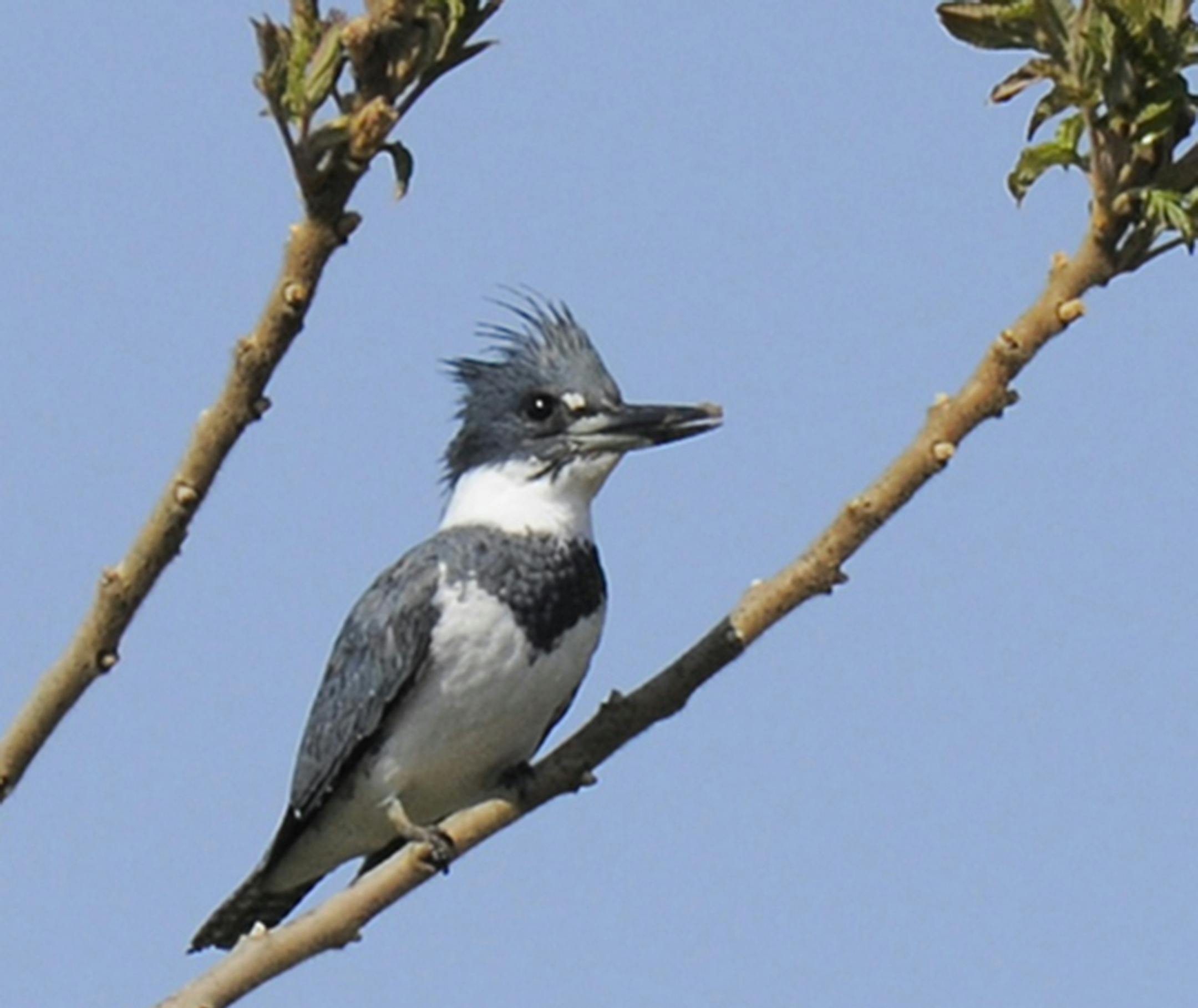
The birds are blue and white, larger than blue jays, sleek in flight, with large heads and heavy bills. Males carry one broad blue stripe across the breast. Females have two stripes or belts, one blue, one red.
That's an oddity. In most bird species the male is decorative, the female cryptically dressed for anonymity on the nest. Of course, kingfishers nest deep inside a burrow. Being seen on the nest is highly unlikely.