
Bird guides offer a benchmark amid a changing environment

Field guides still offer benchmarks in a fluid environment.

May 10, 2016 at 3:40PM
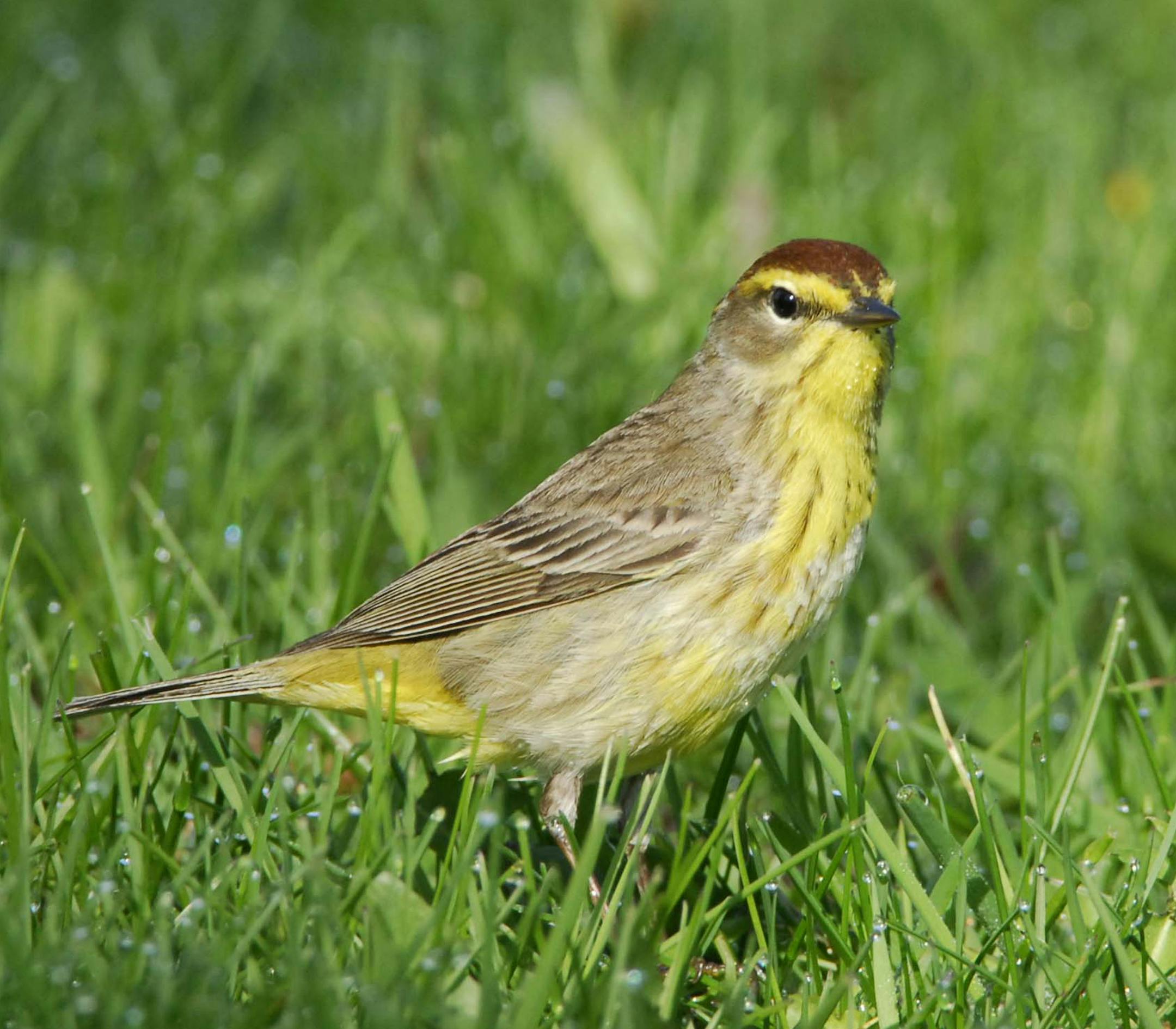
Palm warbler credit: Jim Williams, special to the Star Tribune
Palm warblers currently return here in late April, but earlier springs might change that. (The Minnesota Star Tribune)

"Birds in Minnesota" is a field guide to 400 species of birds that have been seen in Minnesota.

Bob Janssen wrote this book in 1987, 29 years ago. He included dates for early, average and late arrival and departure times for migrant species. Want to know when to expect palm warblers to flit through your trees? You could look it up.

We saw the first warbler in our yard on April 25, right on schedule. Early arrivals came two weeks before that.

But seasons, generally speaking, aren't as reliable anymore, as this spring has shown. We are seasonally gollywampus. I'm with the majority of scientists who say that the seasons by which we have marked and measured our lives are changing, and will be for centuries to come.

Migration dates for palm warblers might not fit patterns 10 or 20 years from now.

Janssen, meanwhile, is currently updating all of the information from his 1987 guide in preparation for a new book.

So, is there purpose to collecting information shortly to be outdated?

The past president of the American Meteorological Society, William B. Gail, wrote an essay about this in the April 19 edition of the New York Times. It's titled "A New Dark Age Looms."

He opens by asking us to "imagine a future in which humanity's accumulated wisdom about Earth — our vast experience with weather trends, fish spawning, migration patterns, plant pollination and much more — turns increasingly obsolete."

He sees a time when nature's reliable patterns, so important to our lives for uncountable years, no longer will be as reliable.

I asked Janssen if the ongoing changes were a concern for him as he worked on his new book.

They are not. Not yet, anyway.

"I believe that climate change is having a huge effect on birds," he said, "mainly in the long run."

He sees this as all the more reason to record what is happening now. Current records will be the ruler against which future change will be measured. Comparing records from the 1987 book with today confirms the point.

Janssen's new edition, like the old, will rely on information gathered by birders. Janssen is using reports birders make to e-mail birding lists, to a Web listing service called eBird, and to the state's official source of records, the Minnesota Ornithologists' Union.

The 1987 book relied on the same kind of information. It also used some records dating to the late 1800s. A reasonably accurate picture of bird activity was possible over a span of decades because things changed very slowly if at all.

The weather, of course, dictates landscape. That is where Janssen sees the problem.

"The biggest decline in bird numbers," Janssen says, "is loss of habitat. It's occurring at an alarming rate. In my lifetime, the numbers of birds that I have seen each year since I was a teenager have dropped drastically."

The cause is same old, same old — agriculture, houses, roads.

"The data will go out of date sooner, yes, because of climate change and loss of habitat," Janssen said. That adds urgency to gathering current data.

Our world is rushing toward that time when, as Gail writes, "our historical understanding will turn obsolete faster than we can replace it with new knowledge."

That includes the birds in your yard, at your cabin. Change will touch the very things you might use to take your mind off change.

Read Jim Williams' birding blog at startribune.com/wingnut.


Robert Janssen, author of "Birds of Minnesota State Parks," spoke with students from Upper Mississippi Academy on April 16 during a Minnesota Department of Natural Resources book-launch at Fort Snelling State Park.
Robert Janssen, author of "Birds of Minnesota State Parks," spoke with students from Upper Mississippi Academy on April 16 during a Minnesota Department of Natural Resources book-launch at Fort Snelling State Park. (The Minnesota Star Tribune)
about the writer

about the writer

Jim Williams, Contributing writer

More from No Section

See More
FILE -- A rent deposit slot at an apartment complex in Tucker, Ga., on July 21, 2020. As an eviction crisis has seemed increasingly likely this summer, everyone in the housing market has made the same plea to Washington: Send money — lots of it — that would keep renters in their homes and landlords afloat. (Melissa Golden/The New York Times) ORG XMIT: XNYT58
Melissa Golden/The New York Times

It’s too soon to tell how much the immigration crackdown is to blame.