

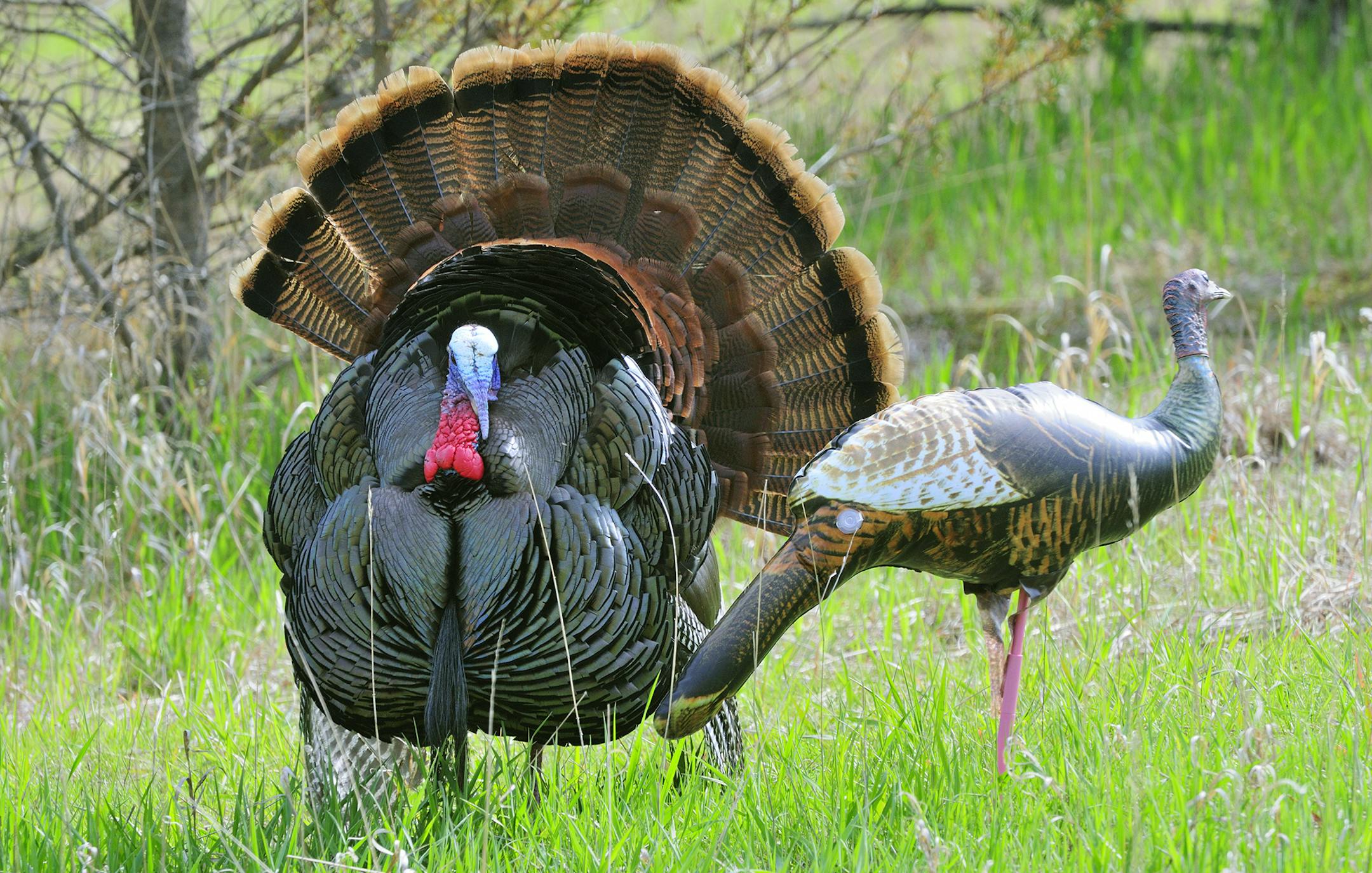
With tens of thousands hunters gearing up for the spring turkey hunting season in Minnesota, state conservation officials are detailing the best ways to keep the wild flock from falling victim to the bird flu that is killing turkeys by the hundreds of thousands in commercial operations.
"Turkey hunters can take steps to minimize the risk of spreading HPAI [highly pathogenic bird flu]," said Michelle Carstensen, wildlife health program supervisor with the Minnesota Department of Natural Resources (DNR), "and they can be excellent scouts in helping identify wild birds like raptors or turkeys that could have been affected."
Wild turkeys are "presumed to be susceptible" to the avian flu, the DNR said in a statement released in the run-up to Wednesday's start of the six-week turkey hunting season.
For the 2014 spring turkey hunting season, more than 43,000 permits were issued. The permits covered all but the northeastern quarter of the state. The take totaled nearly 11,500 turkeys.
So far in Minnesota, the nation's largest turkey producer, the avian flu has been confirmed in more than 20 commercial operations in Minnesota. They are primarily located in the central, western and southwestern regions of the state. All are where turkey hunting is allowed.
Even though the virus presents a low risk to humans and no people in Minnesota have fallen ill during this outbreak, the DNR is encouraging hunters to follow federal recommendations to protect themselves and the birds they take from being stricken with HPAI:
• Do not take or handle wild birds that are obviously sick or found dead.
• Dress game birds in the field whenever possible.


