

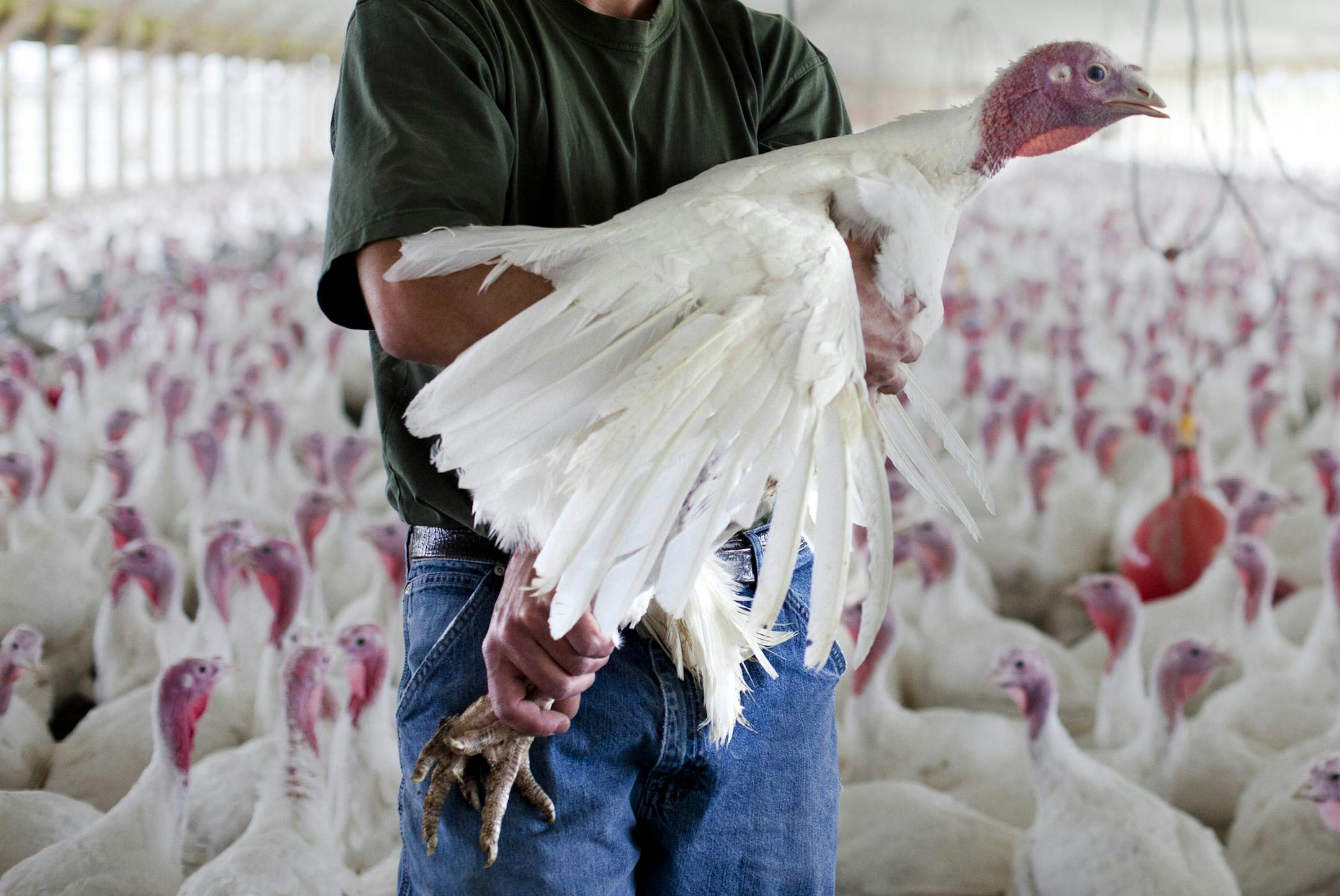
Lethal bird flu has spread to four more Minnesota turkey farms and three additional southwest counties, state animal health officials said Friday.
The outbreak, first reported in early March in Pope County, has now struck 13 farms in nine counties, affecting 872,000 turkeys.
Gov. Mark Dayton issued an emergency executive order allowing heavier trucks and emergency equipment to respond to the turkey farms. The goal is to reduce the number of such trips, lowering the odds that vehicles will spread the H5N2 avian virus.
The virus turned up at a fourth farm in Stearns County, the state's second-largest turkey-producing county behind Kandiyohi, where two farms earlier had outbreaks. New outbreaks also hit farms in Cottonwood, Lyon and Watonwan counties. Together, the four new farms have 189,000 birds, all of which are expected to be killed.
"For these companies, and obviously for the farmers and their families that have been impacted by the H5N2 virus, there are some really difficult times ahead," Minnesota Agriculture Commissioner Dave Frederickson said Friday on a conference call with reporters.
Fredrickson said he isn't calling the outbreak an epidemic. "I don't think we have all settled on a term to describe it," he said. "Obviously this is an event, an ongoing event here in Minnesota. We can put whatever title we want on it, but at this point, we are just responding across the state to the influenza, and we'll continue to do that."
State experts, assisted by a 40-person team from the U.S. Department of Agriculture, have not determined the source of the outbreak. The chief suspects are spring-migrating wild birds, which can spread the virus through their droppings. It poses a low health risk to humans and is not a food safety threat since all birds on affected farms are destroyed.
The highly lethal bird flu has surfaced in at least nine states, but has hit hardest in Minnesota, the nation's largest turkey producer with 450 farms raising about 46 million turkeys a year.


