Bird eggs are an amazing feat

Size, color and number are all programmed into a bird's brain.

July 7, 2015 at 5:08PM
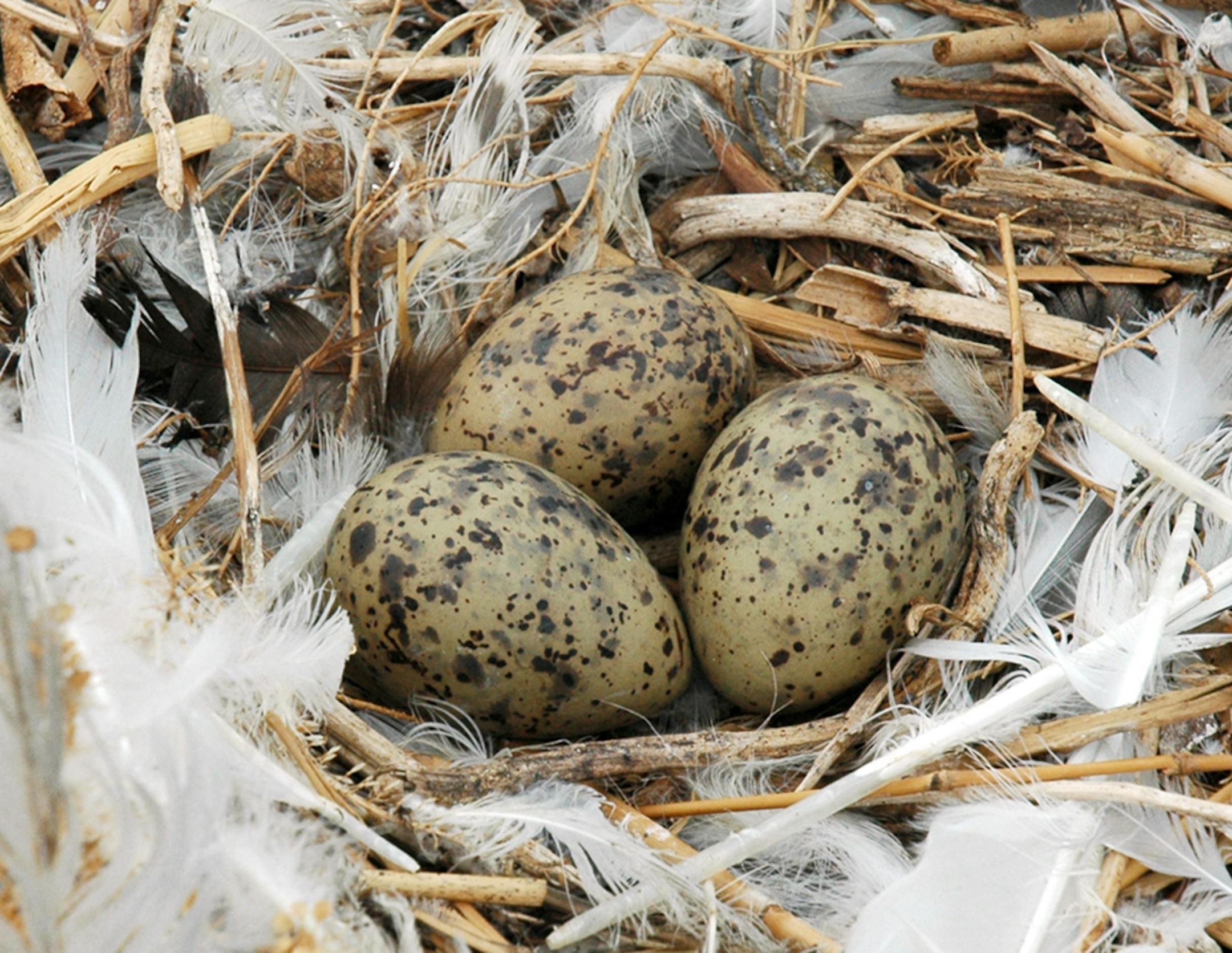
An osprey egg. The open nest demands protective coloration for the eggs. credit: Jim Williams, special to the Star Tribune
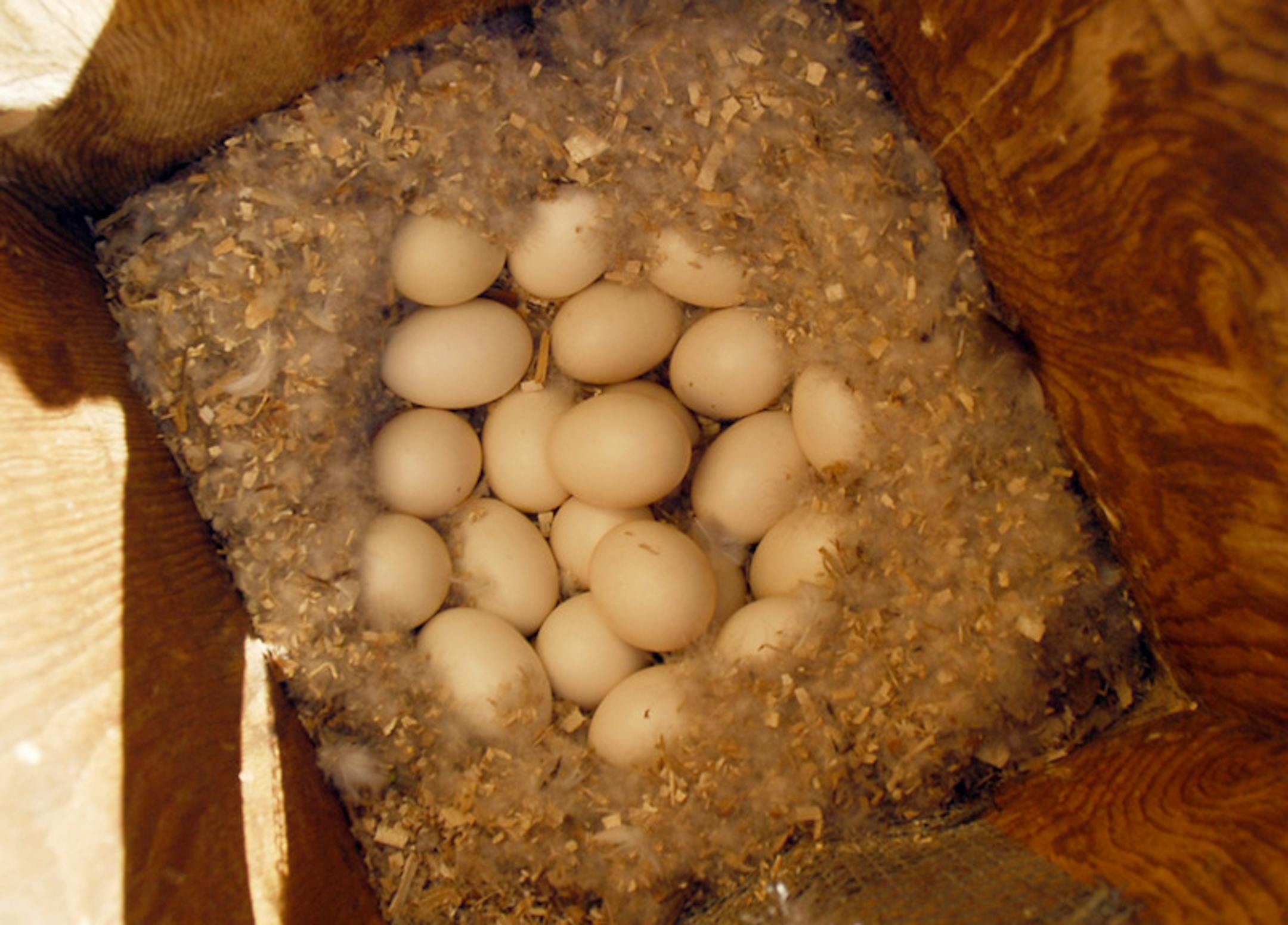
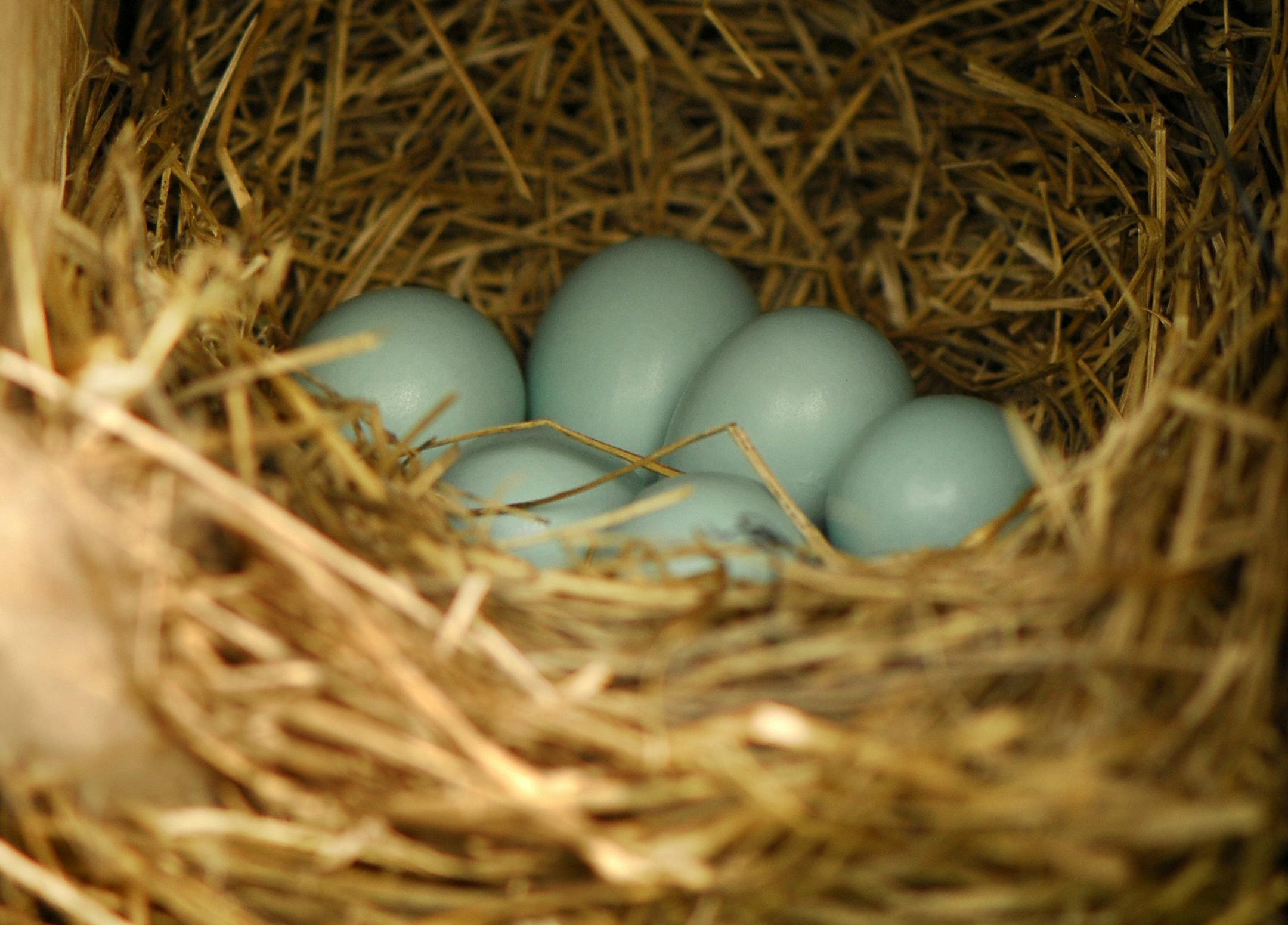
Top: The parent killdeer is standing in front of its nest, the four eggs colored and marked to blend well with the nest location. Left: An osprey egg. The open nest demands protective coloration for the eggs. Middle: We’re looking down at 22 wood duck eggs in a nesting box. The eggs are unmarked. Wood ducks are cavity nesters, unexposed eggs not needing markings. Twenty-two eggs is more than one hen would lay. A second wood duck hen decided to lay her eggs here, avoiding the trials of incubation. This is called dumping. Right: A clutch of six eggs laid by an optimistic Eastern bluebird. Four or five eggs would be a more likely number. The parents will have to work hard to feed six babies once they hatch. (The Minnesota Star Tribune)

The chicken definitely came first.

Before the egg, before the incredible egg.

Production of an egg by any bird, chicken or otherwise, is an impressive feat.

Each species of bird produces a unique egg. Size, color, shape, number — all differ. What is constant is the process of production, the mechanics.

The egg is like a space capsule, a self-contained world for the developing chick. All the nourishment and water it needs to grow is there when the egg is laid. The egg breathes, good air in, bad air out. There is accommodation for waste.

The yolk holds all of the fat and most of the protein the chick needs. (That's why you might be relegated to Egg Beaters.)

Precocial chicks — like geese or killdeer — are up and running within hours of hatching. They hatch from eggs with larger yolks. Altricial chicks — like songbirds — are born helpless, eyes shut, no feathers. Since much development is done after hatching, those species can afford eggs with smaller yolks.

Energy not spent producing larger yolks then is spent feeding nestlings. (Precocial chicks can feed themselves.)
Keeping count

The yolk comes first as the egg moves down the female's oviduct. Albumen, the egg white, is added, then the shell and the membranes that hold it together form. Color is added last, pigment coming from glands in the walls of the oviduct.

Background color is applied first, as the egg twists its way down. Then come speckles or spots or squiggles in a variety of colors. Officially, egg markings are classified as wreathed, capped, overlaid, scrawled, streaked, marbled, dotted, spotted, splashed and blotched.

Hormones bring birds to breeding status. Eggs follow, one at a time. Remove that first egg, and the bird will lay another. She will lay until she has the correct — or close — number of eggs in the nest. Does she count? Is there a correct "feel" when she sits on a complete clutch? No one knows.

Some species of birds are indeterminate breeders. A determinate breeder will lay a predetermined number of eggs, then stop. Indeterminate breeders are programmed to lay a complete clutch. No matter what.

Remove the first egg, and the bird will replace it. Remove. Replace. Remove. Replace. In a research project, one female flicker was induced to lay 71 eggs in 73 days. Other songbird species would respond in the same way.

Allow the bird to assemble a full clutch of eggs, though, and hormones will fade, egg production ceasing.

The hen generally will not hatch more chicks than the food supply will support. Nor will she lay so many eggs that she becomes exhausted, endangering her life or subsequent nesting attempts. The proper investment of energy is an adequate amount, not more or less.

Latitude matters

Many songbirds come north to breed because the Northern Hemisphere's spring causes an explosion of food, plant and insect. As you move north from the tropics, the impact of spring on food supply grows larger. Birds breeding at higher latitudes can provide for larger families.

Flickers, for instance, which breed throughout North America, will add one egg to the clutch for each 10-degree increase in latitude.

Birds nesting in the tropics typically have smaller clutches than do our nesters. The tropics have an even climate, lacking that burst of spring energy.

The long migration that many species make to Minnesota is dangerous and energy-expensive. The reward, though, is more food, more eggs, more chicks, and a more promising future for their genes.

Lifelong birder Jim Williams can be reached at woodduck38@gmail.com. Join his conversation about birds at www.startribune.com/wingnut.


Common tern eggs are colored and marked to offer some protection from predators when the parent tern is off the nest.
Common tern eggs are colored and marked to offer some protection from predators when the parent tern is off the nest. (The Minnesota Star Tribune)
A clutch of six eggs laid by an optimistic Eastern bluebird. Four or five eggs would be a more likely number. The parents will have to work hard to feed six babies once they hatch.
A clutch of six eggs laid by an optimistic Eastern bluebird. Four or five eggs would be a more likely number. The parents will have to work hard to feed six babies once they hatch. (The Minnesota Star Tribune)
The parent killdeer is standing in front of its nest, the four eggs colored and marked to blend well with the nest location.
The parent killdeer is standing in front of its nest, the four eggs colored and marked to blend well with the nest location. (Photos by Jim Williams • Special to the Star Tribune/The Minnesota Star Tribune)
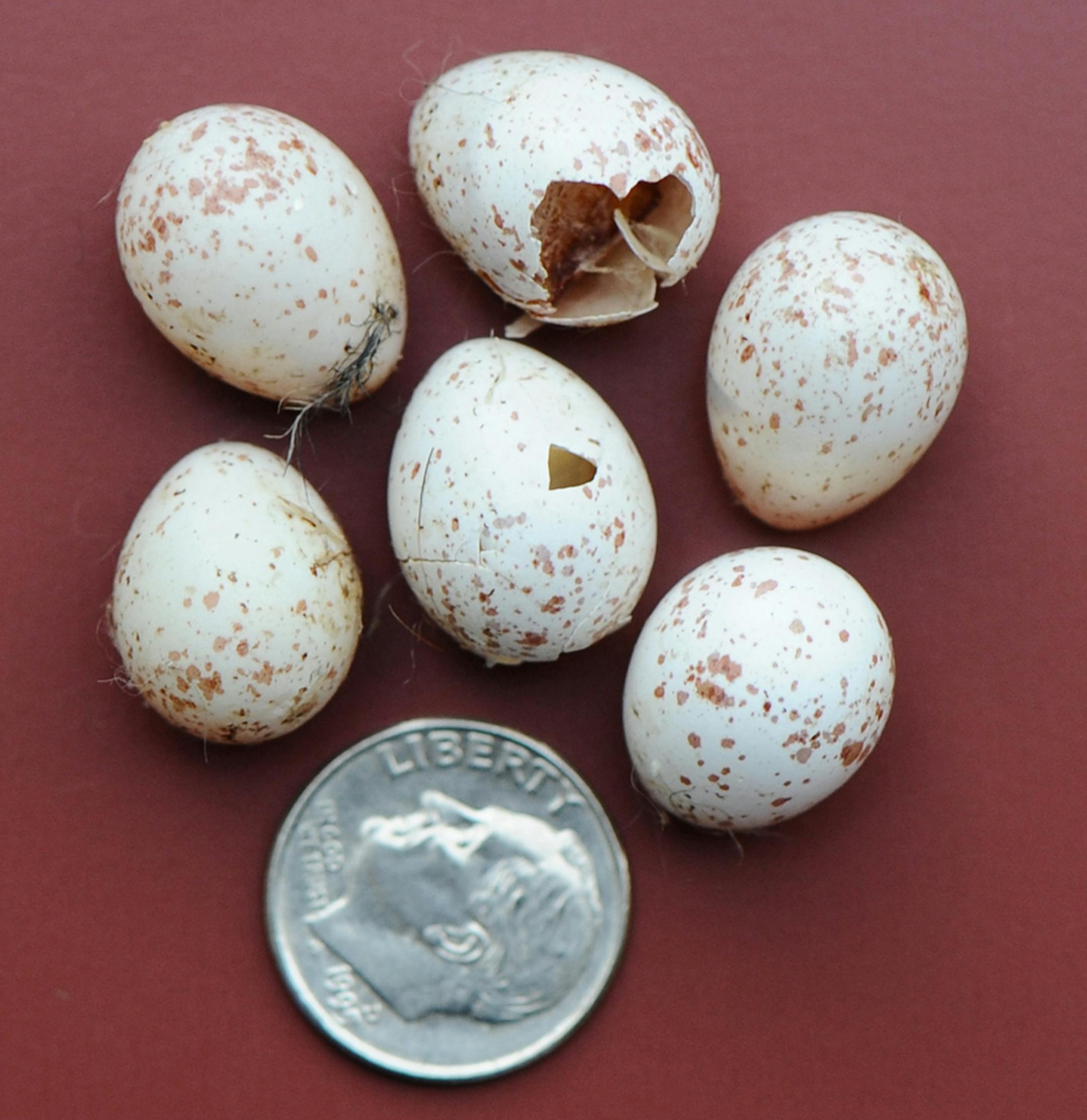
Above: These black-capped chickadee eggs came from a nest that was attacked, then abandoned. The culprit most likely was a house wren that wanted the nest box for itself. Puncturing eggs is common in this situation. Below: Common tern eggs are colored and marked to offer some protection from predators when the parent tern is off the nest.
Above: These black-capped chickadee eggs came from a nest that was attacked, then abandoned. The culprit most likely was a house wren that wanted the nest box for itself. Puncturing eggs is common in this situation. Below: Common tern eggs are colored and marked to offer some protection from predators when the parent tern is off the nest. (The Minnesota Star Tribune)
We’re looking down at 22 wood duck eggs in a nesting box. The eggs are unmarked. Wood ducks are cavity nesters, unexposed eggs not needing markings. Twenty-two eggs is more than one hen would lay. A second wood duck hen decided to lay her eggs here, avoiding the trials of incubation. This is called dumping.
We’re looking down at 22 wood duck eggs in a nesting box. The eggs are unmarked. Wood ducks are cavity nesters, unexposed eggs not needing markings. Twenty-two eggs is more than one hen would lay. A second wood duck hen decided to lay her eggs here, avoiding the trials of incubation. This is called dumping. (The Minnesota Star Tribune)
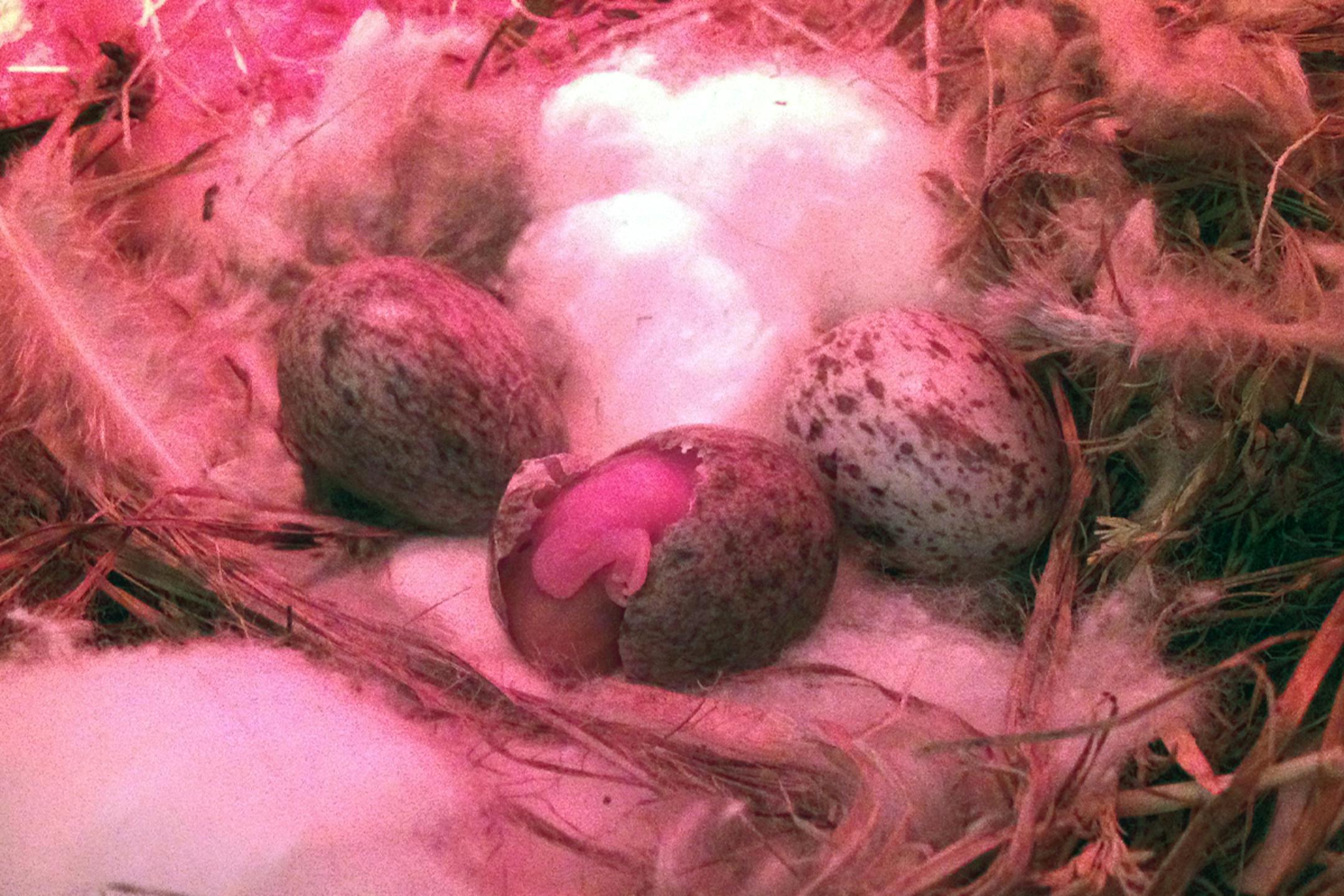
Three House Sparrow eggs, the chick in the middle egg in the process of hatching. This sparrow species is a cavity nester. In most cases, birds using cavities would have plain, unmarked eggs. Camouflage is unnecessary if the eggs are hidden from the view of predators. It is possible that at one time in its history this species nested in the open. credit: Jim Williams, special to the Star Tribune
Three House Sparrow eggs, the chick in the middle egg in the process of hatching. This sparrow species is a cavity nester. In most cases, birds using cavities would have plain, unmarked eggs. Camouflage is unnecessary if the eggs are hidden from the view of predators. It is possible that at one time in its history this species nested in the open. credit: Jim Williams, special to the Star Tribune (The Minnesota Star Tribune)
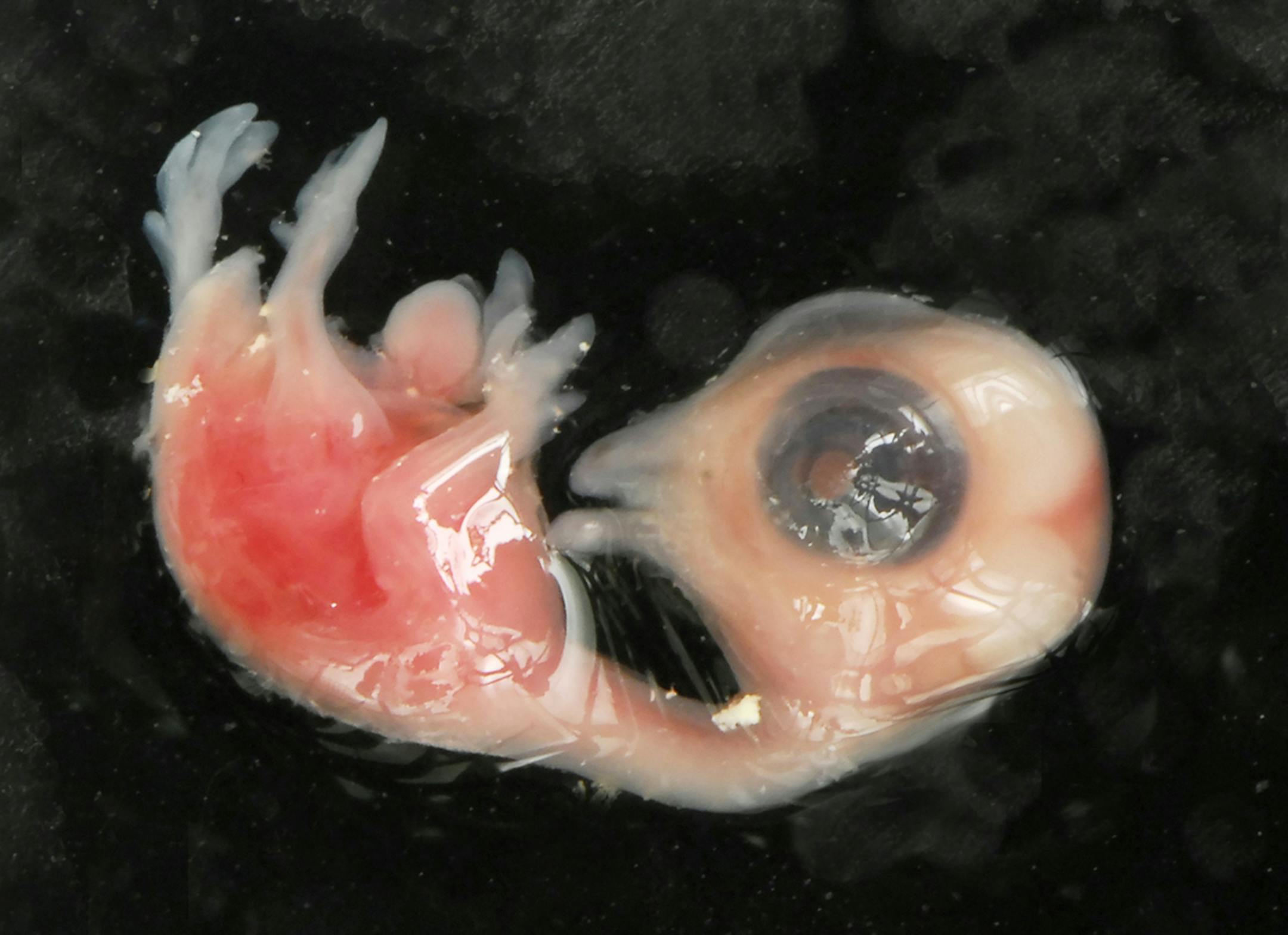
Development of a bird in its egg is fast. Here is the embryo of a Canada goose after eight days of incubation. The nest was abandoned, one egg salvaged to see how far development had gone. credit: Jim Williams, special to the Star Tribune
Development of a bird in its egg is fast. Here is the embryo of a Canada goose after eight days of incubation. The nest was abandoned, one egg salvaged to see how far development had gone. credit: Jim Williams, special to the Star Tribune (The Minnesota Star Tribune)
about the writer

about the writer