
Bills propose wolf hunting and trapping changes

February 29, 2012 at 7:44PM
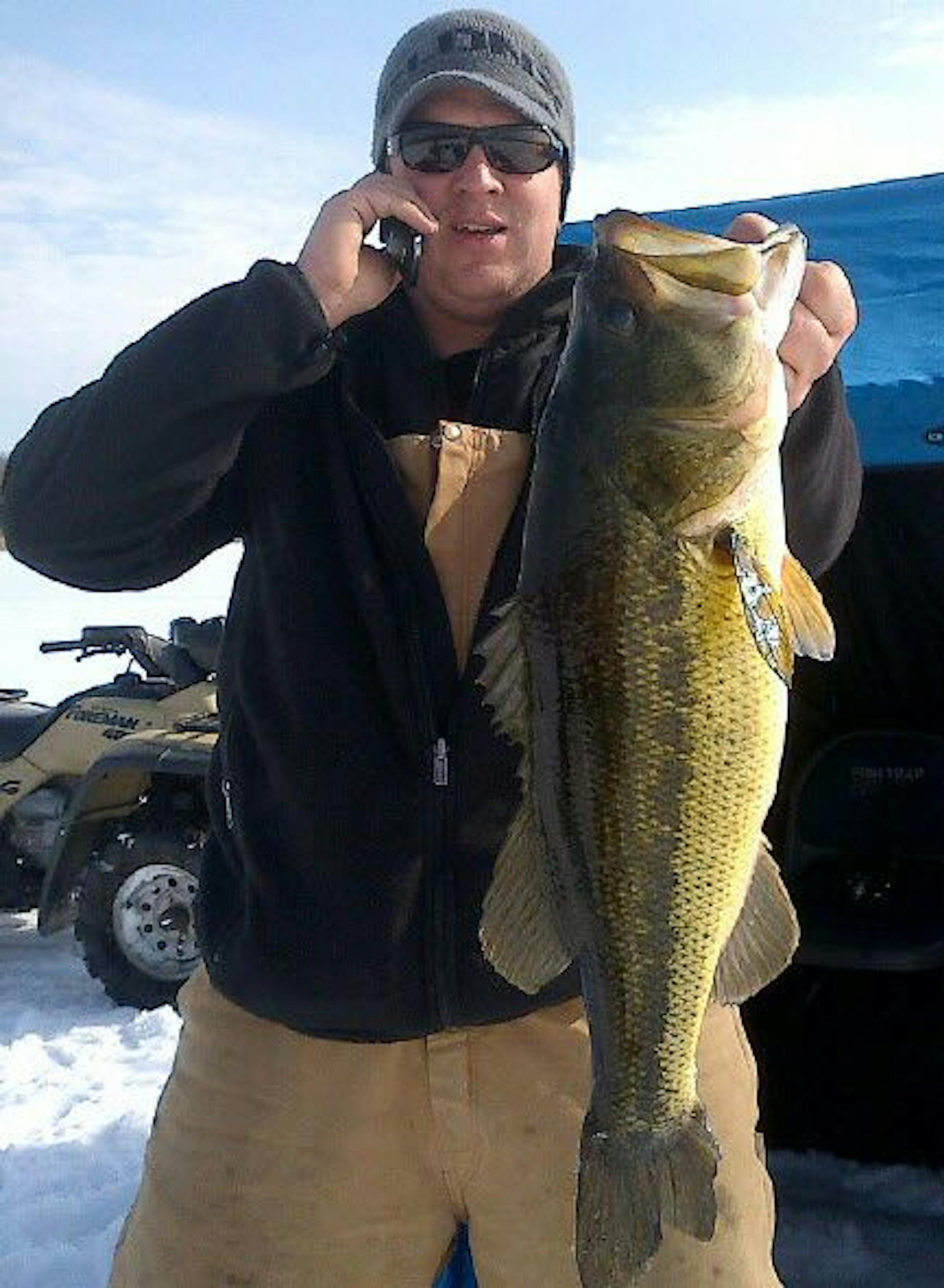
BIG BUCKETMOUTH -- Jon Sontag of Lakeville takes a call while showing off a monster largemouth bass he caught last week on a lake near Pelican Rapids in Ottertail County. "We had never fished the lake before, and set up hoping for some crappies and northerns,'' said friend Steve Zweber of Farmington. The group of four caught six northerns, a "nice batch of sunfish,'' some crappies and several bass, including this dandy, which they estimated at about 5.5 pounds. They released it.
BIG BUCKETMOUTH -- Jon Sontag of Lakeville takes a call while showing off a monster largemouth bass he caught last week on a lake near Pelican Rapids in Ottertail County. "We had never fished the lake before, and set up hoping for some crappies and northerns,'' said friend Steve Zweber of Farmington. The group of four caught six northerns, a "nice batch of sunfish,'' some crappies and several bass, including this dandy, which they estimated at about 5.5 pounds. They released it. (Star Tribune/The Minnesota Star Tribune)

A bill establishing a wolf hunting season in Minnesota will get its first hearing at the Legislature on Thursday.

The bill by Rep. Tom Hackbarth, R-Cedar, calls for the wolf season to coincide with the regular firearms deer hunting season -- an idea supported by the Minnesota Deer Hunters Association but opposed by the Department of Natural Resources (DNR).

"We have some major concerns with that," said Bob Meier, assistant DNR commissioner. "This isn't an incidental take of a predator. We're managing the wolf as a big-game animal. It should have its own season."

Hackbarth said he doesn't believe many deer hunters will get shots at wolves, but at least it gives them that option.

"I think that's the way to go," he said.

The price of a license would be $26, instead of $50 proposed by DNR. The bill, HF2171, will be heard in the House Energy and Natural Resources Policy and Finance Committee.

Meanwhile, the details are out on the DNR's proposal to tighten the use of body-gripping traps to reduce the inadvertent trapping of dogs. Under it, 220-size traps couldn't be used on public lands unless they are 4 feet above ground. Alternatively, the trap trigger would need to be recessed 7 inches from the opening of an enclosure holding a trap (the opening could be no greater than 50 square inches.) Or the trap would need to be in an enclosure with one entrance facing the ground, set no more than 6 inches from the ground, with the trigger recessed 4 inches.

"It's a start, but I'm not sure if this adequately protects dogs," said Sen. Chuck Wiger, DFL-Maplewood, who has introduced his own trap legislation.

DOUG SMITH

about the writer

about the writer

More from No Section

See More
FILE -- A rent deposit slot at an apartment complex in Tucker, Ga., on July 21, 2020. As an eviction crisis has seemed increasingly likely this summer, everyone in the housing market has made the same plea to Washington: Send money — lots of it — that would keep renters in their homes and landlords afloat. (Melissa Golden/The New York Times) ORG XMIT: XNYT58
Melissa Golden/The New York Times

It’s too soon to tell how much the immigration crackdown is to blame.