
Bill would make site where Civil War began a national park

The Associated Press
September 11, 2016 at 10:51PM
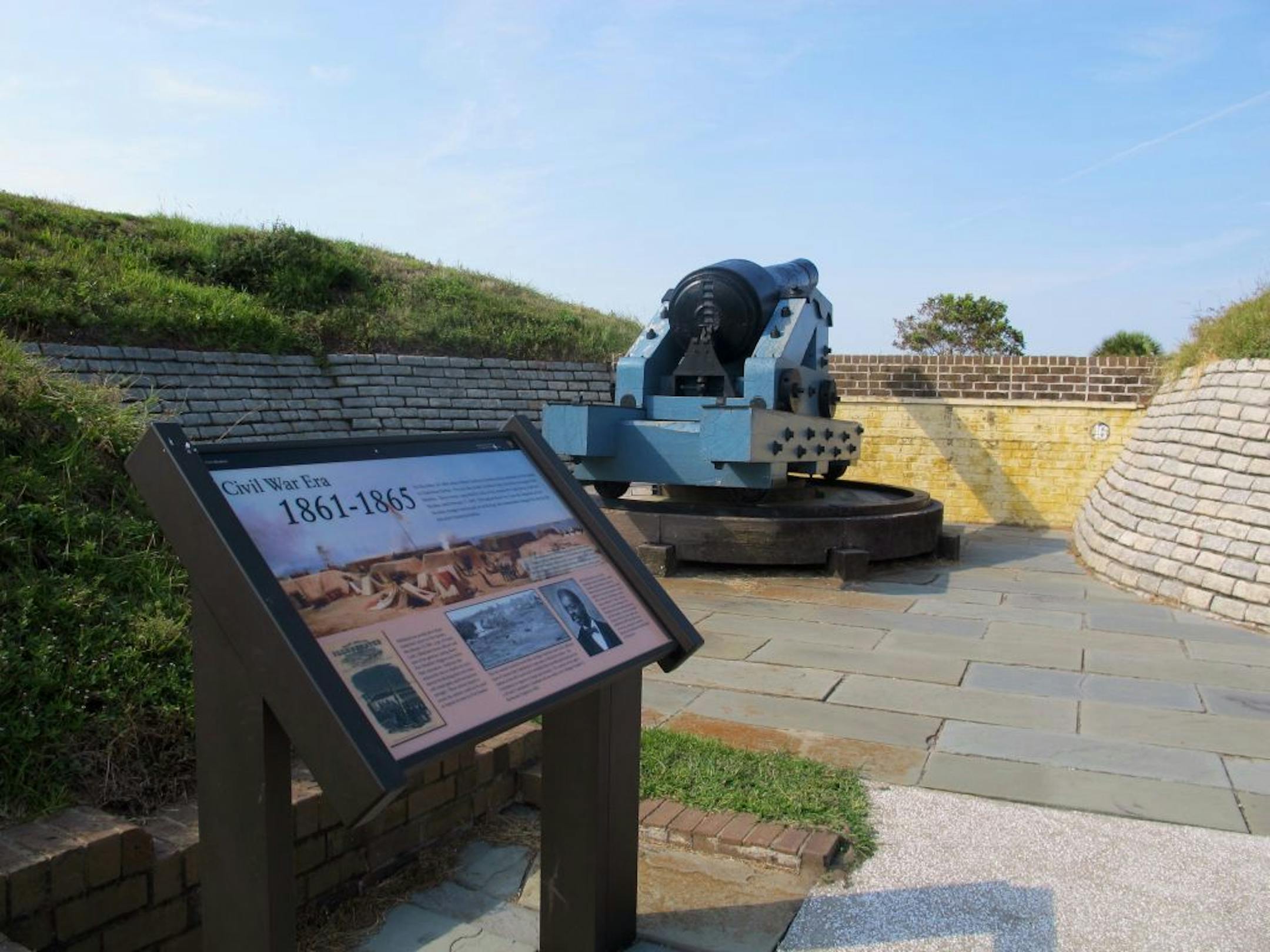
A Civil War-era cannon is seen on the wall of Fort Moultrie on Sullivans Island, S.C. on Friday, Sept. 9, 2016. The fort is part of the Fort Sumter National Monument. U.S. Sen. Tim Scott, R-S.C., has introduced a bill in the Senate to designate Fort Sumter and Fort Moultrie as a national park, raising the status of the sites in a move that is expected to attract more visitors. Fort Sumter is where the opening shots of the Civil War were fired in 1861.
A Civil War-era cannon is seen on the wall of Fort Moultrie on Sullivans Island, S.C. on Friday, Sept. 9, 2016. The fort is part of the Fort Sumter National Monument. U.S. Sen. Tim Scott, R-S.C., has introduced a bill in the Senate to designate Fort Sumter and Fort Moultrie as a national park, raising the status of the sites in a move that is expected to attract more visitors. Fort Sumter is where the opening shots of the Civil War were fired in 1861. (Associated Press/The Minnesota Star Tribune)

CHARLESTON, S.C. — U.S. Sen. Tim Scott, the first black U.S. senator from the deep South since Reconstruction, is proposing that the site where the Civil War began be raised in status to that of a national park.

The Republican lawmaker has introduced a bill creating the Fort Sumter and Fort Moultrie National Park as the nation's 60th national park and second in South Carolina.

Fort Sumter, on Charleston Harbor, was bombarded by Confederate guns on April 12, 1861, in a fight that started four years of civil war.

Moultrie, located on nearby Sullivans Island, is where American patriots turned back a British fleet trying to capture Charleston days before the signing of the Declaration of Independence.

Both forts are part of the Fort Sumter National Monument, one of 84 national monuments among 413 sites administered by the National Park Service.

Scott says a national park designation will give the forts a higher profile among the array of other national park properties and should mean more visitors to sites that now draw about 1 million visitors a year.

"What we hope to do is bring more attention," Scott said. "People know the first shots of the Civil War but they don't necessarily know the history dating back to the first years of our country and the significance Fort Moultrie played."

It's not the first effort to create a national park at the sites. Similar legislation was introduced by the late U.S. Sen. Strom Thurmond, a fellow Republican but a one-time staunch segregationist, in 2002. That bill died in committee.
Scott said he hasn't give much thought to the significance of a black man working to raise the status of an iconic Civil War site.

"South Carolina has a provocative history," the former congressman said. "Perhaps part of that history is me representing in Congress the site where the Civil War began and now as a senator hopefully making it into a park."

He said the bill "resonates on both sides of the aisle and frankly I think it will resonate throughout the nation" and hopes it can pass this year.

Tim Stone, the superintendent of the Fort Sumter National Monument, said a national park designation won't expand the park or mean more budget money.

"It just raises the profile and stature," he said. "It gives the importance of Fort Sumter and Fort Moultrie and their role in American history their proper due."

He said status as a national park is important because many people plan their travels around visiting national parks. If you search online for national parks in South Carolina, the only thing that comes up is Congaree National Park near Columbia, he said.

Jim Thompson, director of Fort Sumter-Fort Moultrie Historic Trust, a nonprofit that helps support projects at the forts, is pleased a new park would have Moultrie in the name.

The fort was only partially finished when troops under Col. William Moultrie turned back a British fleet on June 28, 1776, six days before the signing of the Declaration of Independence.

"Word got back to Philadelphia which gave courage to some of those who were on the fence to go ahead and sign the Declaration of Independence," Thompson said.

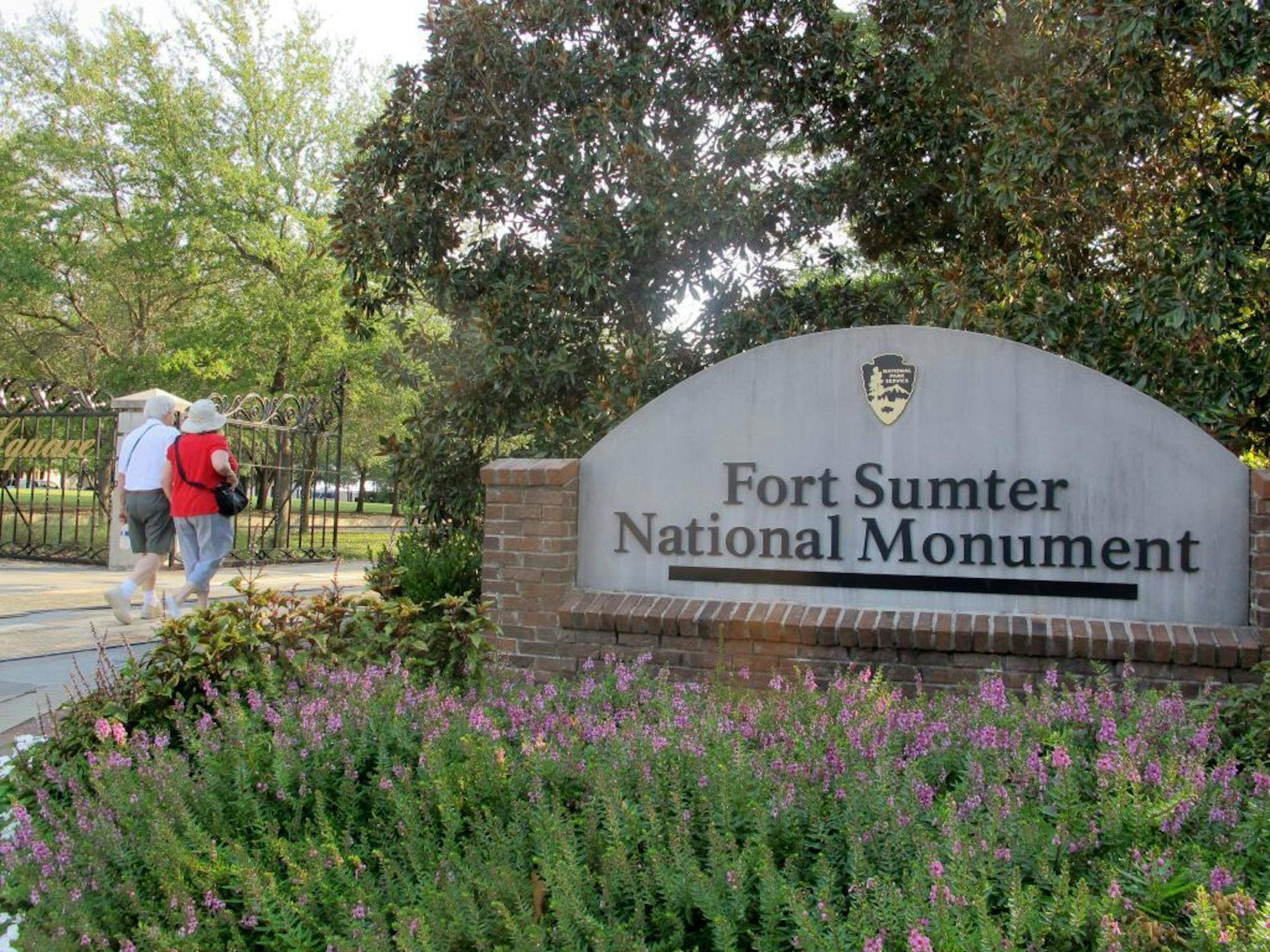
Guests arrive at the visitor center at the Fort Sumter National Monument in Charleston, S.C. on Friday, Sept. 9, 2016. U.S. Sen. Tim Scott, R-S.C., has introduced a bill in the Senate to designate Fort Sumter and nearby Fort Moultrie as a national park, raising the status of the sites in a move that is expected to attract more visitors. Fort Sumter is where the opening shots of the Civil War were fired in 1861.
Guests arrive at the visitor center at the Fort Sumter National Monument in Charleston, S.C. on Friday, Sept. 9, 2016. U.S. Sen. Tim Scott, R-S.C., has introduced a bill in the Senate to designate Fort Sumter and nearby Fort Moultrie as a national park, raising the status of the sites in a move that is expected to attract more visitors. Fort Sumter is where the opening shots of the Civil War were fired in 1861. (Associated Press/The Minnesota Star Tribune)
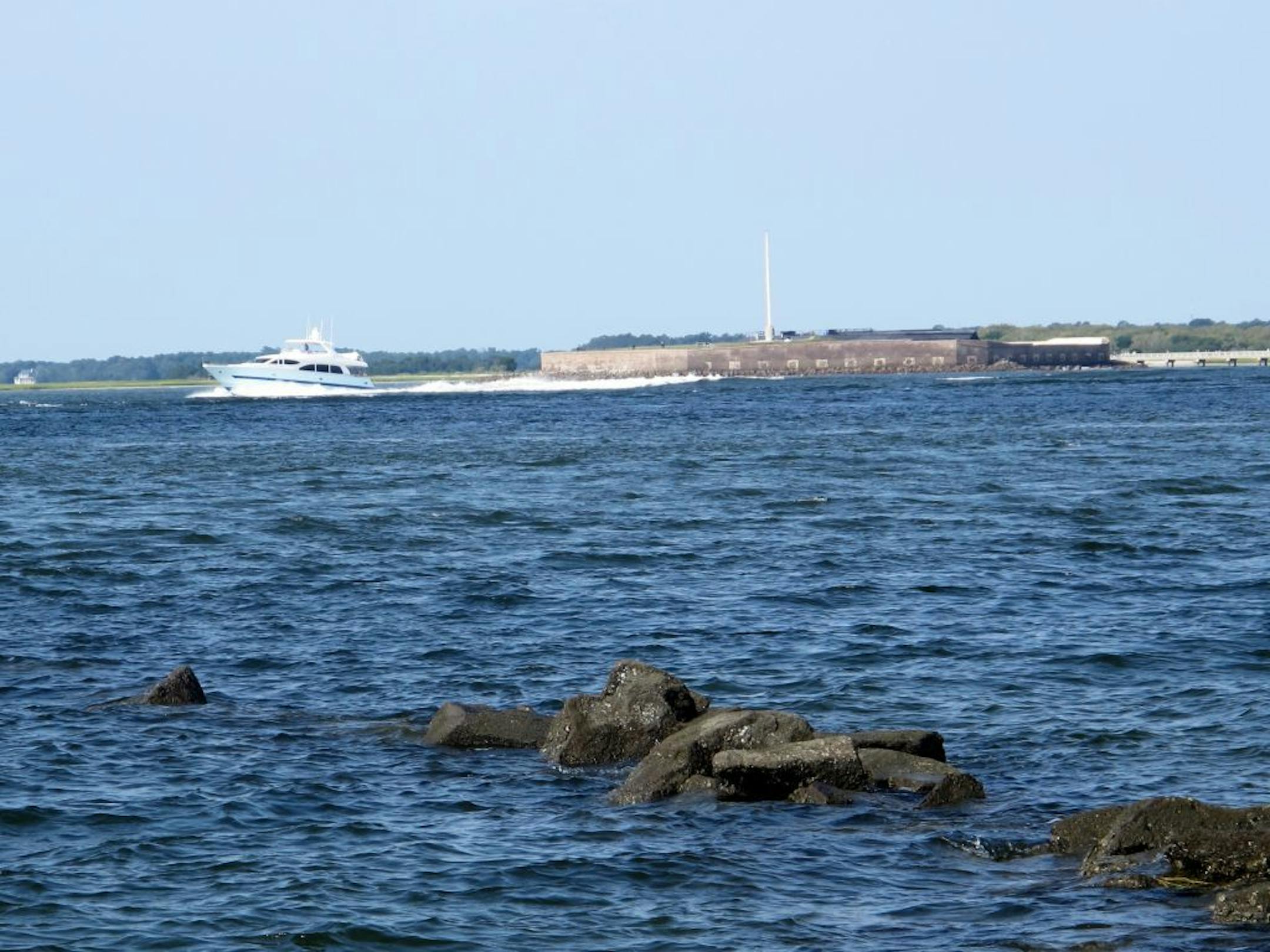
A pleasure boat motors past Fort Sumter in this Friday, Sept. 9, 2016, photograph taken from the beach on Sullivans Island, S.C. U.S. Sen. Tim Scott, R-S.C., has introduced a bill in the Senate to designate Fort Sumter, which is in Charleston Harbor, and Fort Moultrie, on Sullivans Island, as a national park, raising the status of the sites in a move that is expected to attract more visitors. Fort Sumter is where the opening shots of the Civil War were fired in 1861.
A pleasure boat motors past Fort Sumter in this Friday, Sept. 9, 2016, photograph taken from the beach on Sullivans Island, S.C. U.S. Sen. Tim Scott, R-S.C., has introduced a bill in the Senate to designate Fort Sumter, which is in Charleston Harbor, and Fort Moultrie, on Sullivans Island, as a national park, raising the status of the sites in a move that is expected to attract more visitors. Fort Sumter is where the opening shots of the Civil War were fired in 1861. (Associated Press/The Minnesota Star Tribune)
about the writer

about the writer

BRUCE SMITH