
Bill would give survivors, others steel from the fallen 35W bridge

Historical Society would get first dibs before remnants are sold and recycled.

March 14, 2013 at 12:31AM
JIM GEHRZ • jgehrz@startribune.com
Minneapolis/August 11, 2007/11:00AM
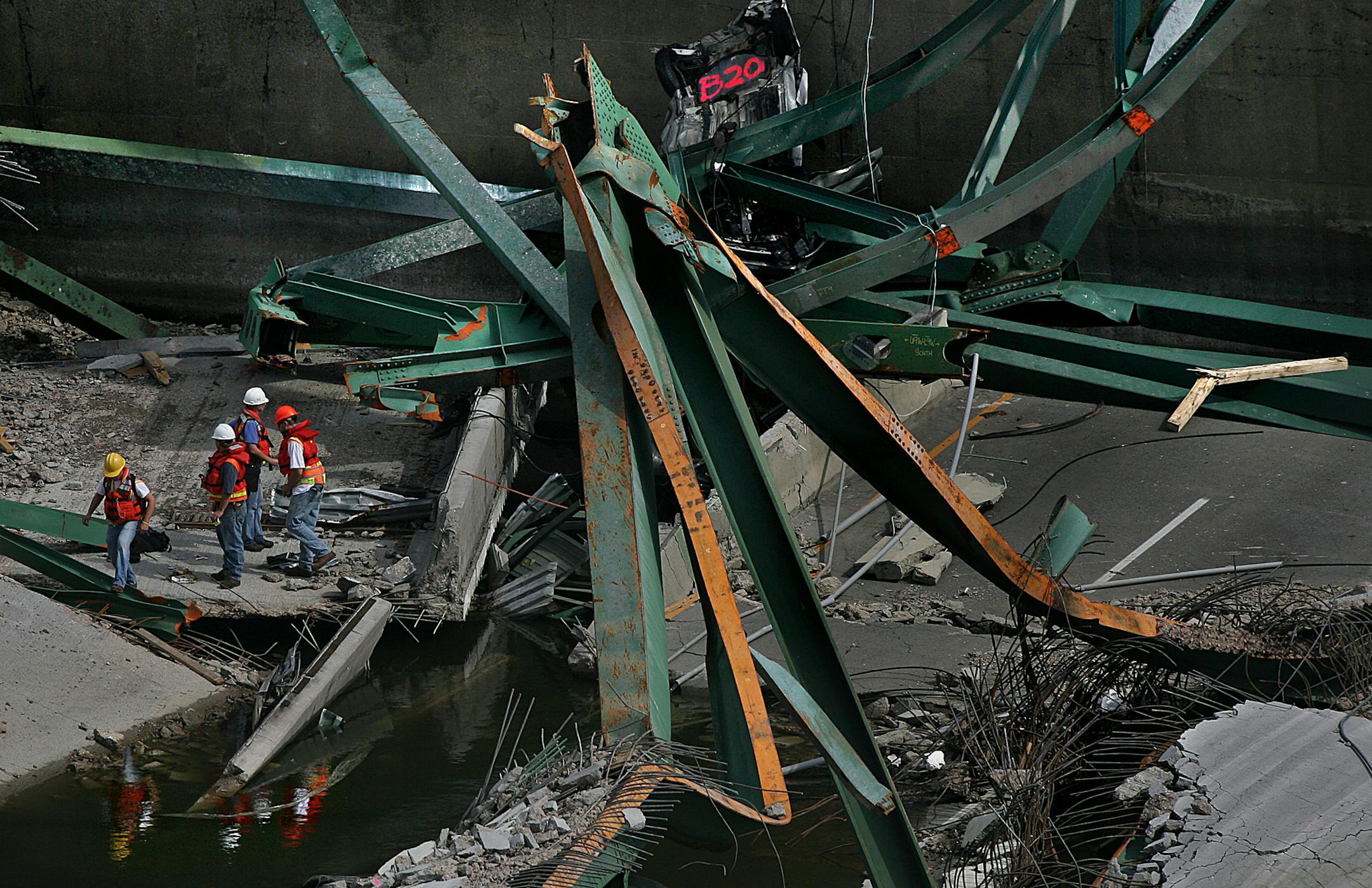
The reflections of workmen are cast in standing waters at the site of the I-35W bridge collapse as investigation, evaluation and recovery efforts continue.
The reflections of workmen are cast in standing waters at the site of the I-35W bridge collapse as investigation, evaluation and recovery efforts continue. (The Minnesota Star Tribune)

Survivors and others who requested pieces of battered steel from the fallen Interstate 35W bridge may get some help from the Legislature.

A bill introduced this week would authorize the Minnesota Department of Transportation to distribute remnant steel — free of charge — to the state's Historical Society, survivors, federal and state agencies with responsibility for transportation safety, engineering schools and others, in that order of priority.

Any remaining pieces would be considered surplus property to be melted down and recycled, with proceeds going into the state general fund.

About 25 to 30 survivors of the Aug. 1, 2007, collapse had requested pieces of the bridge to put on shelves, set in memorial gardens or even destroy as a therapeutic measure.

Brent Olson, who has been organizing requests on behalf of fellow survivors, said he hadn't heard about the bill, but he was pleased to know plans were moving forward.

"There's several people that are looking at wanting to have something from it," he said.

The Minnesota Historical Society would likely not want a giant piece, said Jennifer Jones, director of library and collections, but it might like to procure a gusset plate or other small piece to add to the items it already has from the bridge collapse, including the back door of the school bus.

"We're looking for objects that help us tell the story," Jones said. "I think it's great that people are being history-minded about this."
At least one university's engineering department has requested a piece of the wreckage to incorporate into a ceremony intended to remind graduating students of their professional responsibilities.

MnDOT wanted to accommodate those requests, but officials there thought they may be legally obligated to sell scrap materials and put money back into the state budget. The bill, introduced this week by Sen. Ron Latz, DFL-St. Louis Park, and Rep. Ryan Winkler, DFL-Golden Valley, would allow the department to give away some bridge pieces before sending the rest away for recycling.

"It made sense," Latz said. "It's obviously significant for [survivors]. There isn't any real reason why they shouldn't have some of it."

MnDOT spokesman Kevin Gutknecht said his department worked to get the bill introduced so the requests could be accommodated. "It was a difficult, historic event," he said. "It needs to be something that we remember, never forget."

Pam Louwagie • 612-673-7102

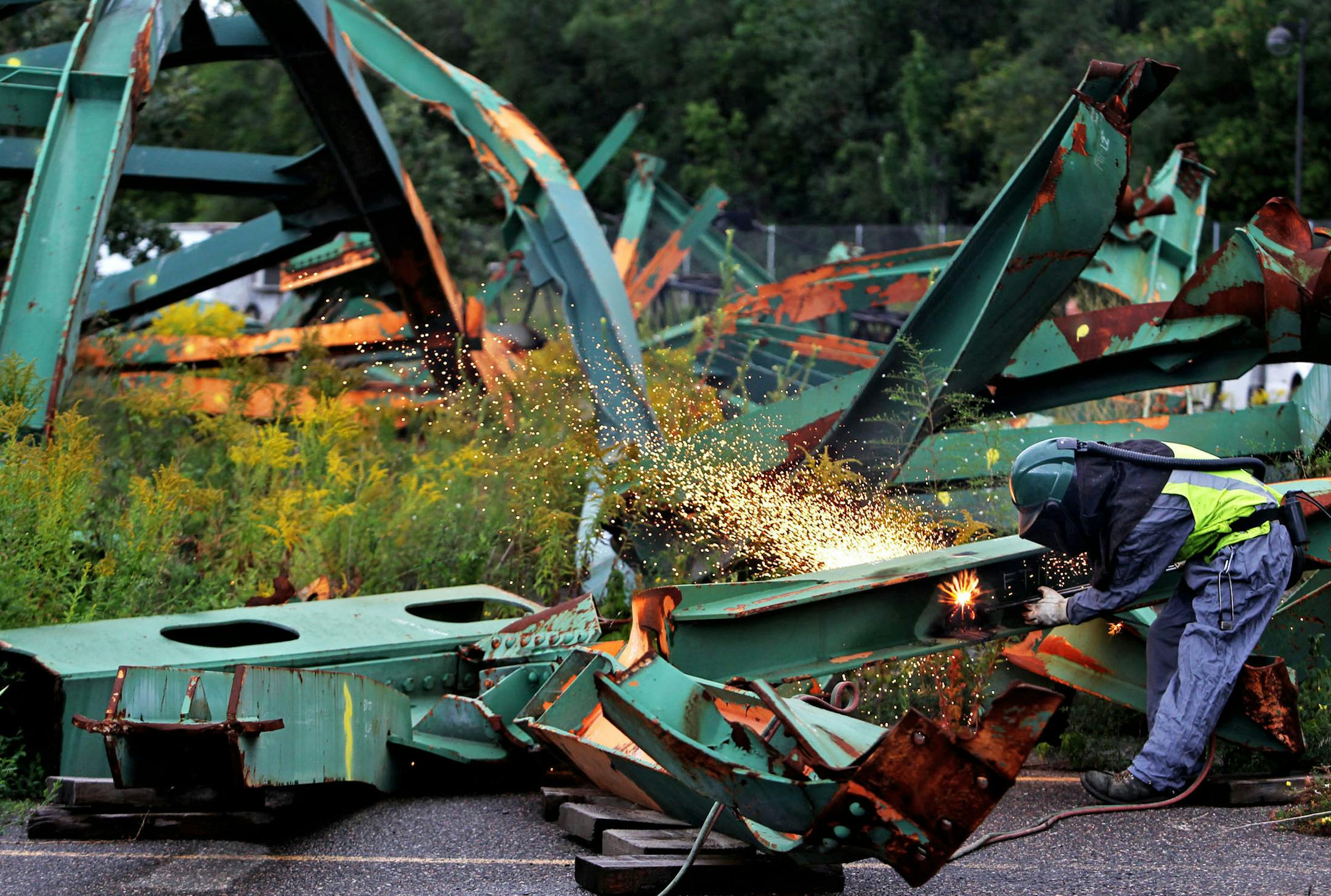
In this Sept. 7, 2010 file photo, the remains of the fallen 35W bridge that had been stored along East River Road were about to be moved to a new location in the east metro near Afton.
The remains of the fallen 35W bridge that have been stored along East River Road are about to be moved to a new location in the east metro near Afton. Staging and cutting took place Tuesday and the moving of the pieces was expected Wednesday. Bolander & Sons of St. Paul is the contractor for the job, which is expected to take about a month. In this photo:] Cutting torch operator Dan Maher cuts through the first beam on the site. (Star Tribune/The Minnesota Star Tribune)
about the writer

about the writer

Pam Louwagie

Reporter

Pam Louwagie is a regional reporter for the Minnesota Star Tribune. She previously covered courts and legal affairs and was on the newspaper's investigative team. She now writes frequently about a variety of topics in northeast Minnesota and around the state and region.

See Moreicon

More from No Section

See More
FILE -- A rent deposit slot at an apartment complex in Tucker, Ga., on July 21, 2020. As an eviction crisis has seemed increasingly likely this summer, everyone in the housing market has made the same plea to Washington: Send money — lots of it — that would keep renters in their homes and landlords afloat. (Melissa Golden/The New York Times) ORG XMIT: XNYT58
Melissa Golden/The New York Times

It’s too soon to tell how much the immigration crackdown is to blame.