

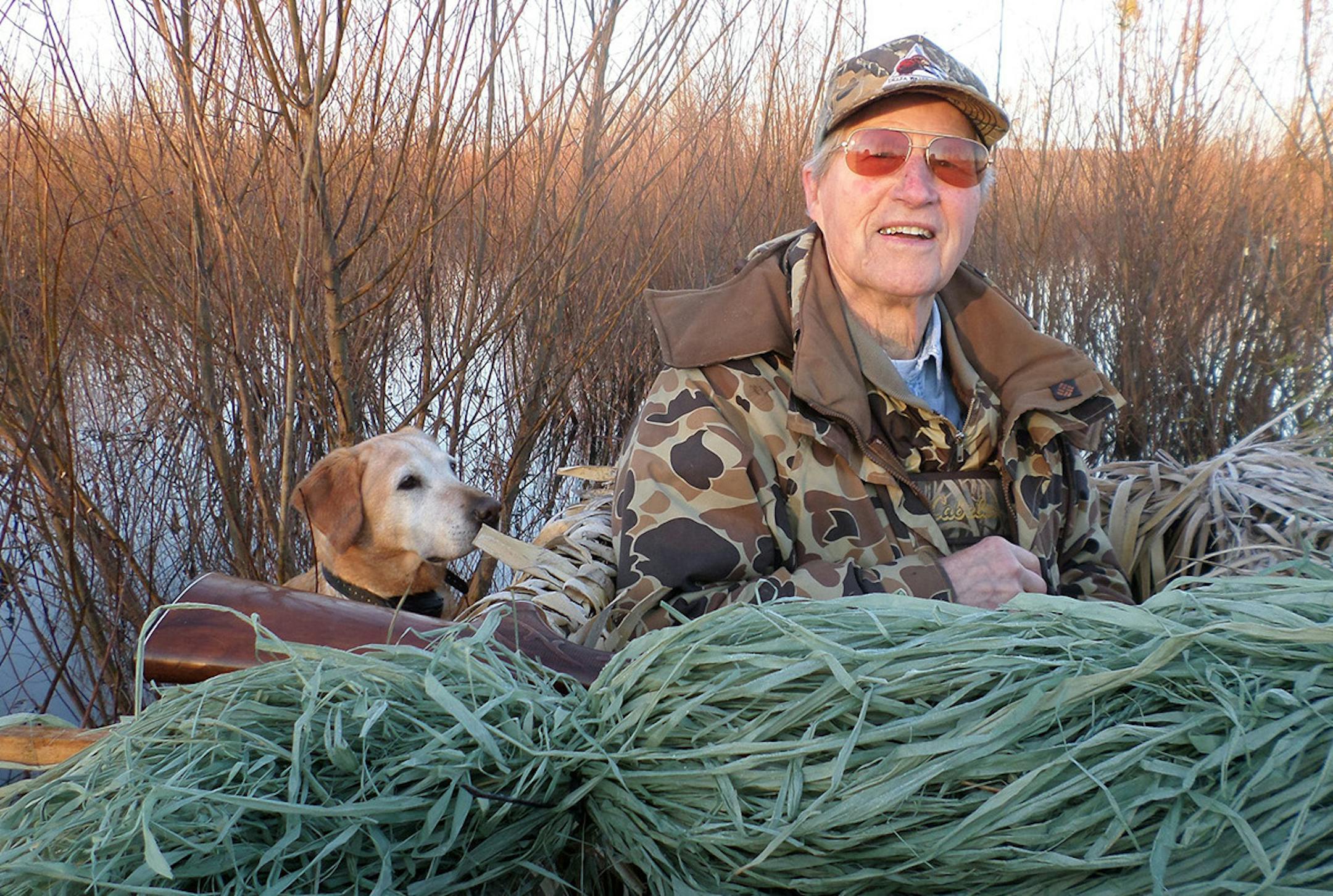
From the time he was a boy, Bill Webster bore twin passions, one for birds, the other for art.
His dad was a duck hunter, and Bill could never forget the long-ago October and November mornings when the two huddled beside the Mississippi River near Lake City, awaiting morning flights. Mallards and the other puddlers were reason enough to rise early. But at season's end, when long skeins of canvasbacks arrowed low over the water between the river's steep bluffs, that was special, and the sight of these gray backs with their sloped foreheads remained forever etched in Bill's mind.
He had thought he might be an artist. His dad collected duck stamps and young Bill was fascinated and inspired by these, the small representations of what he loved so much in a marsh — windswept water, autumn's low gray sky, ducks materializing from unimaginable places in the north — all of these were on a stamp the government required so flights of these birds could be guaranteed forever. So it was, Bill figured, that their purchase was righteous and, for him, happily transacted.
By his gentlemanly disposition Bill was a natural-born salesman, and for many years he labored on behalf of the Master Lock Co. Month by month, the job took him hither and yon. While traveling, Bill continued to nurture his inner artist, becoming as he did evermore sophisticated in his understanding of art, wildlife art in particular, and evermore appreciative of the artists whose work he admired.
This included the much celebrated David Maass of Long Lake.
"Bill had seen some paintings of mine, I think in New York, and he came to visit me," Maass recalled Wednesday. "We struck up a quick friendship and remained very close for over 60 years. We hunted all over together. He was as good a friend as I've had."
Like Bill, Maass was fascinated not only by the beauty of ducks and their featherings, species by species, but by their profiles in flight. A drake mallard backpedaling over decoys at sunrise is a singularly magnificent sight. But so is a bluebill banking against a snowy squall and, similarly, a wood duck perched on a marsh log. Watercolorists can evocatively portray the generalized magnificence of these settings. But in many of their renderings, the two agreed, the more detailed, realistic representations of the birds and their raw splendor were lost in translation.
"In the earlier days of wildlife art, the technical part of ducks and pheasants in flight was marginal at best," Bill told Doug Smith of the Star Tribune in 2008, "because people basically were painting scenery with a few ducks in it."


