

NEAR BRAINERD, MINN. - To a duck, the Ray Cook Wildlife Management Area (WMA) must look particularly attractive.
On the north end is a beautiful marsh. Thick cattails are interspersed with patches of open water large and small. The south end is occupied by what most would call a lake. In reality, it's a huge shallow wetland roughly a half-mile long by a quarter-mile wide. Between the marshes is a grassy field and willow lowland. Duck heaven.
Several pairs of ring-necked ducks nest in the emergent vegetation surrounding the big wetland. So do Canada geese and a pair or two of sandhill cranes. Wood duck boxes on tall poles are located along the shoreline.
As pretty as the wetlands are, most savvy outdoor people recognize that puddle ducks -- such as mallards and blue-winged teal -- nest on dry land, usually in the grassy uplands surrounding marshes. When their eggs hatch, the hens move their broods to nearby marshes.
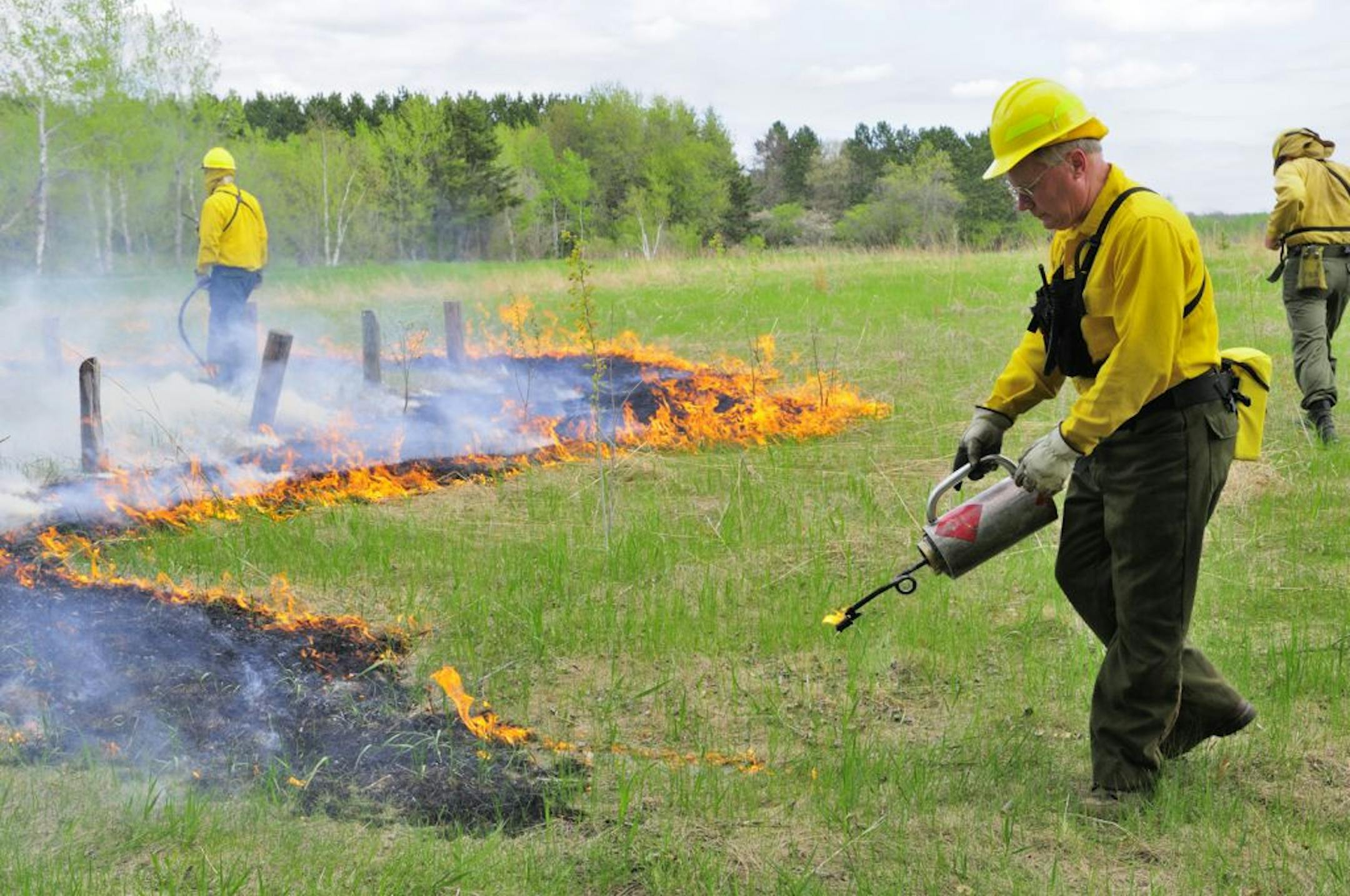
I thought about that last week as I watched approximately 40 acres of grassland and lowland willow -- the terrain between the wetlands -- go up in smoke.
"Our primary purpose for burning the Ray Cook WMA is to create and improve nesting habitat for waterfowl and other upland species," said Gary Drotts, an area wildlife manager stationed in Brainerd. "If we don't burn periodically, brush and trees invade the grasslands. Nature is never static."
The burn area consisted of 20 acres of prairie, 13 acres of alder and willow lowland, and seven acres of oak/aspen forest.
According to Drotts, burning grasslands suppresses the cool season grasses and helps eliminate woody shrubs and trees, while at the same time stimulating the more desirable warm season grasses such as big bluestem. The tall prairie grass is less likely to flatten under the weight of the snow, thus providing better nesting and brood-rearing conditions for waterfowl and other ground-nesting birds come spring. Burning the alder and willow increases the heartiness of forbs and shrubs, providing forage and cover for ruffed grouse, woodcock and deer.


