

BRAINERD - Last week I talked with a bow hunting friend about the do's and don'ts of hunting whitetails with archer equipment.
"Sometimes I climb up into my stand and I don't care if the wind direction is wrong," my friend said. "I just hang up my bow and sit and watch."
I'm not quite so casual about my bow hunting. I know a deer downwind is a deer you don't see, or at least one not likely to wander within bow range, so I'm attentive when it comes to wind direction. My friend's point was that he just wants to relax and watch nature, and I respect that. "The deer can come from any direction anyway," he said.
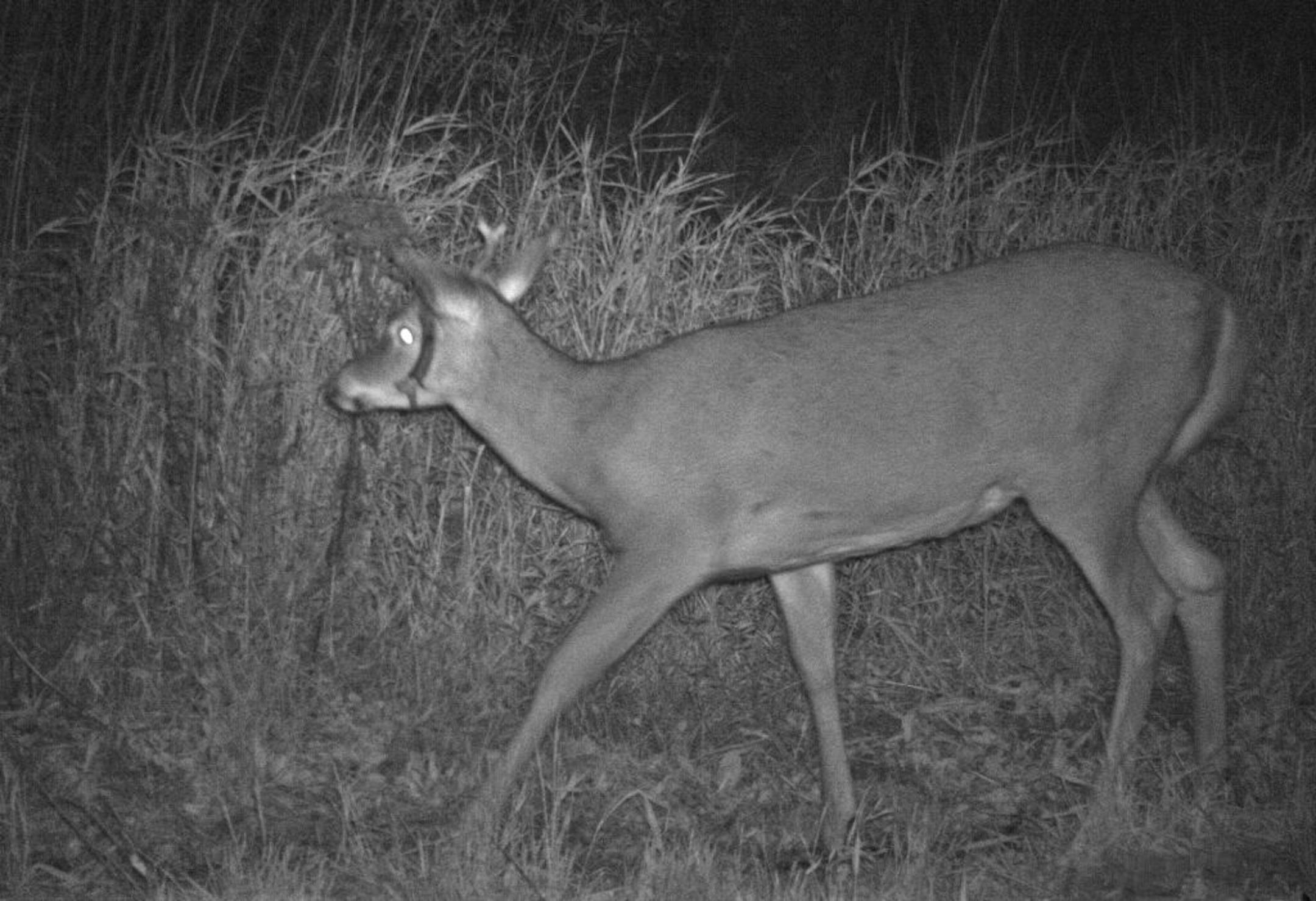
The wind direction was favorable as I sat 15 feet up in a spruce tree one evening last week. My bow hung from one tree limb, my backpack from another. I considered bringing a camera for the evening hunt because a few days prior, an image from one of my trail cameras placed nearby caught my attention. The image was of a young buck that grew an odd left antler, one that angled abnormally downward from the antler's origin, a plate called a pedicel. I wanted a better-quality picture of the odd buck, but, on that relatively calm evening I knew if the young buck appeared, the click of a camera shutter would alert the deer and send it bounding away, reducing my chances that a mature whitetail would appear.
The vista from my stand was typical of late October, yet one to behold. To the south was a stand of triangle-shaped tamarack trees, their golden needles ready to give way to the next big wind. West of me grew a clump of balsam firs, tall wedges deep green in color, some so neatly shaped as to be considered for the front lawn of the White House come Christmas.
It didn't take long once I was settled into my tree stand for the wildlife to begin to move about. Sparrows of various species, among them white-throated, white-crowned, Harris and fox, began to shuffle for food in the leaf litter below. Four blue jays were busy gathering the last of the acorns from a nearby bur oak. Sometimes the jays would grab an acorn and fly off to cache it. Other times they wedged it between their feet and, with powerful thrusts of their stout beaks, cracked the nut and ate it right there.
The first deer appeared at 6 p.m., a full 50 minutes before the end of legal shooting time. Strangely, the deer was a doe fawn -- unusual because its mother was nowhere in sight. A short time later, the odd-antlered buck approached on the same trail as the fawn.
Using my binoculars, I studied the freakish antler. Eventually the little buck walked to within a few yards of the base of the tree where I was perched, allowing me a good look at the buck's unusual headgear. The pedicel was damaged. I could see that the antler grew immediately to the side rather than up, and was bare of velvet. As the antler proceeded down alongside the deer's face, dried, blackened velvet still clung to the bone. The tip of the antler forked, and that portion was free of velvet.


