

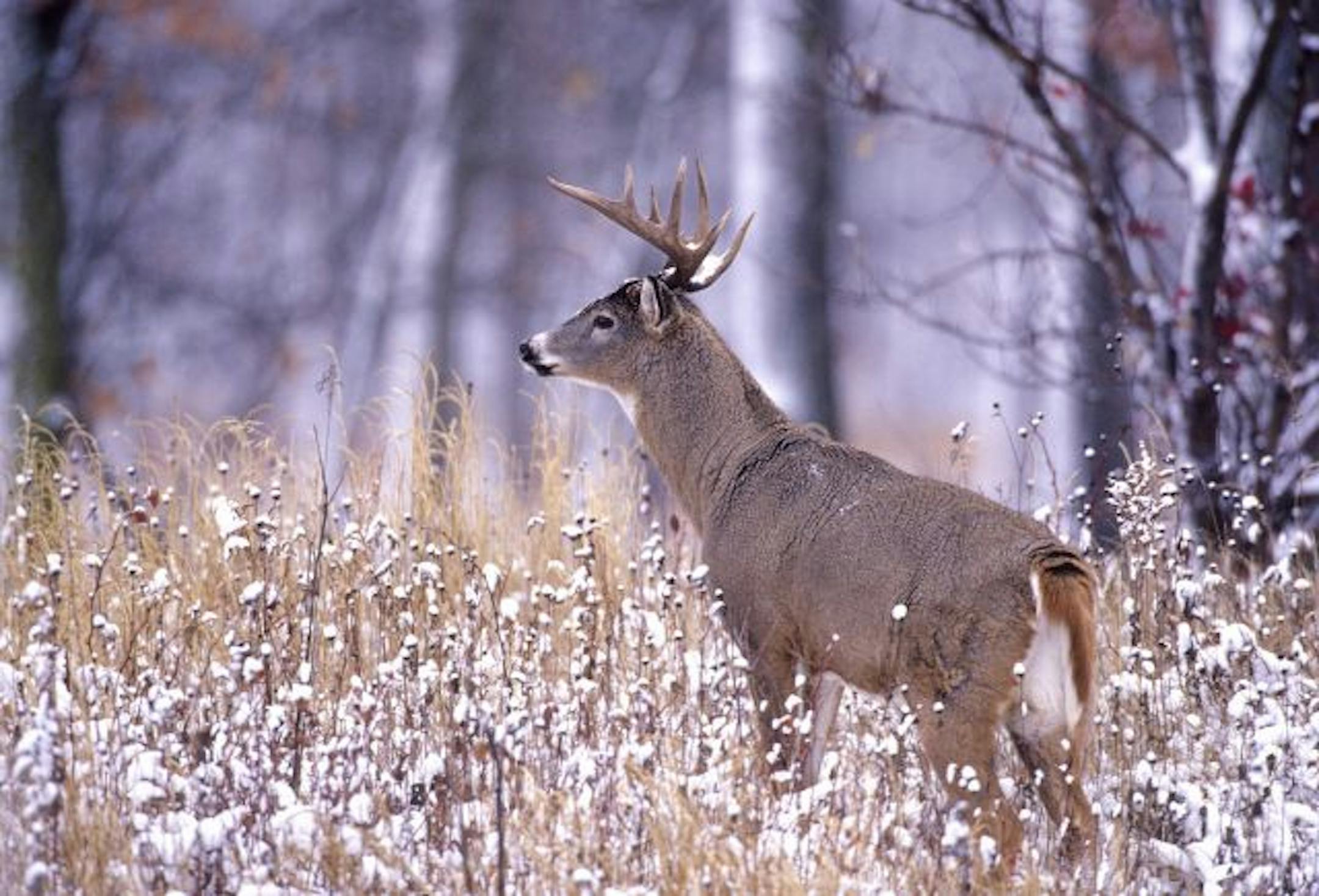
BRAINERD — It was mid- afternoon and the snow had just started as I walked with bow and a quiver full of arrows in hand to a deer stand. This was on Tuesday, just as the first winter storm of the season was moving northeast out of the plains into Minnesota.
It was 10 degrees and the wind was just starting to pick up as I climbed into a tree stand I had previously hung in a balsam fir. My lofty perch overlooked a one-half acre food plot consisting of Imperial Whitetail Winter-Greens, a commercial blend of various brassicas that are highly attractive to deer after several hard freezes.
The sky was battleship gray and snow filled the air. The flakes were tiny, so small that it appeared as if a fog had settled over the lowland landscape. With each passing moment, the north wind increased.
If you read various hunting magazines, the experts suggest the period preceding a major weather front is a good time to be afield. Deer, they say, are on the move, filling their bellies in anticipation of bad weather ahead. The same experts put far less emphasis on the hours following a storm.
I thought about this as I watched for movement, anything that might suggest a deer headed my way. The best time to hunt is when you can. In my experience more deer are on their feet after a weather event.
A motionless hunter is at the mercy of winter weather. It didn't take long for the cold to creep through my many layers of clothing. My brain, however, was working overtime. Here was a chance to perform a mini-, unscientific experiment on deer movement related to storm fronts. Hunt on the front side of an approaching storm, then return and hunt as the storm retreated. Then I could compare notes.
About 4 p.m. a button buck wandered into the food plot and immediately began to consume the still-green brassicas. When the youngster glanced in the direction from which he had arrived, I followed his gaze and watched as two more deer, a doe and another button buck, entered the food plot. The three deer were downwind and completely unaware I was watching from 30 yards away. I was holding out for a buck, so I watched as they fed for a while. Eventually the deer wandered off into the woods and ultimately out of sight.
All was quiet for some time save for a group of seven or eight chickadees and two red-breasted nuthatches that were busy gathering seeds from spruce and fir cones. At one point, a chickadee landed on my knocked arrow, then flew to a branch a few feet from my head, and after that to my left shoulder.


