

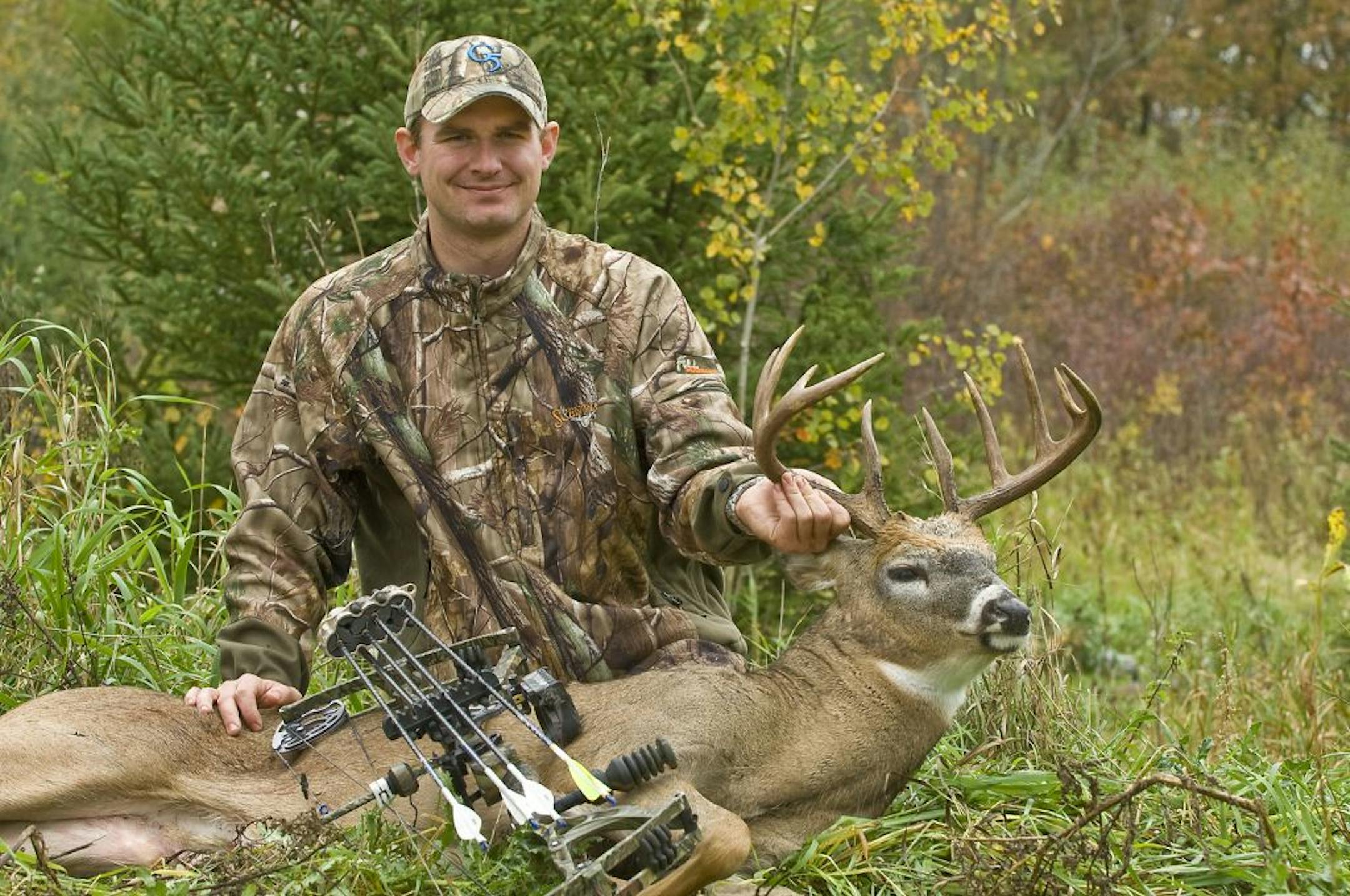
BRAINERD - I love to look at deer hunting photos, and so do most other hunters. Each image brings a flood of memories.
A few deer hunting pictures adorn the walls of my office. I look at those images and instantly recall the moment I first spotted the bucks. One image in particular is of me posing with a bruiser of a buck. When I look at that image I vividly recall the instant the buck stepped from behind a wall of young aspens, his rut-swelled neck and tall, dark antlers etched in my mind.
A closer look at the image reveals a much younger me. I'm wearing a jacket and pants sporting a camouflage pattern that is no longer made. I look at the date -- 1998. Can it really be that long ago?
I remember a friend and I had taken a considerable amount of time to photograph me with my buck. My friend was kind enough to take part of his hunting day to help me get the worthy images I so cherish today.
What constitutes a superior "kill shot" image and how does one go about taking them?
Use the best camera that you have. Images taken with a cell phone are getting better all the time, but they don't offer the photographer as many options as does a 35-millimeter camera or quality point-and-shoot.
Ideally you'll want to photograph you with your deer at or near the site where it fell before field dressing the animal. That requires you carry a camera in your backpack. It's a good idea to pack some paper towels or, better yet, wet wipes to clean the deer's face and mouth of blood. Be sure to tuck the deer's tongue back into its mouth, or cut it off. Hopefully, one of your hunting partners is nearby and willing to help you with the photo process. Kill shots always look better before rigor mortis sets in.
If the "grip and grin" image must be taken back at camp, or later at home, be sure to move the carcass to a spot that offers a natural background such as a large bush or hedge. As you gaze through the camera's viewfinder, look for distracting objects in the image, such as other hunters, vehicles or any manmade objects. Check to make sure the deer's antlers stand out against a uncluttered background such as the sky, out-of-focus distant trees, or a background colored differently than the antlers. Be sure each antler point is distinguishable from the others. That usually requires the hunter to position the deer's head facing slightly to the side.


