
Advertisement

Bill Green: Force for stability

Bill Green plans to step down next week after leading the Minneapolis school district through four stormy years

June 25, 2010 at 2:53AM
Bill Green
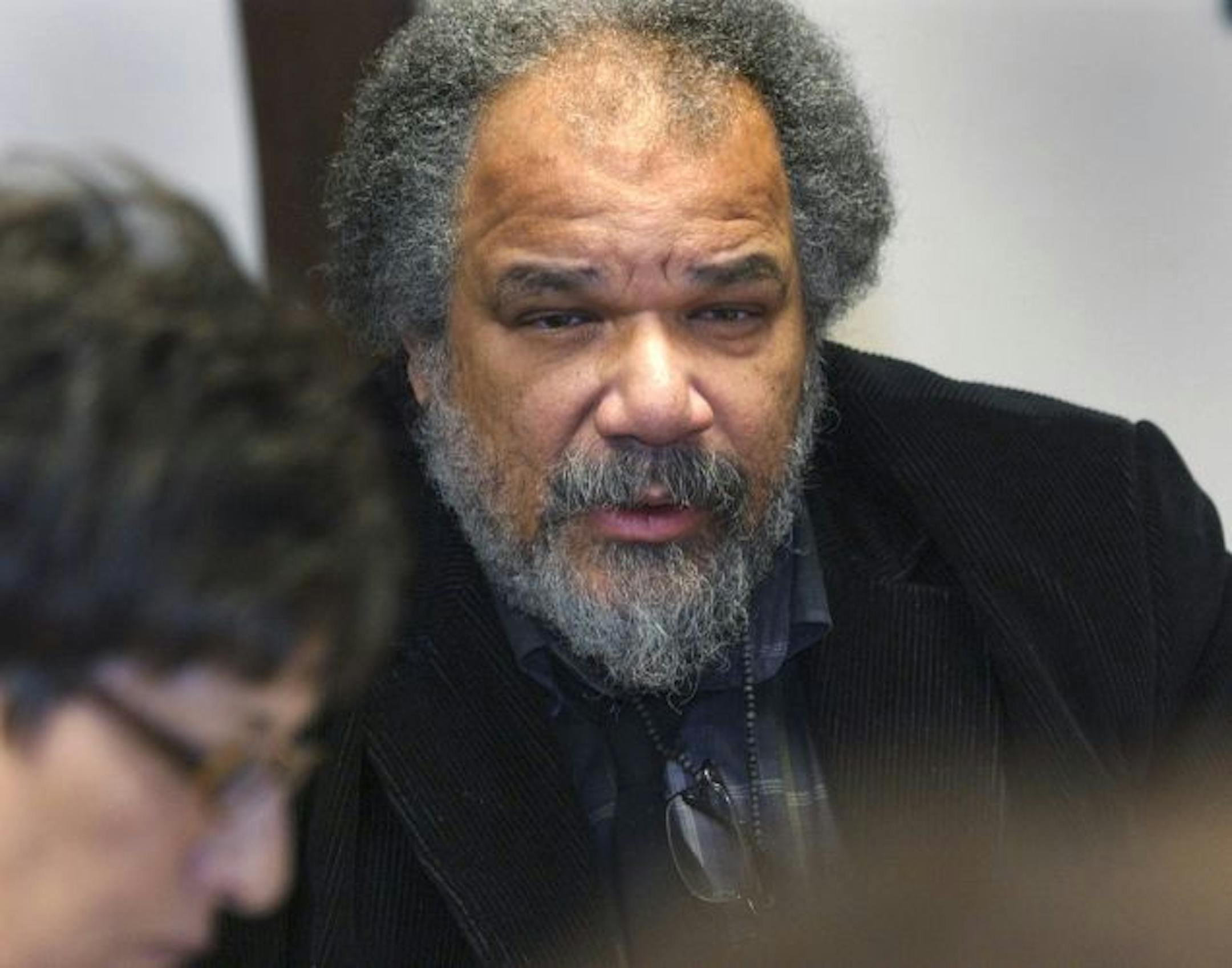
Bill Green (Jm - Star Tribune/The Minnesota Star Tribune)
Advertisement

Minneapolis schools Superintendent Bill Green plans to step down next week after four years during which he drew praise for calming and stabilizing a district many saw as chaotic and politically stormy.

Green spent eight years on the school board and 17 months as interim superintendent before being awarded the job permanently in 2007. The Star Tribune talked with him Wednesday about his time at the helm. His answers were edited for length.

Q Why did you want the job?

A I didn't really want the job in the first place, but I didn't feel like I could turn it down. I didn't ever see myself as an administrator, and I didn't have any background in K-12, even though I'd served on the board for eight years. I feel very, very privileged to have done the job, but it was a very scary thing to consider. The district had a lot of challenges facing it, and many of them were unprecedented.

Q Why did you apply for the permanent position?

A Within the fourth month [as interim superintendent], people were saying, 'Are you going to stay? 'Cause if you're not, I'm not going to invest.' I kind of knew by summer that I needed to stay longer than I had intended, if for nothing else so I could attract strong people to the system, so we could get focused on the work rather than looking at, 'Well, who comes after Green?' I needed them focused on the classroom.

Q What were the top things that needed to be done?

A We broke it down to three categories, actually. The first one, we talked about reconnecting, which meant rebuilding the relationships among all the stakeholders. The sense existed that public education was lost and that Minneapolis public schools in particular was a lost cause.

Advertisement

The second part was refocusing. It's kind of like when parents are fighting each other in a divorce situation, the kids are forgotten. They're sitting on the steps, listening to mom and dad yell at each other. And we needed to make peace with each other so we could refocus on what the kids needed.

The third part was restructuring the district. It was too big. Given the fiscal realities of the times, if we were really going to refocus on the kids, we needed to be much more efficient with our use of dollars.

Q How much of that was accomplished?

A I think we've done all three, but it's the type of thing where each of those requires constant work and attention. One of the things I sensed that I knew but didn't know to the extent that I know now is that there are very, very powerful forces that have nothing to do with education that affect how we do our job in the district.

Q Like what?

A Well, the economy, for example. We could not have anticipated that. And the financial standing of the state. We couldn't have anticipated that. The student demographics we also couldn't have anticipated. We didn't know the amount of invisible children we have in the system until the last couple of years.

Advertisement

Q What do you mean?

A We never paid much attention to homeless kids. And we didn't really spend a lot of concentrated time thinking about immigrant children and the unique circumstances of their own lives. We've since done more outreach in that area than I think is typical. I think we've also realized that we had to, in a sense, share power, which is another aspect of being transparent and forming relationships.

Q Share power with whom?

A With all of our stakeholders. We also have to be mindful of how the language we use has a way of putting people off, because we're kind of living behind doors. We also need to enter into a different relationship with the bargaining units, and that's relatively unprecedented. [The district has yet to secure a contract with its teachers for the 2009-10 and 2010-11 school years.] There was a time when we could afford to settle contracts on terms of money, and that was the principal focus of the contract. But now our proposal has married financial imperative with reform.

Q Was there anything you wish you had done but couldn't because of community pressure, school board, politics, etc.?

A I wish we could have done more in the discussion of inter-district desegregation. We have to figure out how the districts can work more efficiently with each other, and we also have to elevate the importance of desegregation, which is now viewed as something that is totally expendable.

Advertisement

... We still don't know how to make things work [as effectively] as we can. There's a vacuum, which is why people who don't know as much as we know step in with easy solutions. I don't think that all the simple fixes [they propose] are necessarily wrong, but they're partial; they're piecemeal. They don't necessarily deal with a very complex issue.

Q Like what?

A Like how to improve instruction, how to enhance achievement and how to close the [achievement] gap. It's not entirely the kids' fault that they're not achieving. And yet, we know that the way to discuss it isn't as simple as that. It's not because a teacher isn't working hard enough. It's not because the principal isn't working hard enough. It's not because the parent can't come to the teacher conference. But those are factors. It's not because the kid doesn't see any adult with a job or that they don't have a house, but those are factors. And then, the feds want us to do stuff like that [snaps fingers]. And then the politicians want us to do stuff like that [snaps fingers again].

Emily Johns • 612-673-7460

about the writer

about the writer

EMILY JOHNS, Star Tribune

Advertisement