

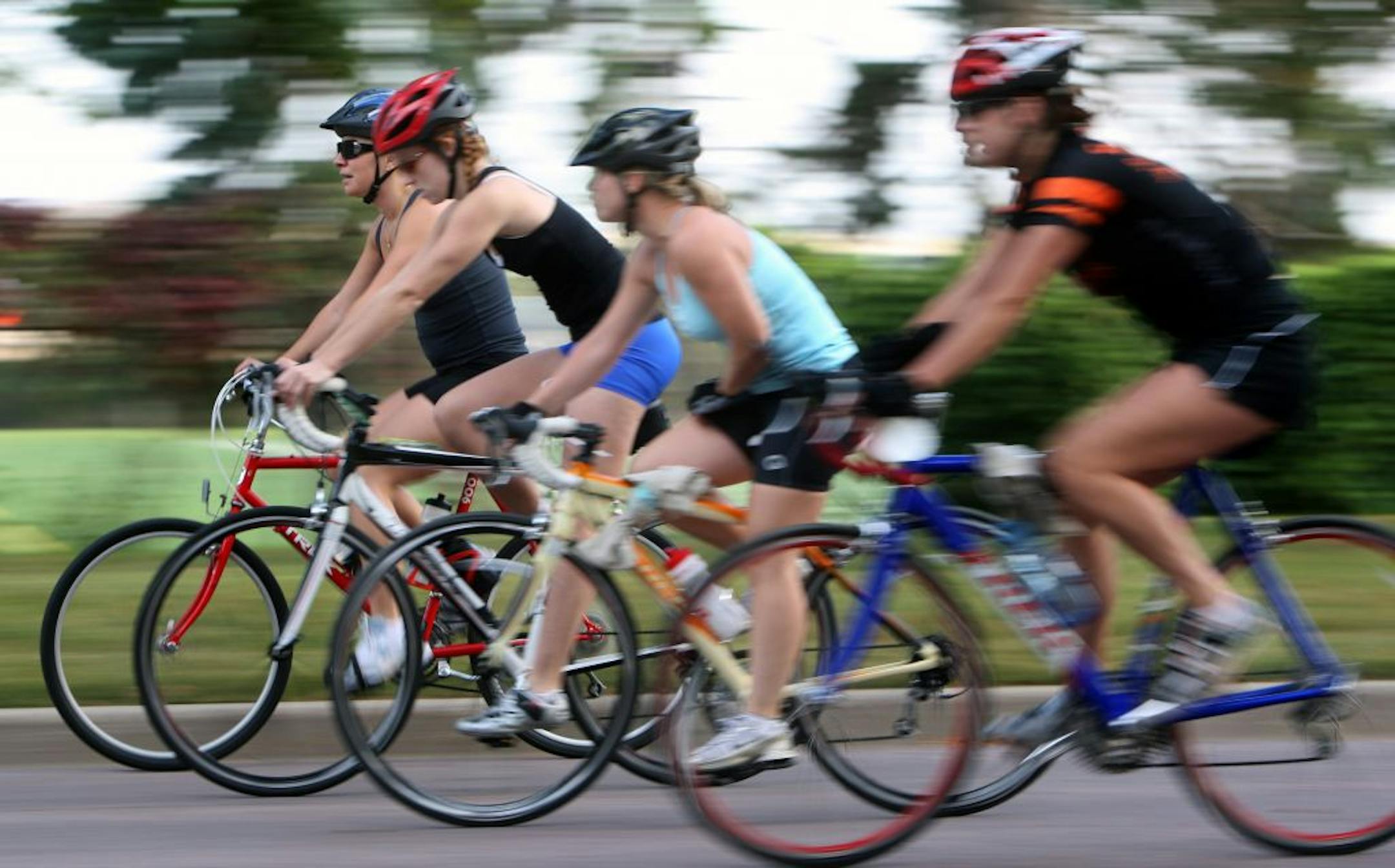
When Julie Philbrook leads a seminar on bicycle safety, she can count on encountering some people who don't think they need to listen because they're good bikers.
"You might be a very good rider," responds the trauma prevention specialist at Hennepin County Medical Center. "But what are you going to do when the driver of a car makes a mistake? You can get hurt through no fault of your own."
Although bicycles have become a year-round form of transportation, usage spikes in the summer. And so does the number of accidents. Not only are there more riders, but -- as opposed to the serious bikers who keep pedaling all winter -- warm weather attracts casual cyclists, many of whom are not as knowledgeable about the laws and procedures in place to enhance safety.
"A lot of people do not ride safely," said Dorian Grilley, executive director of the Bicycle Alliance of Minnesota. "The vast majority of people are not confident riding on the street. Bikers fare best when they act as and are treated as drivers of vehicles, and that means following the rules of the road."
Despite the cliché about never forgetting how to ride a bike, Grilley's group is convinced that an occasional refresher course can save lives. It sponsors a series of such classes, including one titled Traffic Skills 101 (www.bikemn.org).
In addition to learning the laws, he recommends following three basic guidelines: "Be predictable. Be visible. Be courteous."
No matter how experienced a biker is, Philbrook adamantly recommends wearing a helmet.
"We can fix most other injuries, including broken bones," she said. "But we can't fix brain injuries."


