

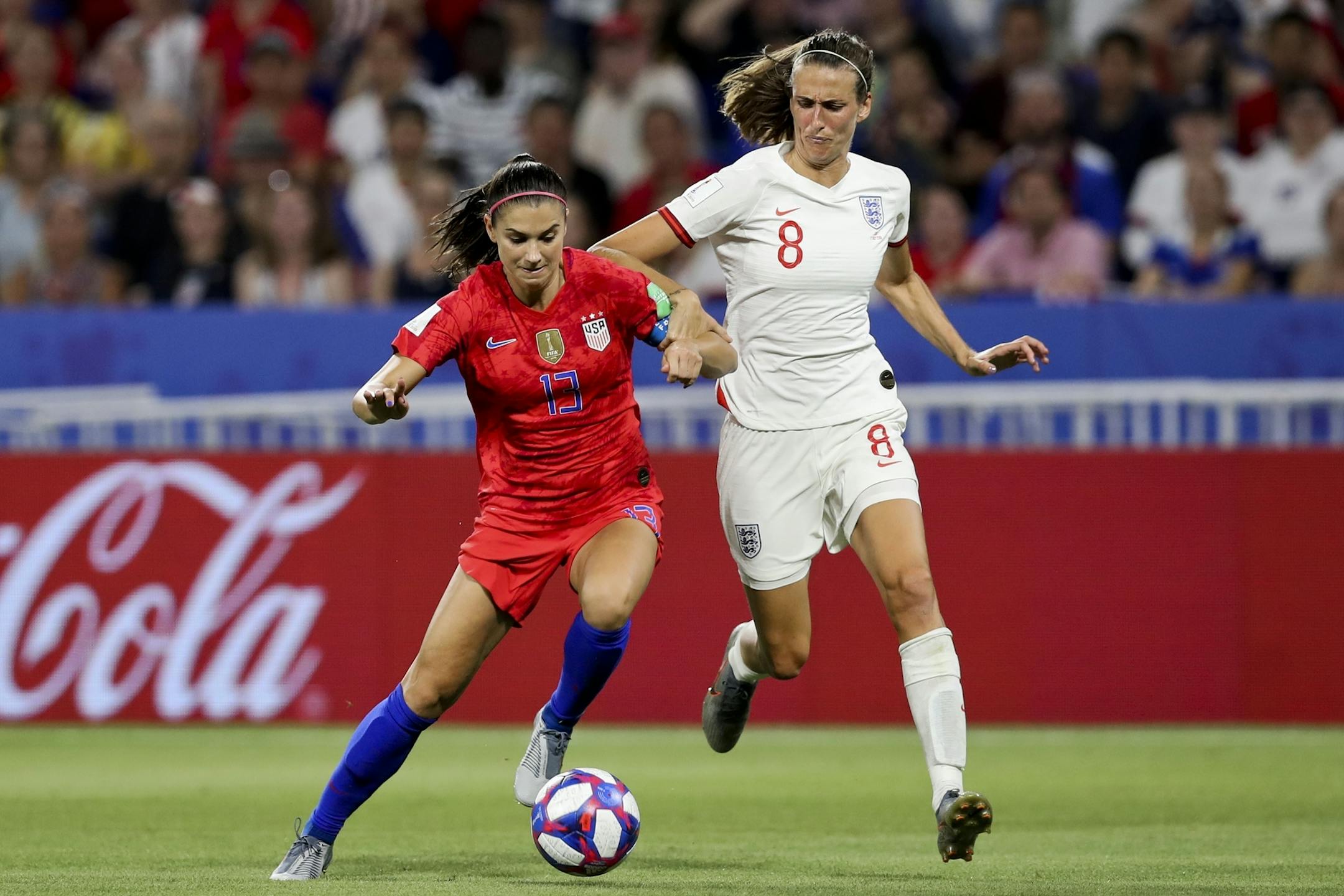
When a swim coach challenged my 3-year-old daughter to race against her 5-year old brother, she beat him so badly that it seemed the toddler swim equivalent of the U.S. women's national soccer team's 13-0 thrashing of Thailand in their opening game of the 2019 FIFA Women's World Cup.
My daughter did not worry about embarrassing her brother. She just did her best and won.
That is why I cheered alongside millions when the U.S. women's national soccer team advanced to Sunday's finals of the 2019 Women's World Cup after a hard-fought semifinal victory over England. My cheers were not only because the women have the opportunity to bring home their fourth World Cup victory, but also because the lessons in leadership that sports can teach to girls and women were on display to the world.
As a soccer fan, recreational athlete and youth sports coach with a brief stint as a collegiate athlete, I apply multiple lessons that I learned from sports to my professional roles as a professor and administrator at a major medical school. The critically important lesson for the success of female leaders is to embrace competition.
Former national team coach Anson Dorrance said that the type of player who thrives in his women's soccer dynasty at the University of North Carolina at Chapel Hill is a player who loves to compete. He fosters that trait by encouraging a competitive cauldron that emphasizes toughness and an aggressive desire to win.
In his 2005 book, "Vision of a Champion," Dorrance notes that even in the highly competitive world of collegiate athletics, many young women are socialized to cooperate and get along. Too often, cooperation and making friends become the antitheses of competition.
The practice of discouraging competition persists for women in the professional world. Female leaders are routinely celebrated for their collaborative leadership style, a focus on consensus-building and their contributions to a positive workplace culture. As valuable as these traits are, fewer female executives hold leadership roles in divisions responsible for profit and loss, which are the gateway to the C-suite.
Once when I interviewed for a leadership position at a medical school, a search committee advised me not to overuse the pronoun "I" in describing my accomplishments. Rather, committee members suggested I emphasize what "we" had done to accomplish "our" goals. The advice was well-intended, but I wonder whether men receive similar advice.


