

Twenty years ago, half of America's dozen largest cities had Republican mayors. Today, just one does. Of the 30 largest U.S. cities, 26 now have Democratic mayors — the greatest partisan imbalance perhaps since the presidency of James Monroe, when the nation had only one political party.
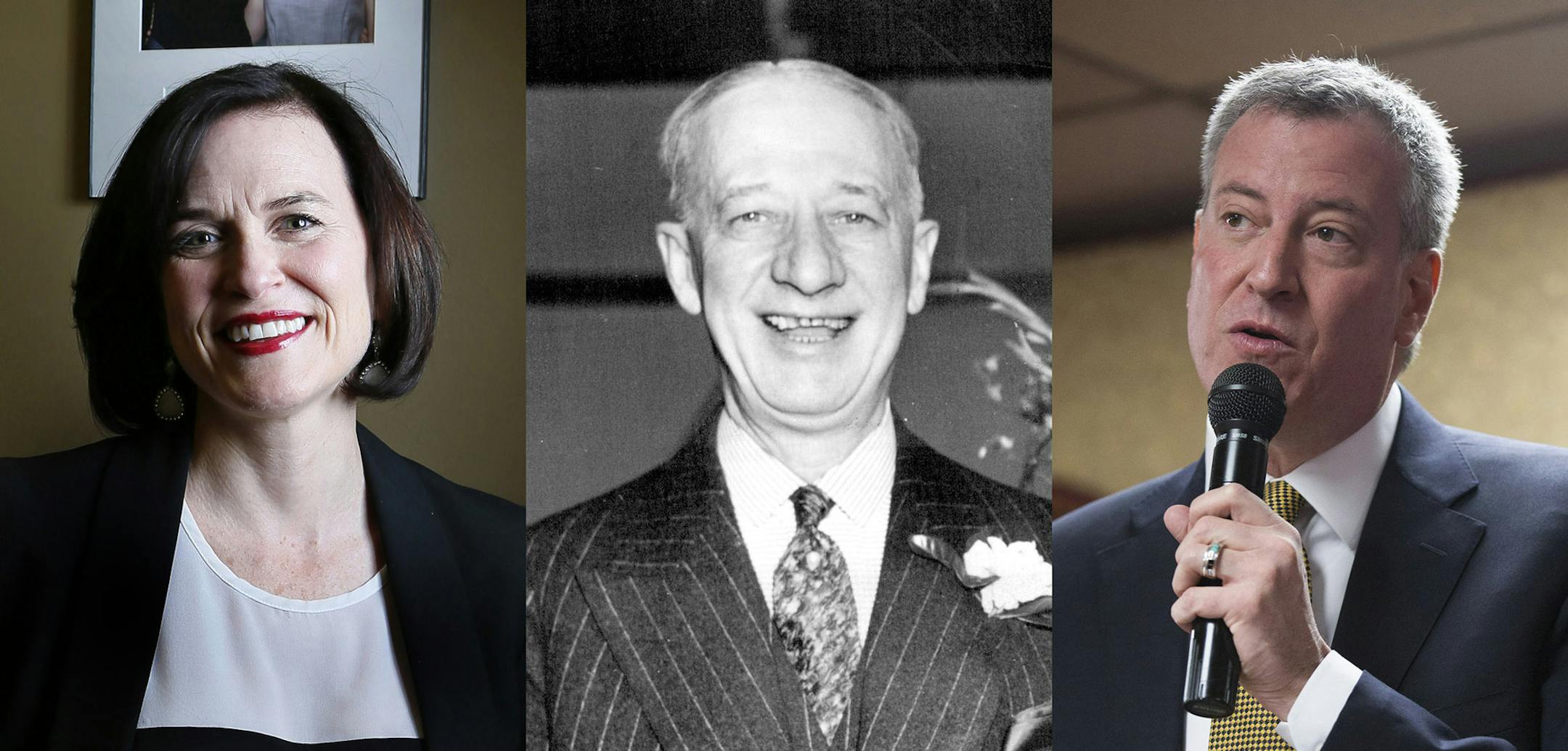
What's more, many of these mayors are progressives who came to power by besting more centrist Democratic establishments. New York's Bill de Blasio is just one of a number of insurgent liberals who won municipal elections last year. Others include Boston's Martin Walsh, Minneapolis' Betsy Hodges, Pittsburgh's Bill Peduto and Seattle's Ed Murray.
Some Democratic mayors — Chicago's Rahm Emanuel, for one — cling to a 1990s-vintage Clintonian centrism. But most of the mayoral newbies were elected on platforms that called for higher minimum wages and universal preschool, as well as building energy-efficient affordable housing. "There wasn't communication among us," says Peduto. The similarity of themes "just emerged organically."
Underpinning this organic confluence of policies is an organic confluence of cities' changing demographics. An article in The American Prospect lays out the extent of that change. (Full disclosure: I wrote it and am The Prospect's editor at large.)
Between the 1980 and 2010 census reports, the non-Hispanic white share of the U.S. population dropped from 80 percent to 64 percent, and most of that decline occurred in cities. During those 30 years, the percentage of non-Hispanic whites fell, for example, from 53 percent to 37 percent in New York; from 48 percent to 29 percent in Los Angeles; from 53 percent to 26 percent in Houston; from 78 percent to 47 percent in Phoenix, and from 68 percent to 47 percent in Boston.
It's not just the post-1980 wave of non-European immigrants that has transformed U.S. cities. During the past decade, millennials have also flocked to urban America. And given that people of color and millennials are disproportionately liberal, cities have moved left. In the 2012 presidential election, Barack Obama outperformed 1984 Democratic presidential nominee Walter Mondale by 10.5 percentage points nationally, but in cities his margin was much higher: He outpaced Mondale by 20 points in New York, 26 points in L.A., 24 points in Dallas, 24 points in Denver and 27 points in Columbus, Ohio.
These changes in cities' political profiles are not themselves sufficient, however, to explain the ascent of the new urban regimes. In virtually every city that has elected such governments, new coalitions have powered them into office. Almost invariably, they are composed of local unions — not (perhaps surprisingly) public employee unions but the private-sector unions of janitors, hotel housekeepers, health care workers and supermarket clerks whose members are disproportionately immigrant and black. Also important are immigrant rights groups, organizations of the urban poor, affordable housing advocates and liberal churches. These are groups whose members benefit from living-wage and local hiring ordinances, the establishment of universal pre-K and policies that keep local police from handing over undocumented immigrants to federal agents.
Some of these new blue cities are nestled in deep-red states. Arizona may have enacted some of the country's most viciously anti-immigrant and anti-Latino laws, but in Phoenix, its largest city, a progressive city council and mayor have told the city's lobbyists to push Congress to enact immigration reform.


