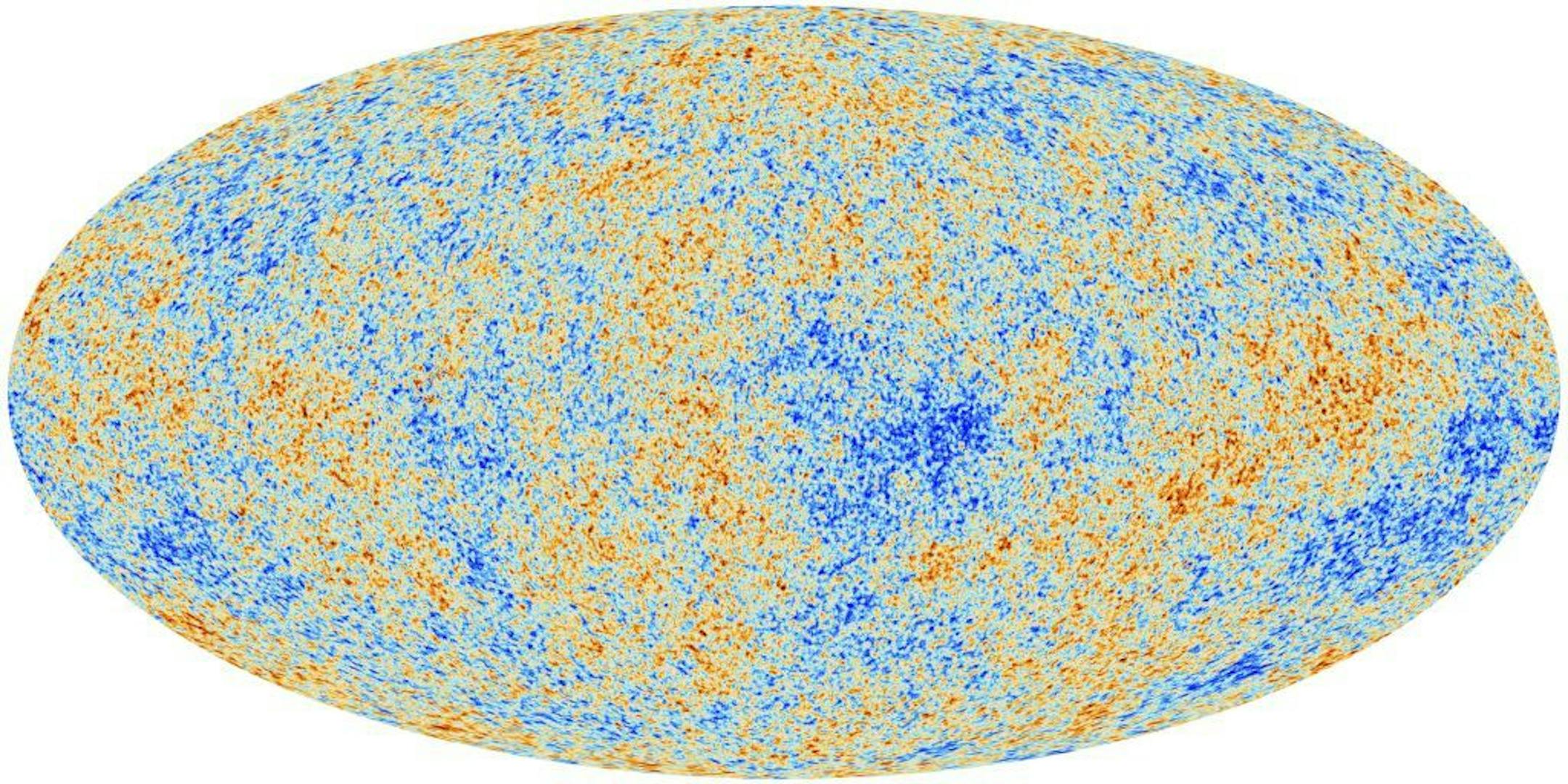
PARIS - A new examination of what is essentially the universe's birth certificate allows astronomers to tweak the age, girth and speed of the cosmos, more secure in their knowledge of how it evolved, what it's made of and its ultimate fate.
Sure, the universe suddenly seems to be showing its age, now calculated at 13.8 billion years — 80 million years older than scientists had thought. It's got about 3 percent more girth — technically it's more matter than mysterious dark energy — and it is expanding about 3 percent more slowly.
But with all that comes the wisdom for humanity. Scientists seem to have gotten a good handle on the Big Bang and what happened just afterward, and may actually understand a bit more about the cosmic question of how we are where we are.
All from a baby picture of fossilized light and sound.
The snapshot from a European satellite had scientists from Paris to Washington celebrating a cosmic victory of knowledge Thursday — basic precepts that go back all the way to Einstein and relativity.
The Planck space telescope mapped background radiation from the early universe — now calculated at about 13.8 billion years old. The results bolstered a key theory called "inflation," which says the universe burst from subatomic size to its vast expanse in a fraction of a second just after the Big Bang that created the cosmos.
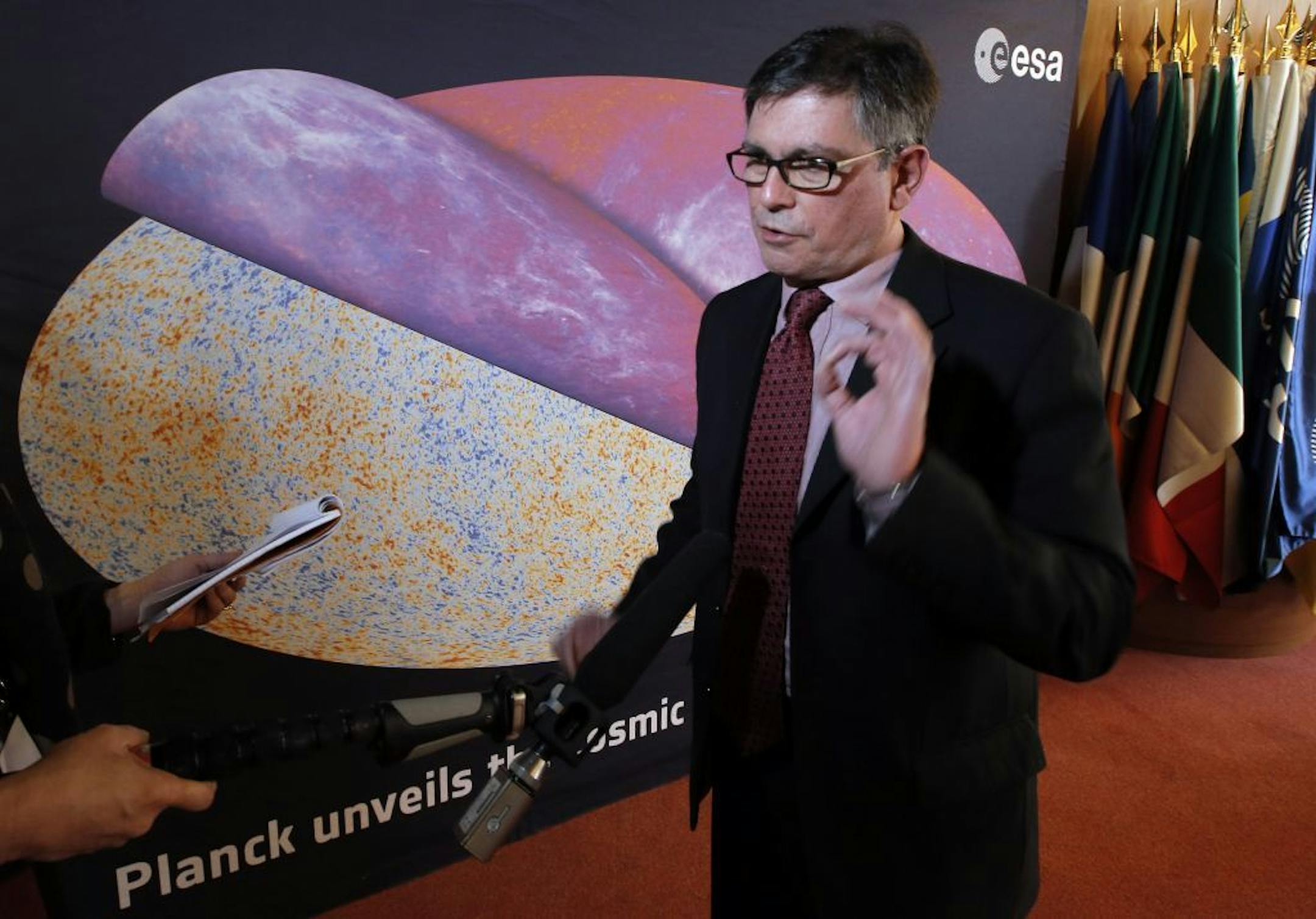
"We've uncovered a fundamental truth of the universe," said George Efstathiou, director of the Kavli Institute for Cosmology at the University of Cambridge who announced the Planck findings in Paris. "There's less stuff that we don't understand by a tiny amount."
The map of the universe's evolution — in sound echoes and fossilized light going back billions of years — reinforces some predictions made decades ago solely on the basis of mathematical concepts.